
Alliance for Restoration of Forest Ecosystems in Africa (AREECA)
Land degradation and forest loss, exacerbated by climate change and unsustainable land use practices in Africa, threaten ecological functions, land productivity, food and water security. Inadequate resource management, limited access to innovation and resources, and inappropriate policies prevent countries from restoring forest landscapes on a large scale. The project increased the economic, environmental and climate-related benefits of large-scale forest restoration (FLR) in partner countries. The project provided capacity building on the ground and policy advice. It also involved the exchange of FLR experiences and the follow-up of FLR results. The creation of additional carbon stocks and the reduction of pressure on existing stocks contributed to climate protection, increasing resilience and protecting biodiversity.
- Countries
- Cameroon, Kenya, Malawi, Rwanda
- IKI funding
- 23,495,808.70 €
- Included preparation phase
- 509,162.49 €
- Duration
- 09/2019 till 03/2026
- Status
- completed
- Implementing organisation
- Deutsche Gesellschaft für Internationale Zusammenarbeit (GIZ) GmbH
- Political Partner
-
- Ministry of Environment, Climate Change and Forestry (MECCF) - Kenya
- Ministry of Environment, Nature Protection and Sustainable Development (MINEPDED) - Cameroon
- Ministry of Environment - Rwanda
- Ministry of Environment and Forestry - Kenya*
- Ministry of Forestry and Wildlife - Cameroon
- Ministry of Natural Resources, Energy and Environment - Malawi
- Implementing Partner
-
- African Union Development Agency (AUDA-NEPAD)
- Food and Agriculture Organization of the United Nations (FAO)
- International Union for Conservation of Nature and Natural Resources (IUCN) - Eastern and Southern Africa Regional Office
- The World Bank Group
- World Resources Institute (WRI)
- World Wide Fund for Nature (WWF) - Germany
State of implementation/results
- Project completed
- The AREECA project implemented restoration activities on 16,472 ha and supported further planning processes on 3,8 million ha.
- AREECA co-managed the Restoration Community on the global PANORAMA Platform.-- AREECA implemented restoration capacity assessments and trainings to strengthen national capacities in planning and monitoring of FLR (Forest Landscape Restoration) activities.
- AREECA co-organised two rounds of the Restoration Academy to support regional capacity building of researchers, NGOs, CSOs and government representatives.
- AREECA conducted a training on the Ex ACT-Tool as means of verification for the carbon sequestration potentials of the implementation sites and for key stakeholders from the target countries.
- Rwanda:
- ROAM (Restoration Opportunities Assessment Methodology) was applied to develop district-level FLR strategies.
- Local farmers were trained in nursery establishment and tree survival monitoring.
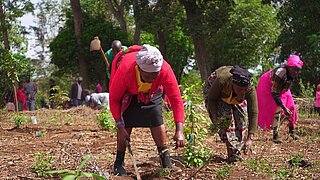
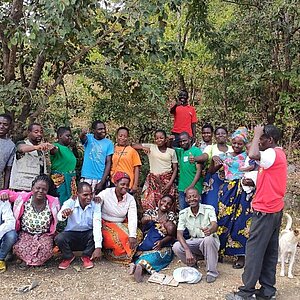
- 480 community members (209 women, 271 men) were employed in seedling production and planting.
- Community groups produced 8,033 fruit tree seedlings, which were distributed to farmers in Kirehe and Nyagatare district.
- Malawi:
- 1,110 people were trained in nursery establishment, woodlot management, beekeeping, climate-smart agriculture, and resource management. 14 environmental clubs were established in schools.
- 5 Management plans for Ntcheu District and 4 District Development Plans (DDPs) had been developed. Guidelines for FLR in DDPs had been approved.
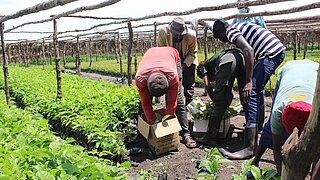
- 200,977 seedlings were produced, alongside with 360 beehives and 20 fishponds to support alternative livelihoods.
- 1,400 ha of degraded land were restored in Mvai Forest Reserve.
- 37 Farmer Field Schools involving 926 farmers (63% women) were set up to promote sustainable practices.
- National FLR communication strategy and two policy harmonisation briefs published.
- Kenya:
- Restoration plans for five coordination platforms were reviewed, contributing to 11,046.15 ha of improved ecosystem functionalities.
- The Kajiado County Natural Resource Network was created to strengthen FLR governance and coordination.
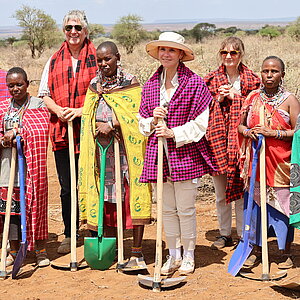
- 2,273 ha of degraded rangelands were restored, securing wildlife corridors and supporting Maasai livelihoods through sustainable practices such as grass seed banking.
- A Community Forest Association was established at Entarara Forest to promote sustainable management and conservation of natural resources.
- Cameroon:
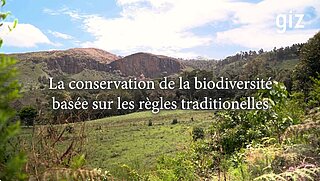
- Over 6,000 native trees from sacred forest nurseries were planted in six sacred forests.
- Two Local Conventions were signed for sustainable management, covering a sacred forest and riverbank stabilization.
- FLR planning support was provided to the communities of Fongo Tongo, Batcham, and Babadjou. A national-level training on FLR planning and implementation was conducted. The ROAM process is currently ongoing.
- Participatory landscape restoration approaches were disseminated through experience sharing and a published manual on developing local agreements, distributed to local and national stakeholders including Civil Society Organisations, opinion leaders, municipalities, and ministries.
Latest Update:
10/2026
Project relations
Legend:
The link has been copied to the clipboard