

Protecting peatlands
Priority field of action in the IKI funding area conserving and restoring of natural carbon sinks (as of April 2025)

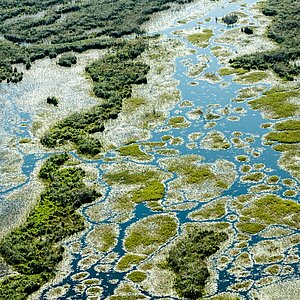
Healthy peatlands are amongst the most important carbon pools in the world. Peatlands cover only 3-4 per cent of the land surface, but hold up to one third of global soil carbon. Peatland protection fosters the binding of this carbon and is therefore decisive for achieving global climate targets. However, instead of acting as carbon sinks, degraded and dewatered peatlands become sources of immense greenhouse gas emissions, having a negative impact on the climate.
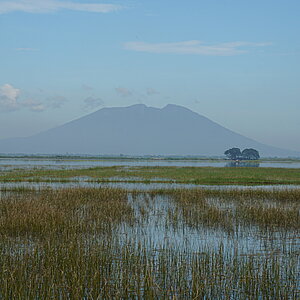
Peatland ecosystems fulfil many other important ecological functions: They play a decisive role in the hydrological cycle by storing and filtering water, delaying dewatering peaks and reducing the effects of floods. They also provide a habitat for unique flora and fauna that millions of people depend on. Despite their significance for nature and the climate, peatlands are seriously threatened by changes in land use. In recent decades, the proportion of degraded and dewatered peatlands has constantly increased worldwide. It is expected that the conditions for the growth and preservation of peatlands will deteriorate to varying degrees from region to region caused by the impacts of climate change.
Peatlands in an international context
The awareness of the significance of peatland protection for climate change mitigation, biodiversity and the resilience of natural systems is rising in many countries. International resolutions such as the Ramsar Convention (Convention on Wetlands of International Importance), the Convention on Biological Diversity (CBD), as well as resolutions of the International Union for Conservation of Nature (IUCN) and the UN Environment Assembly (UNEA) underline the importance of the protection, sustainable management and restoration of peatlands. Nevertheless, national peatland strategies are only in place in a few countries. Even in the national climate commitments that form part of the Paris Agreement, peatlands are hardly mentioned despite their decisive role. In spite of that fact that some policy progress has been achieved, major challenges for peatland protection still exist in many countries as they face a lack of resources, knowledge of the occurrence of peatlands and national definitions of peatlands.
Focus of the IKI
Taking this as a basis, the IKI is focusing on the one hand on the preservation of the remaining near-natural peatlands, and on the restoration and stabilisation of damaged and degraded peatlands in the partner countries on the other. Specific focus is placed here on the integration and more intensive consideration of peatland protection in infrastructure projects and planning for the development of rural areas.
Selected projects
- Securing crucial biodiversity, carbon and water stores in the Congo Basin Peatlands by enabling evidence based decision making and good governance.
- Improving the management of peatlands and the capacities of stakeholders in Indonesia (Peat-IMPACTS Indonesia)
- The Global Peatlands Initiative: Assessing, Measuring and Preserving Peat Carbon
Funding area

The IKI Strategy
The IKI wants to maximise its impact on climate action and biodiversity conservation. To this end, it concentrates its funding activities on prioritised fields of action within the four funding areas. Another key element is the close cooperation with selected partner countries, especially with the IKI’s priority countries.


The link has been copied to the clipboard