

Cultivating climate resilience through agroforestry
![[Translate to English:] Mangobäume stehen auf trockenem Boden in einem Flussbettgebiet in der Region Dodoma in Tansania.](/fileadmin/_processed_/4/1/csm_20260618_Scarf_1_379c08feed.jpg)
The IKI supports long-term resilience of smallholder farmers in rural Tanzania.
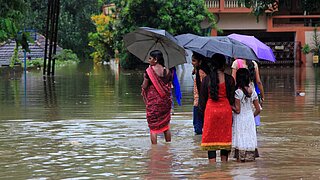
Rising temperatures, more intense and unpredictable rainfall, flooding, and droughts are among the climate challenges that characterize the Dodoma and Morogoro regions in Central Tanzania. These increasingly challenging conditions ultimately affect agricultural production, the primary source of livelihood for much of the rural population.
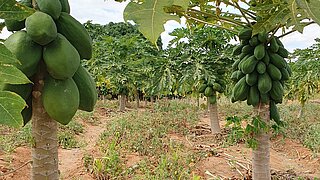
With support from Germany´s International Climate Initiative (IKI), the project “Scaling Agroforestry for Holistic Climate Resilience-Building in Rural Tanzania (SCARF)” promotes the adoption and expansion of agroforestry practices in Tanzania. The deliberate integration of woody perennials into crop and livestock systems represents a locally grounded and ecologically suitable response to the compounding climate pressures facing agrarian semi-arid and sub-humid regions.
Understanding the socio-ecological dynamics and identifying challenges
Agroforestry offers a wide range of benefits for local communities. It improves, for example, soil fertility, microclimate regulation, and livelihood diversification. However, despite its recognized potential, the adoption rate among farmers in Dodoma and Morogoro remains low. In response, the IKI project aims to deepen the empirical understanding of socio-ecological dynamics and to identify barriers to the wider adoption of agroforestry practices. By doing so, the project contributes to reducing the climate vulnerability of rural farming communities.
Understanding adoption and success of agroforestry practices
Engagement with local farmers began with in-village focus group discussions and multidisciplinary workshops exploring the biophysical and socioeconomic context, the challenges faced by farmers, and the potential of agroforestry practices. These engagements formed the basis for the design of tailored and locally viable solutions, through which five key agroforestry technologies were identified:
- fruit tree intercropping,
- woodlots for timber and woodfuel supply,
- integration of fertilizer trees and rainwater harvesting,
- contours planted with fodder crops, and
- perennials for integrated natural pest management.
These agroforestry technologies emerged as a central component of the project, providing the foundation for supporting farmers in establishing their own agroforestry systems.
Surveys for a robust knowledge base
Furthermore, baseline and endline surveys were conducted with farmers in the region, both in the target villages and in neighbouring communities. These surveys highlighted important aspects related to farmers’ motivations for maintaining agroforestry trees, the support needed to sustain existing tree resources on local farms, and potential solutions for scaling up agroforestry practices.
The surveys also revealed important insights into factors that can help conserve local tree species, as well as the most suitable species for different locations, based on farmers’ preferences and the ecological conditions of each region.
Capacity building for farmers
A core component of the project was the strengthening of local farming communities’ capacities to better understand and apply the evidence-based benefits of agroforestry technologies. Demonstration plots were established in eight villages across the target regions to prototype and showcase the selected agroforestry technologies. The establishment of these demonstration plots involved hands-on activities, with participation from farmers from different villages as well as agricultural extension officers.
To support the further uptake of agroforestry practices, a multi-pronged approach was adopted. Additional farmer trainings were conducted on tree propagation, tree management, and other agroecological practices. Tree nurseries were established within the villages to facilitate access to the prioritized tree species. In addition, farmers received ongoing support through in-person visits and WhatsApp communication to address challenges encountered during the first growing season.
Engagement with policy circles
The project also facilitated multiple workshops with ministries, local government actors, and extension services. Most recently, it organized a national workshop with ministry-level extension departments and other key stakeholders aimed at translating research findings into actionable interventions for policymakers and practitioners. The workshop brought together a total of 21 participants, including five women. Presentations provided an overview of agroforestry principles, the agroforestry technologies promoted by the project, and opportunities for scaling their adoption, emphasizing the need for wider replication of proven practices.
The workshop strengthened awareness, improved institutional alignment, and—together with the other components of the project—laid the groundwork for integrating agroforestry more effectively into agricultural planning, resource mobilization efforts, and national monitoring frameworks.
In this way, IKI support helped establish a strong foundation for enhancing climate resilience through agroforestry in Tanzania in the years ahead.
About the IKI Medium Grants
With the IKI Medium Grants the German federal government supports projects for climate action and biodiversity conservation that particularly involve smaller civil society actors in developing and emerging countries. The IKI Medium Grants funding instruments is implemented by Zukunft – Umwelt – Gesellschaft (ZUG) gGmbH.
Together with the IKI Large Grants and IKI Small Grants, the IKI Medium Grants complete the competitive funding instrument form IKI Compete.
The link has been copied to the clipboard
Contact
IKI Office
Zukunft – Umwelt – Gesellschaft (ZUG) gGmbH
Stresemannstraße 69-71
10963 Berlin