
How healers in Cameroon are linking healthcare and conservation
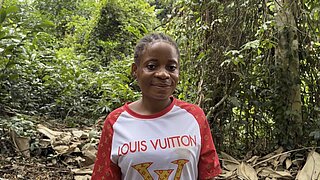
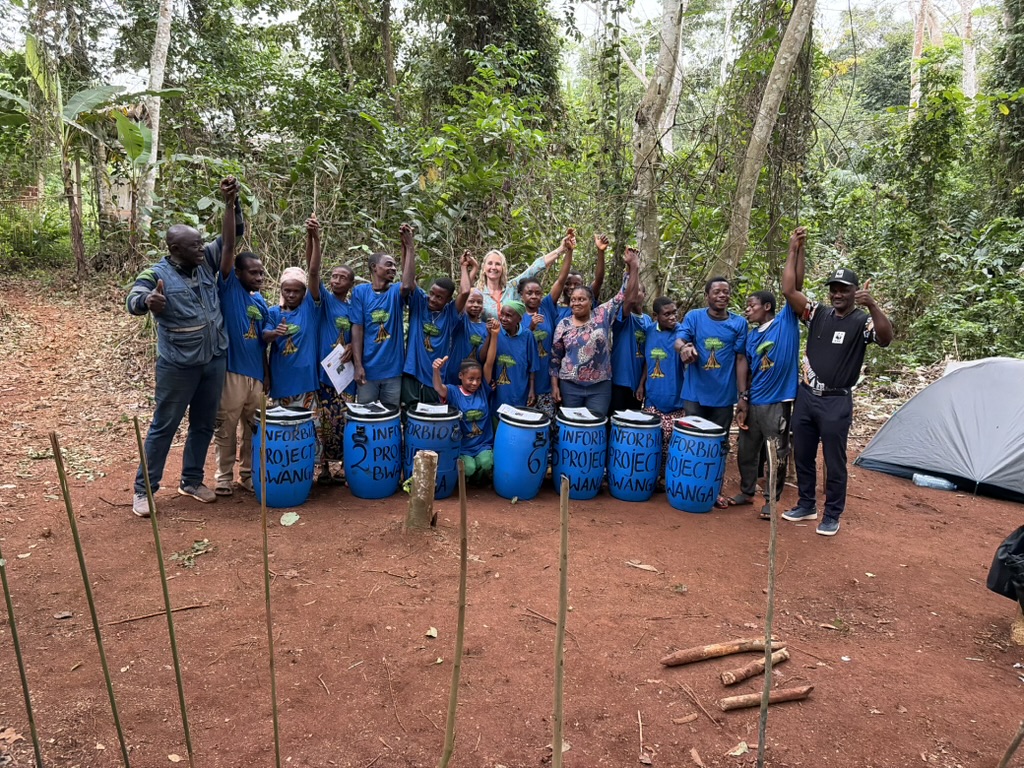
In Cameroon's rainforest, Charlotte Mbegna carries a blue barrel on her back, delivering medicines. The traditional healer was trained by Project Bwanga and is part of an IKI project that links health, communities, and nature conservation.
Charlotte Mbegna aus dem Dorf Mbangoye läuft mit ihrem blauen Fass über eine matschige Straße in der Lobéké, einer Landschaft im Südosten Kameruns. In diesem Fass transportiert sie jedoch kein Wasser, wie man auf den ersten Blick vermuten könnte. Sie ist vielmehr auf dem Weg zu einem Patienten und das Fass eine mobile Klinik. Denn Charlotte Mbegna ist eine traditionelle Heilerin der Baka-Gemeinschaft.
Healthy people, healthy forest: how it all connects
These mobile clinics are part of the” INtact and effectively managed FORests and BIOdiversity as natural barriers to mitigate climate change and risk of pathogen spillover (INFORBIO)” project, a collaborative initiative between WWF and local partners in the Congo Basin. Through its International Climate Initiative (IKI), Germany is supporting approaches that combine traditional knowledge with modern healthcare.
Only communities with access to healthcare can participate in long-term conservation efforts
Healthy communities are essential for conserving biodiversity, as well as restoring and sustainably managing forest landscapes. If you want to engage people in biodiversity monitoring, forest protection, or restoration efforts, you must first consider their basic needs. Communities lacking access to medical care can rarely participate in long-term conservation initiatives.
Through its funding of the INFORBIO project, Germany is establishing vital conditions for successful conservation and restoration efforts in the Congo Basin. At the same time, the project follows the 'One Health' approach, recognising that the health of people, animals, and ecosystems is deeply interconnected. A deforested landscape or degraded forest forces wildlife and humans closer together, making it easier for diseases to spillover from animals to humans. These zoonotic diseases pose a very real threat in regions like the Congo Basin. Conversely, the healthier the forest and its wildlife populations, the better protected the surrounding human communities are. Guided by this logic, the project directly links healthcare with the protection of biological diversity
Bringing the clinic to the people
When someone falls ill in a Baka community within the Lobéké region, a hospital is rarely their first port of call. In these remote rainforest areas, medical care is often difficult to access, with the nearest state health facility located far away. Just a few years ago, falling ill meant travelling for hours or even days to receive medical assistance – a journey involving immense hardship and high costs. Today, healers like Charlotte Mbegna deliver essential medication straight to families.
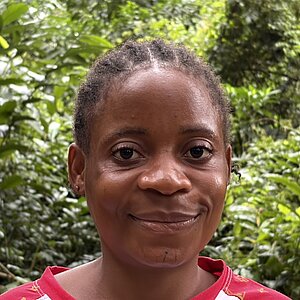
We often don't have the money for transport or for the examination in the hospital. That is why I bring the help directly to the people in the forest.
Traditional healers are an important part of the Baka community. They speak the local language, know the everyday realities on the ground, and enjoy great trust. Especially for the indigenous Baka, who frequently experience discrimination in state institutions, they are often the primary source of help in case of illness. For many families in her community, Charlotte Mbegna is therefore the first point of contact when health problems arise.
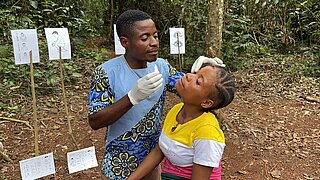
This is where the work of Project Bwanga comes in. The non-governmental organisation is one of the local IKI project partners on the ground. In the Mbendjele BaYaka language, the name "Bwanga" means "medicine".
Rather than replacing existing structures, Project Bwanga builds upon the trust that traditional healers already enjoy. As many families are still semi-nomadic, the necessary medicines are carried with them in these portable clinics. The waterproof barrel protects the valuable ingredients from humidity.
clinics
deliver essential medical services to Cameroon's Baka community in times of illness.
IKI project trains healers in administering medicine
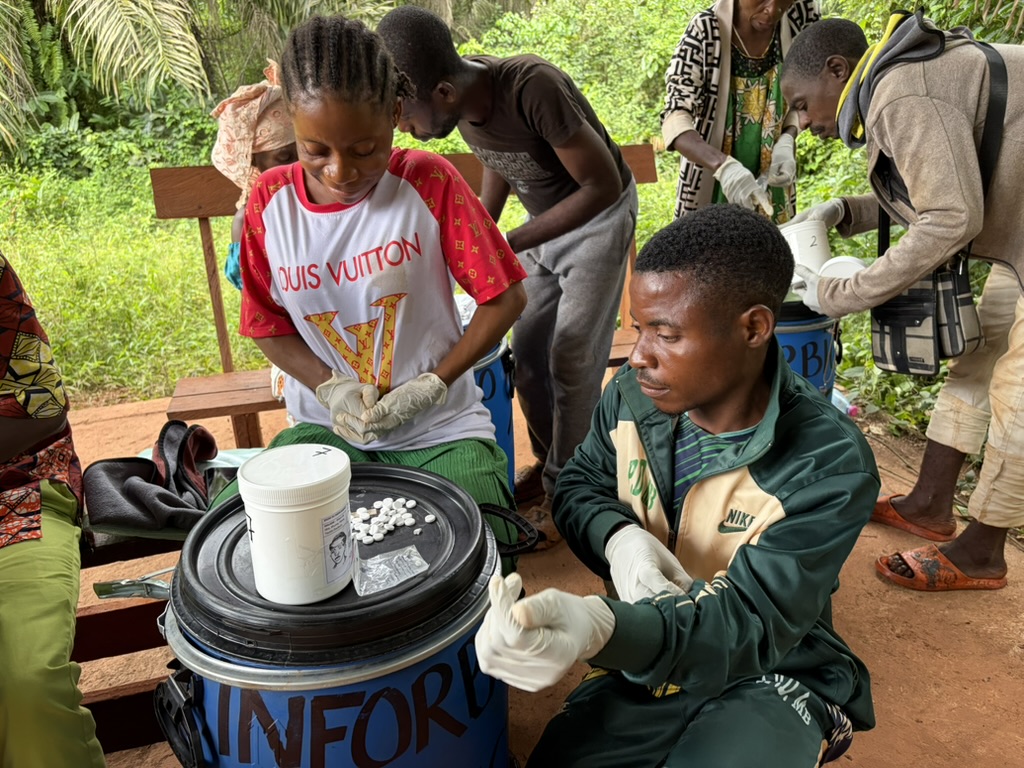
As part of the IKI project, Project Bwanga trained Charlotte Mbegna and 13 other traditional healers to treat common and endemic illnesses, safely administer medicines, and recognise severe or unusual courses of disease early on. If the healers cannot treat patients themselves, they refer them directly to the nearest health facility.
Following their training, the healers receive regular support and guidance from a qualified local nurse. This ensures that medications are used correctly and allows for an exchange of experiences.
Learning without reading and writing
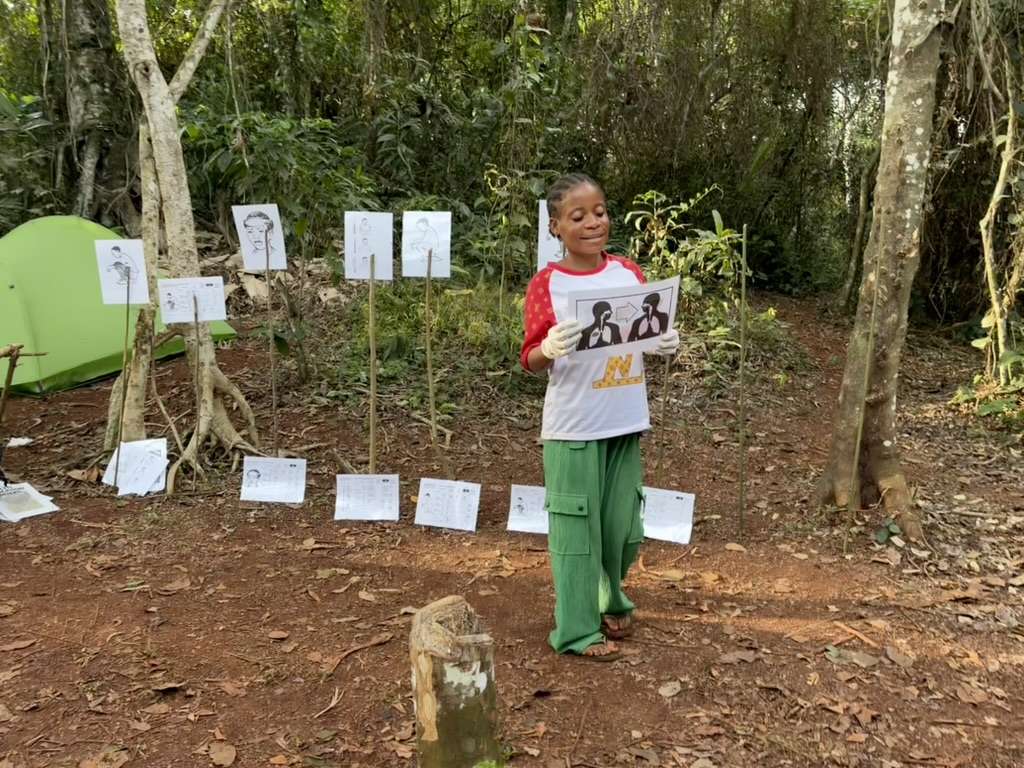
The training programme was specially adapted to the needs of the communities. Since many participants can neither read nor write, the trainers – Ingrid Lewis, Marianne-Catherine Ndobo, and Gabriel Ntewane – work with symbols, pictograms, practical exercises, and role-play.
The first training sessions began in early 2025. Step by step, the participants are expanding their medical knowledge and learning to better assess health risks. The training will continue throughout the entire project period until 2030, being continuously adapted based on local experiences.
I am proud that my community chose me to help our people.
Faster medical care for local communities
The new approach is already having an impact, changing healthcare for the Baka community. By mid-2026, 14 traditional healers had been trained, operating seven mobile clinics across the region. Since the start of the project, the teams have treated more than 600 patients. People now receive swifter care for everyday illnesses, while more severe cases can be specifically forwarded to professional healthcare facilities.
received medical treatment from the 14 clinics by mid-2026 under the IKI-funded In.For.Bio project.
For Charlotte Mbegna and other healers, this has also brought a shift. Thanks to their training, they now play an even more important role in the health of their communities.
People have trusted their healers for generations. By combining this trust with modern healthcare, the IKI project can reach even the most remote communities.
From treatment to prevention
The trained healers are among the first to notice changes in their environment. Beyond cases of human illness, they also observe unusual events in the forest, such as increased wildlife mortality or changes in animal behaviour. These observations can provide valuable data for biodiversity monitoring and the early detection of zoonotic diseases.
In the future, the trained healers will use the Sapelli app to document Project Bwanga health data and report relevant findings. Because the application works with symbols, photos, and voice messages, it can be easily operated without literacy skills.
One Health: Going forward, healers will record health data and wildlife mortality rates.
In the long run, the reporting channels established by the project could do more than just flag potential disease outbreaks. They could also help gather data on the state of wildlife populations in remote forest areas, generating additional knowledge about species and ecosystems in one of Africa's most biodiverse regions.
A model with significance far beyond Lobéké
The experiences from Lobéké underscore a central message that is gaining increasing traction in negotiations for the Convention on Biological Diversity: protecting species and ecosystems can only succeed alongside the people who inhabit and depend on these habitats. Effective conservation is not achieved through protected areas alone, but through strong communities that are actively involved in and benefit from the preservation of their environment.
The link has been copied to the clipboard
Contact
IKI Office
Zukunft – Umwelt – Gesellschaft (ZUG) gGmbH
Stresemannstraße 69-71
10963 Berlin