

How traditional knowledge shapes the future
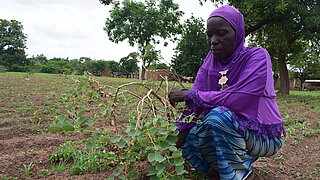
Reviving traditional farming techniques improves livelihoods, increases food security, and strengthens social cohesion across Burkina Faso.
Minata Bassinga is like many women farmers in the rural commune of Soaw, Burkina Faso: she manages her own fields, so her successes can mean the difference between malnutrition and thriving families.
Mrs. Bassinga, 42, belongs to the Mossi ethnic group and lives in Kalwaka Village with her five children; she helps her husband cultivate the family’s field before working on her own 2ha plot.
For her, improving social cohesion and learning new skills were of utmost importance.
A good harvest means the difference between malnutrition and thriving families.
Burkina Faso's economy relies on subsistence agriculture – mainly cereals like sorghum, millet, corn and rice – but is often marked by low crop productivity due to difficult conditions.
Across Boulkiemdé, the central Burkinabè province where Bassinga lives, meagre harvests are often inadequate to feed families three meals a day.
Sacred sites, vast reserves of knowledge
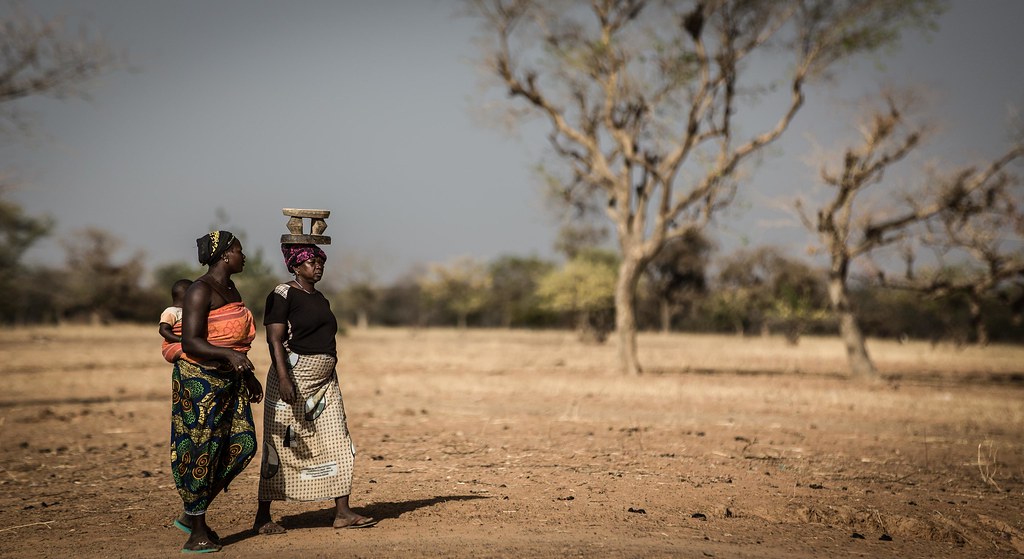
Throughout Burkina Faso, many territories and areas like Mrs. Bassinga’s are conserved by Indigenous Peoples and local communities (ICCAs for short). These ICCAs are characterized by sacred rivers, wells, hills, groves, and forests, with significant plants, wildlife, and water resources.
These ICCAs include nine previously-recognised sites: Wend Bouli (God's Well or Sacred River); Tansob Tanga (Healer's Hill); Kalwaka Kaongo (Kalwaka Forest); Wend N Goud Tanga (Hill of Divine Protection); Zamtini Kaongo (Zamtini Forest); Wagd Kalse; Kikirs Tindili; Tang zug kaongo (Forest on the Hill); and Bourassoum Tanga (Bourassoum’s Hill). In the aggregate, these sites cover 110 hectares of land.
The nine ICCAs are home to more than 5,100 ethnic group members, including the Mossi, Fulani, and Gourounsi peoples. Agriculture is the dominant economic activity in the area, and thus, local populations heavily rely on the water sources within the Soaw commune, as well as on the Soaw and Soum dams in the vicinity.
Compounding problems
Economic hardships, climate change and severe droughts, however, have resulted in strong demographic pressure on agricultural land, exacerbated by low yields. Most of the population, especially women, engage in market gardening activities to generate additional income, but not all familial basic needs are yet met.
The communities consequentially have resorted to the use of fertilizers, herbicides, and chemical pesticides to increase production yields. This, in turn, has resulted in cases of water and air pollution, soil degradation, increased animal deaths, and even losses of human lives. The recent profusion of gold panning and large construction sites in the area compounds the degeneration.
Empowering self-determination
In partnership with the NGO Songui-Manégré Association, the Global Environment Facility (GEF) Small Grants Programme (SGP), implemented by the United Nations Development Programme (UNDP), implemented the ‘Projet d'appui aux APAC de la commune de Soaw province du Boulkiemdé, Région du Centre-Ouest’ with support from the Global Support Initiative to ICCAs (ICCA-GSI). Germany is strengthening the role of indigenous peoples and local communities in conserving biological diversity by funding the ICCA-GSI through the International Climate Initiative (IKI).

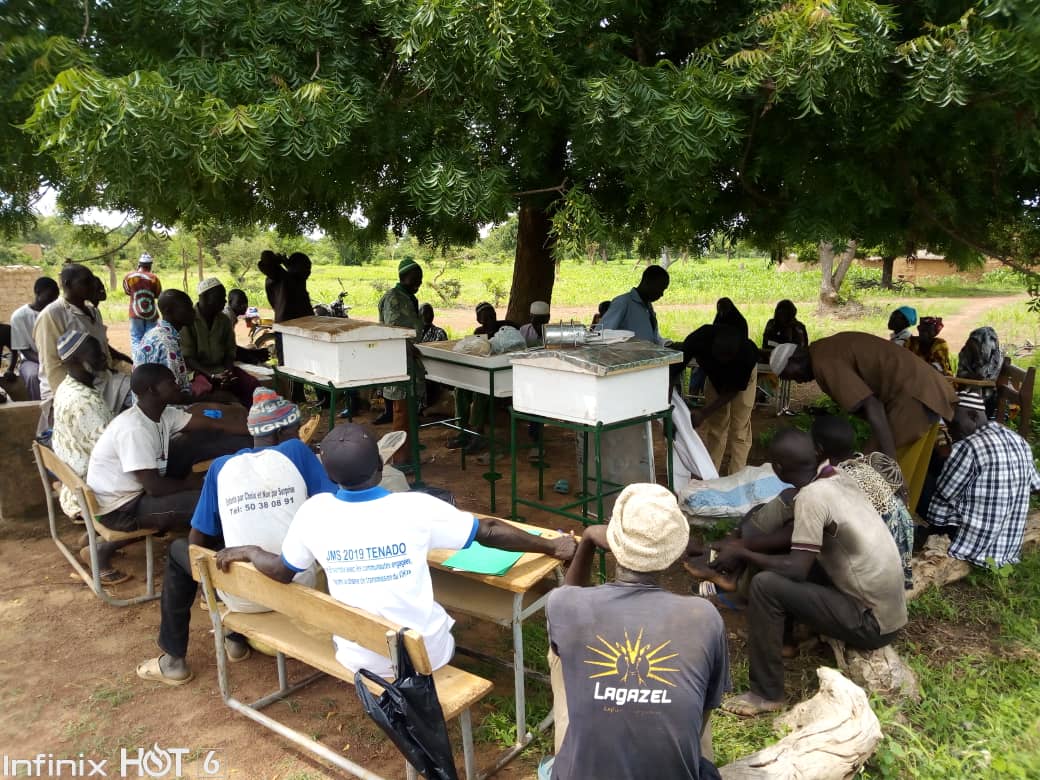
Within the project iterative participatory sessions were held to enable indigenous peoples to reflect, understand, and document their reality in relation to the inter-related ecological, social, cultural, spiritual, political, and economic aspects of the ICCAs. Together, they documented and envisioned their desired future, their role as custodians, as well as kindling community enthusiasm and sense of unity.
Tradition = Transformation
Reviving traditional techniques based on their self-determined priorities, organic agricultural production techniques were selected in order to reduce the use of chemicals in fields and gardens. Firstly, the communities were trained on installing stone bunds to form a barrier that slows down rainwater runoff, ensuring better (and more evenly distributed) soil hydration. This process helped build up a layer of fine soil and manure particles, rich in nutrients. A ground triangle or a topographic survey operator was used to determine contour curves before digging the furrows, along which the large stones were then arranged.


Through the IKI, Germany is strengthening the role of Indigenous peoples and local communities in preserving biodiversity.
After the terrain was assessed, the traditional technique of zaï was revived during the dry seasons to restore degraded lands and increase soil fertility. The farming technique consists of digging crescent-shaped holes in less permeable soil to catch water runoff and concentrate compost. About 300 grams of organic matter, such as manure and compost, was placed into holes to provide nutrients for eventual use on plants. The manure attracts termites, whose tunnels help further break up the soil. The zaï holes were also covered with mulch to maximize water retention and the biological activity of termites in the soil.
increase in millet yields has been recorded by Ousmane Kaboré since he began using traditional techniques to farm his field.
Increasing yields, improving lives
Stone-bunding resulted in up to 200 litres of additional water penetrating the ground per square metre per year.

In my village, the combination of stone barriers, zaï and the use of organic manure has made it possible to improve field yields by 260 percent for certain farmers. In my field of 4 hectares, for example, I used to harvest 150 kilogrammes of millet per hectare, but since I practice stone cordons and zaï combined with the use of organic manure, I harvest on average 300 to 400 kilogrammes.
The increased agricultural production yields have led to improved food security in the ICCAs. According to Kaboré, there is now more food, and he is able to adequately feed his children. “In the past, we struggled to have just one meal a day,” he said. Now his “children can eat in the morning before going to school.”
In the past, it was struggle to have just one meal a day. Now the children can eat in the morning before going to school.


Apiculture was also introduced as an alternative livelihood option. For Kaboré, selling 150 litres of honey per year generated an additional US$450, not including the income from wax. He adds that “there is an additional income of $27,000 per year in the village because of beekeeping.”
in additional income per year has been generated through beekeeping introduced with IKI support.
Unity for community and planet
Beyond livelihoods, the project also focussed on improving social cohesion, enhancing community stewardship, and empowering women. Emmanuel Kaboré, a 58-year-old native of the Kalwaka village, said he “acquired a lot of knowledge in agriculture, beekeeping, and natural resource management.”
I used to call on agricultural agents. Now, I know it myself. I no longer need to call them for help. I can even teach other people.

Bassinga said that she has joined the group for cohesion in the village. She learned to make the stone barriers and the zaï and also learned how to make soap, shea butter, ointment, and soumbala, a fermented seed condiment.
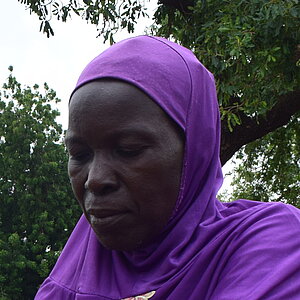
Before the project I earned $10 per month, now I can have $30 per month. Before, my children barely ate twice a day. Thanks to the project, they now eat three times a day.
Traditional knowledge working for people for planet
Bassinga and her community are a powerful testament to the resilience, innovation, and leadership of Indigenous Peoples and local communities in Burkina Faso. By reviving traditional agro-ecological practices and integrating them with community-driven development, these communities have not only restored degraded lands but also revitalized livelihoods, improved food security, and strengthened social cohesion.


This transformation – rooted in self-determination, traditional knowledge, and inclusive participation – demonstrates how Indigenous-led conservation can contribute meaningfully to the Global Biodiversity Framework (GBF) targets. It supports Target 3 by conserving vital ecosystems, Target 21 through the respectful sharing of Indigenous knowledge, Target 22 by ensuring Indigenous participation in biodiversity governance, and Target 23 by advancing gender equality.
Indigenous-led conservation makes a significant contribution to the goals of the Global Biodiversity Framework (GBF).


Text: Anna Lisa Jose, Noel Compaore, and Andrea Egan
The link has been copied to the clipboard
Contact
IKI Office
Zukunft – Umwelt – Gesellschaft (ZUG) gGmbH
Stresemannstraße 69-71
10963 Berlin
IKI@CBD COP17
About the project
ICCA-GSI is a multi-partnership initiative that is delivered by the UNDP-implemented GEF SGP and funded by the Government of Germany, through its Federal Ministry for the Environment, Climate Action, Nature Conservation and Nuclear Safety (BMUKN). Key partners include the Convention of Biological Diversity (CBD), the International Union for the Conservation of Nature’s Global Programme on Protected Areas (IUCN GPAP), the United Nations Environment Programme’s World Conservation Monitoring Centre (UNEP WCMC), and the ICCA Consortium.


![[Translate to English:]](/fileadmin/_processed_/a/5/csm_20221215_CBDCOP15_2029ff5619.jpg)