
Local ideas for tackling climate change
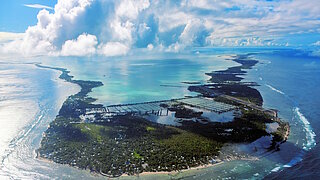
On Kiribati’s atoll islands, Germany’s International Climate Initiative (IKI) is showing how communities can strengthen their food security and become more resilient to climate change through simple, locally adapted solutions.
Saltwater is penetrating the soil, groundwater is becoming increasingly saline, and the risk of coastal flooding is rising. Yet fruits, vegetables and other food are being grown on Kiribati – in raised beds, aquaponics systems and with the help of biochar. What may look like small-scale solutions at first glance is helping communities cope with the impacts of climate change and become less dependent on imported food.
Growing food and creating new sources of income
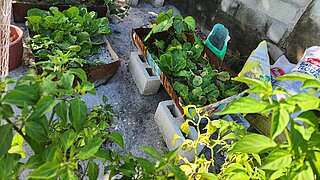
The IKI project “Geen-blue development in Kiribati” focused on practical approaches that enable communities to improve their food supply and better prepare for the impacts of climate change.
Communities received hands-on training in:
- food production in raised beds,
- composting organic waste and seaweed,
- aquaponics, combining fish farming and plant cultivation in a closed water cycle, and
- small livestock farming, including pigs and chickens.
The project also trialled the use of biochar to improve soil productivity and reduce the impacts of salinity on crops.
With these approaches, households can grow fruit and vegetables despite the difficult environmental conditions. More locally produced food also means less dependence on imports. This is particularly important when supply chains are disrupted – as experienced during the Covid-19 pandemic.
The project also promoted improved waste sorting and recycling practices and established small community markets where surplus produce can be exchanged or sold. These initiatives not only create new opportunities for local food production, but also for generating additional income – particularly for women.
Women and elders as drivers of change
Women and elders play a central role in implementing the project’s activities. For example, four out of five participating church groups consisted almost entirely of women and elders.
Women in particular often play a key role in managing household food security and community wellbeing – making them an important target group for the project’s training activities.
Strengthening impact through local governance structures
The project worked through Kiribati’s traditional Maneaba governance system to build trust, encourage participation, and strengthen partnerships between church elders and women leaders. Maneabas are traditional communal meeting places where people come together to exchange ideas and make collective decisions.
In Betio, for example, where churches play a central role in community life, workshops were held in church Maneaba buildings.
The project also combined scientific information with the experiences of people on the ground. This helped communities better understand the long-term changes brought about by climate change. Gradual changes can be difficult to perceive – and therefore difficult to recognise as an immediate threat.
Sharing lessons and experiences
One of the project’s key lessons is that climate adaptation works best when solutions are developed together with local communities, are affordable, and are adapted to local conditions.
Training materials, implementation guides and experiences from pilot communities such as Bonriki, Temwaiku, Bikenibeu, Eita and Nanikaai are helping to share knowledge gained through the project with other island communities across Kiribati. Dissemination events and exchanges between communities, councils and other stakeholders are helping to share successful approaches and further develop them.
Outlook
The IKI project “Blue-Green Development in Kiribati” has provided important momentum for community-based climate adaptation. Many households are already continuing and expanding home gardening and aquaponics activities using the skills and knowledge gained through the project.
The work therefore extends beyond the end of the project: local councils, communities and partners will continue to build on these experiences through further training, knowledge sharing and the integration of successful approaches into local planning processes.
About the IKI Medium Grants
The project was funded under the IKI Medium Grants. With the IKI Medium Grants the German federal government supports projects for climate action and biodiversity conservation that particularly involve smaller civil society actors in developing and emerging countries. The IKI Medium Grants funding instruments is implemented by Zukunft – Umwelt – Gesellschaft (ZUG) gGmbH.
Together with the IKI Large Grants and IKI Small Grants, the IKI Medium Grants complete the competitive funding instrument form IKI Compete.
The link has been copied to the clipboard
Contact
IKI Office
Zukunft – Umwelt – Gesellschaft (ZUG) gGmbH
Stresemannstraße 69-71
10963 Berlin