
Protecting pollinating insects in Latin America and the Caribbean

Insect pollination is essential for food production and the conservation of terrestrial biodiversity. The IKI project “Regional action for enhanced protection of pollinating insects and pollination services in Latin America and the Caribbean” (PoliLAC) therefore aims to protect pollinating insects and pollination services.
Insect pollinators provide a vital service to natural ecosystems and are essential for agricultural production. Around 80% of crops and wild-flowering plants depend on animal pollination, but pollinators have been declining mainly due to habitat loss, intensive agriculture, pesticide use, and high fertiliser inputs. There is an urgent need to increase the numbers and diversity of pollinator species, to make our food system more resilient and productive.
As part of this work, the PoliLAC project focuses on protecting natural ecosystems, and adapting agricultural systems to protect the ecosystem services provided by pollinators while reducing the vulnerability of local communities to the effects of pollinator decline.
The PoliLAC project at CBD COP 16
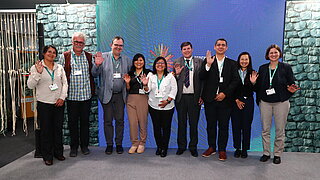
At last year's UN Biodiversity Conference in Cali, Colombia, a representative of the project gave an update on the project in the dialogue space "Biodiversity and Pollinators in Latin America". The progress and challenges in the region were analyzed, highlighting the creation of working networks that have advanced knowledge on pollinators.
Another important event took place at the Peruvian pavilion, where the Vice Minister of Strategic Development of Natural Resources of Peru, Raquel Soto Torres, highlighted that "the work of pollination is fundamental for the reproduction of a great variety of plants, including many fruits, vegetables and crops that are part of our food".
Promote knowledge exchange
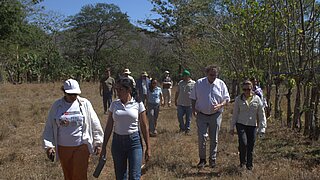
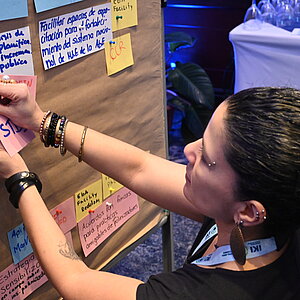
To promote knowledge exchange on pollinator friendly practices and to identify potential solutions and innovative tools for pollinator conservation, the project held a workshop in March this year. Political counterparts and partners from Brazil, Costa Rica, Mexico, Paraguay and Peru met to develop a common vision for implementing friendly practices and monitoring to conserve pollinating insects and their ecosystem services.
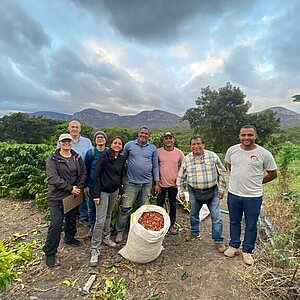
The event included a field trip to the Nicoya Peninsula in Guanacaste, the selected landscape in Costa Rica, where the project will be implemented. During this visit, participants visited protected wildlife areas, biological corridors and productive landscapes linked to the protection of pollinating insects.
This was the second regional workshop of the project. With initiatives such as this, Latin America and the Caribbean continue to promote actions to protect pollinators, which are essential to ensure better production, a better environment, better food and a better life, leaving no one behind.
The link has been copied to the clipboard
Contact
IKI Office
Zukunft – Umwelt – Gesellschaft (ZUG) gGmbH
Stresemannstraße 69-71
10963 Berlin