

Storage Technologies are Key to the Energy Transition
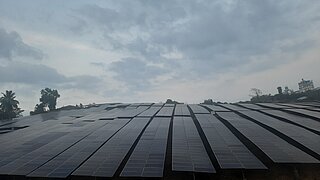
With battery storage systems, the International Climate Initiative supports India’s energy transition – from demonstration projects to workforce training.
India is undergoing a remarkable yet complex energy transition. Solar power today contributes nearly 9.4% of electricity generation and helped limit the increase in CO₂ emissions to just 0.7% in 2025, the lowest rise in two decades. At the same time, coal still contributes to meeting 50% of power demand in India, despite the country’s ambitious targets of 500 GW non-fossil capacity by 2030 and net zero emissions by 2070.
The challenge is not only renewable energy generation, but also its integration into the grid. Solar and wind power are inherently variable, and without storage, surplus renewable energy is often curtailed while coal and diesel plants continue to meet peak demand.
The evolving power distribution landscape
Energy storage systems (ESS) provide a solution. According to the India Energy & Climate Centre, storage can increase renewable energy utilisation to 58–63%, reduce annual emissions by 40–50 million tonnes, and delay investments in fossil-based generation capacity.
At the same time, India’s distribution networks — the systems supplying households, businesses, and industries — face persistent challenges. These include losses of 15–20%, voltage fluctuations caused by increasing rooftop solar installations, and rising evening peak demand.
Deploying storage at the distribution level can help address these issues. It allows low-cost daytime solar power to be stored and used during peak hours in the evening. In addition, it improves local grid balancing, enhances voltage stability, and reduces the need for costly transmission upgrades.
From demonstration projects to scalable models
India currently has around 247 GWh of energy storage capacity under different stages of development. However, only about 1.2 GWh is operational, and most projects are concentrated at large grid scale. Distribution-level deployment remains limited.
The Indo-German “Energy Storage for Renewable Energy Integration in India” project (StoREin), funded under the International Climate Initiative (IKI), addresses this gap through demonstration projects in close collaboration with Distribution Companies (DISCOM). So far, Memorandum of Understanding (MoU) have been signed with utilities in Gujarat and Delhi.
The first demonstration project involves deploying a 12 MW / 25 MWh Battery Energy Storage System (BESS) with grid-forming inverter technology in Delhi’s distribution network. Scheduled for deployment in 2026, the project is expected to reduce emissions by around 12,000 tCO₂e while strengthening the utility’s capacities in storage planning, procurement, operational management and business model development.
Establishing a unified Research & Development ecosystem
India’s energy storage research landscape has long been fragmented. To address this, StoREin launched the Indian Research & Development Forum for Grid-connected Energy Storage Systems. The platform brings together academia, industry, government, and think tanks to exchange knowledge, align research with deployment needs, and support large-scale renewable energy integration.
The Forum also contributes to a national roadmap for decentralised energy storage and promotes Indo-German cooperation through joint research and technology exchange on next-generation storage solutions.
Building the skilled workforce for a storage-driven future
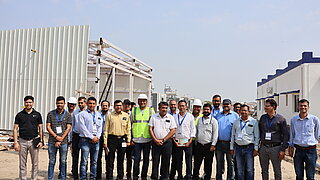
India’s growing energy storage sector requires qualified professionals across the entire value chain. StoREin therefore conducted a skill gap assessment covering manufacturers, developers, utilities, academia, and training institutions. The study identified shortages in technical, operational, financial, and managerial expertise, as well as limited training infrastructure and high training costs.
To address these gaps, the project is developing:
- two vocational training courses aligned with National Certification Frameworks;
- one academic course for platforms such as SWAYAM (Study Webs of Active-Learning for Young Aspiring Minds) and NPTEL (National Programme on Technology Enhanced Training);
- a comprehensive digital e-learning platform featuring self-paced learning modules, assessments, and specialised courses tailored for DISCOMs, the financing sector, BESS operation & maintenance professionals, technicians, and academia.
- a dedicated Faculty Upskilling and “Training of Trainers programme” aimed at developing a national pool of nearly 25 master trainers.
The project aims to directly train 1,500 professionals on energy storage planning, design, financing, implementation, and operation through targeted capacity-development programmes. At the national level, a combination of the self-paced digital learning platform and the cascading outreach enabled through the master trainers is expected to indirectly contribute to the skilling and sensitization of over 10,000 professionals and practitioners.
Creating a national knowledge hub
As part of its knowledge-sharing efforts, StoREin has developed the “Urja Sanchay” portal, a one-stop platform for ESS-related information in India. It includes interactive dashboards, e-learning resources, documentation from the R&D platform, and a digital knowledge library with national and international resources.
The platform is expected to be hosted under the Ministry of New and Renewable Energy (MNRE) to support informed decision-making and strengthen institutional knowledge on energy storage systems.
Outlook
Energy storage is a key enabler of India’s clean energy transition. Through demonstration projects, research collaboration, capacity building, and knowledge platforms, the International Climate Initiative is creating a strong foundation for large-scale ESS adoption.
With continued leadership from MNRE, these efforts can evolve into a national blueprint for energy storage and serve as a model for other countries pursuing a resilient and low-carbon energy future.
The link has been copied to the clipboard
Contact
IKI Office
Zukunft – Umwelt – Gesellschaft (ZUG) gGmbH
Stresemannstraße 69-71
10963 Berlin