
When biodiversity and productivity go hand in hand
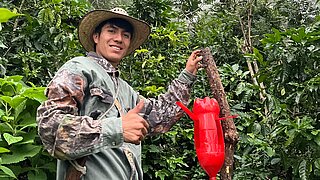
At an altitude of 1,564 metres in Mexico, José David Mazariegos González takes over the family business. Through a further training programme funded by Germany, he is learning how to turn his coffee grove into a diverse ecosystem – with fewer pesticides and increasing yields.
Behind every cup of coffee we drink lies a plot of land and a person who ensures it reaches us. To find this invisible origin, you have to embark on a journey. For example, at an altitude of 1,564 metres above sea level, at Rosario Agua Escondida in Motozintla, Chiapas, Mexico. There lies the plot of José David Mazariegos González, a young Mexican producer who is currently doing a tour of his coffee plants.
Inheriting the family farm
González faced great responsibility early: in 2017, at just 17, he took over the family farm when his father fell ill. What began as a duty evolved into a passionate journey of personal development.
As part of the IKI project, David embarked on a passionate journey of personal development.
The diploma that changed how he sees his land
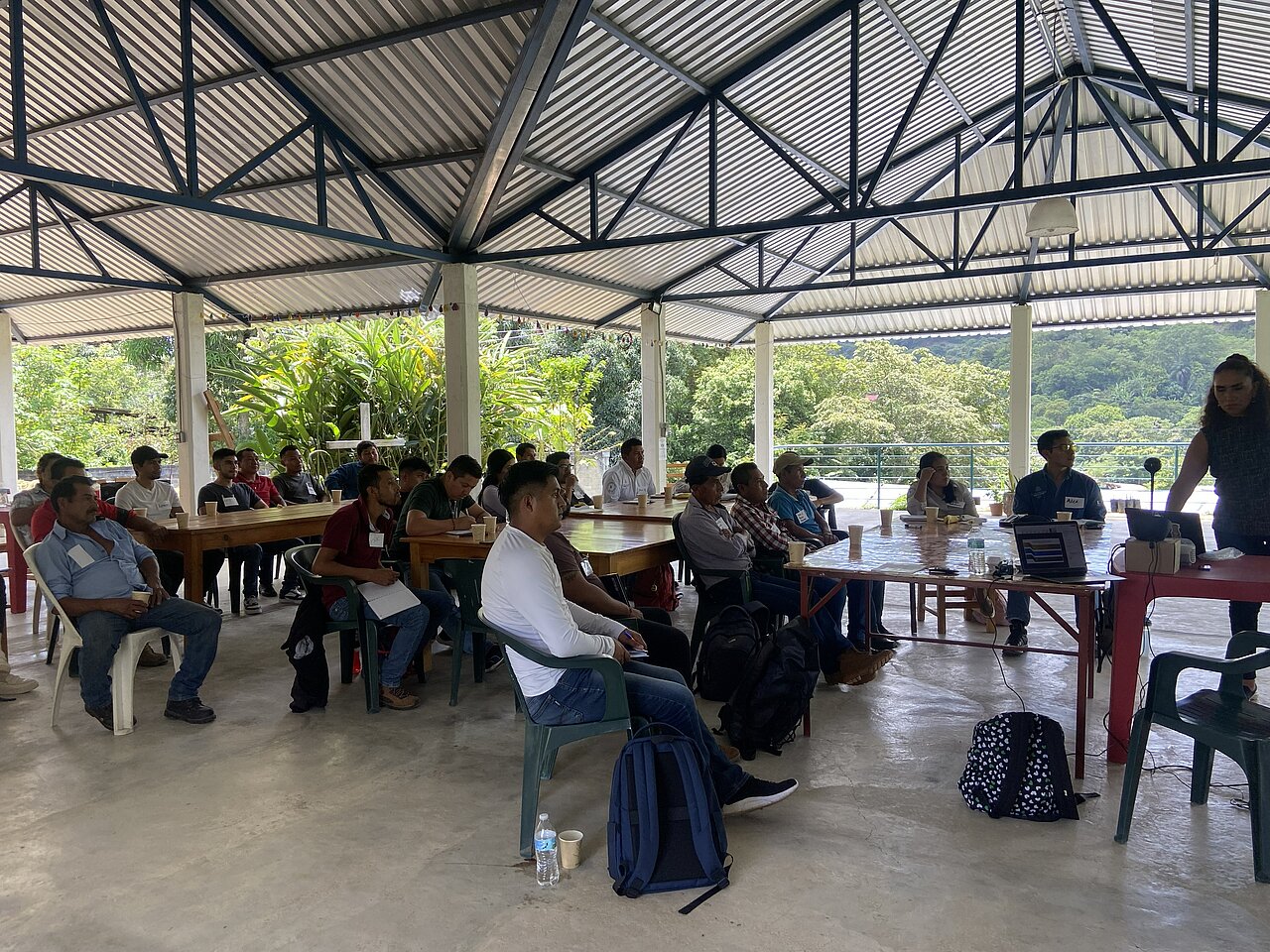
An important step on that journey was his participation in the "Commitment to Biodiversity" diploma programme. The programme is part of the "Large-scale transformation towards biodiversity-friendly, climate-resilient agriculture through risk financing solutions and conducive frameworks in politics and trade" project, known for short as BioFinCas (Biodiversity Finance Agricultural Cooperatives), funded by Germany through the International Climate Initiative (IKI).
Coordinated internationally by OroVerde and led and implemented in Mexico by Pronatura Sur, BioFinCas equips coffee farmers with the technical, social, and pedagogical skills to promote eco-friendly agriculture, incorporating sustainability principles, gender equity, and continuous quality and yield improvements, while providing tools for production management, risk preparation, and climate change mitigation.
The project’s success in numbers
took part in the ‘Commitment to Biodiversity’ programme–21 of whom were women.
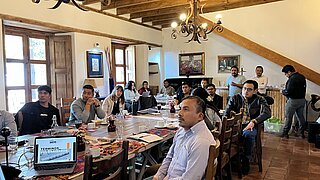
The first module, "Trainer of Trainers", was about developing competencies in future trainers to design training workshops, focusing on participatory methodologies, teaching techniques, and defining the facilitator's role. Designed specifically to help trainers generate meaningful learning in adult farmers, including those with limited academic backgrounds, the module utilised 'learning by doing' methodologies. Through this, participants acquired key skills such as planning workshops tailored to farmers' needs and prior knowledge, using interactive and digital tools, and designing adult-focused training processes.
By the end of this module, González began to see his coffee grove differently. No longer just a plot to harvest, it had become a living ecosystem in need of balance – and with it, he redefined his purpose: to improve his own land and share what he had learnt with other farmers.
With the help of the IKI and its project González began to question practices he had once taken for granted–what he calls "innocent ignorance", the kind of harm you do without meaning to, simply because no one has told you otherwise.
Small changes, visible results
The "Commitment to Biodiversity" programme showed González better alternatives. Armed with this knowledge, he began to transform the work on his plot. He planted various tree species to provide more shade for the coffee plants and to protect the soil. Instead of discarding residues, he used pruning leftovers as organic matter barriers and produced nutrient-rich compost from coffee pulp. Biological traps now keep the berry borer in check, making chemical pesticides unnecessary.

The transformations we’ve made on the land are thanks to the diploma, and we are grateful to our parents and the organisation for trusting us to lead – not just in guiding other farmers, but in managing our own land.
Nature returns to the grove
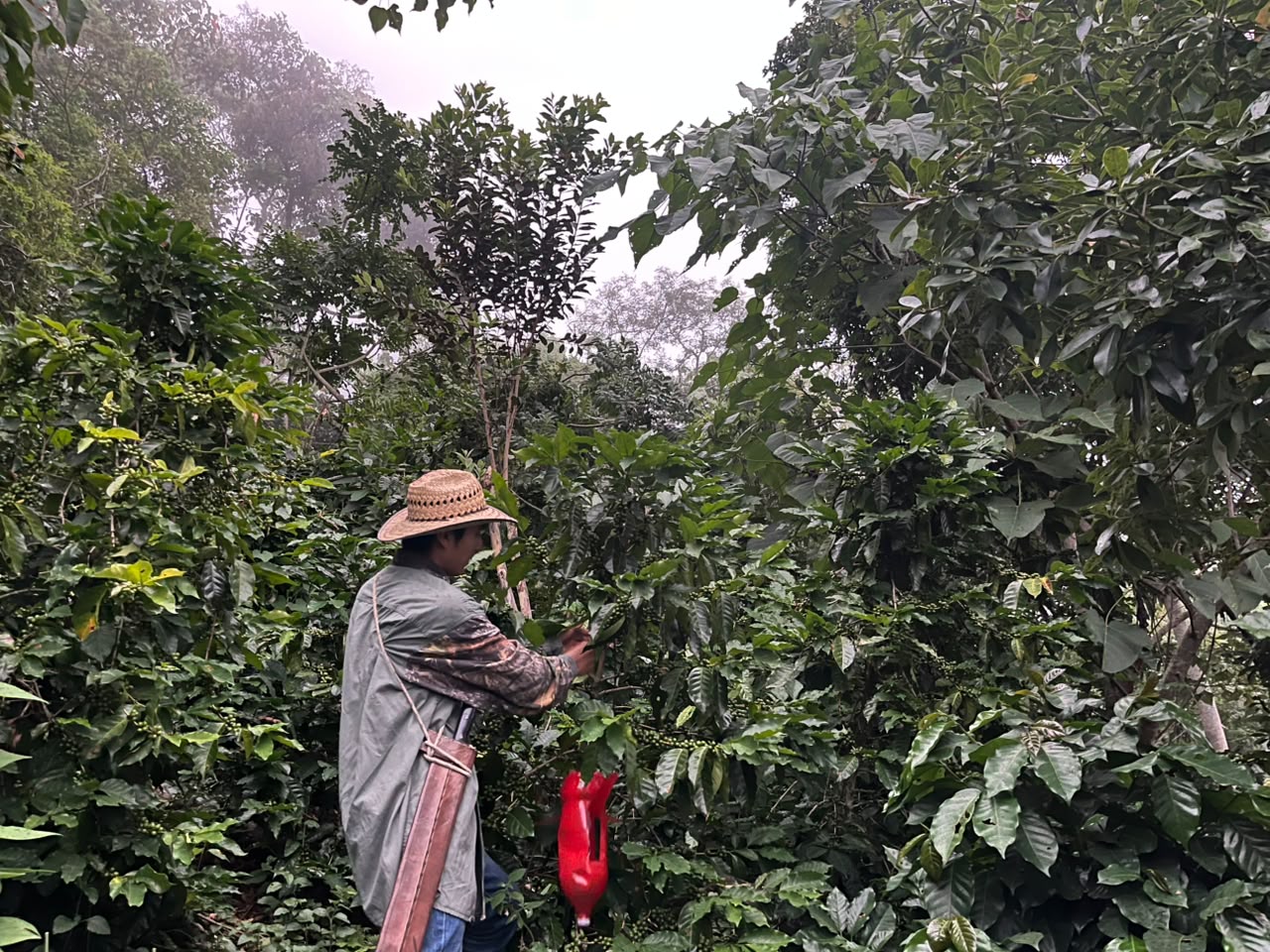
González’ grove is living proof that biodiversity and productivity go hand in hand. Since he adopted these practices, yields and bean quality have improved, while pest pressure has dropped. Today, coffee coexists with trees, subsistence crops, and wildlife like white-tailed deer, armadillos, foxes, and insects – which he proudly registers on iNaturalist.
He cannot yet give you a precise percentage: systematic measurements of the exact percentage increase are scheduled to begin this second year. What he can say, based on field observation, is that his plants carry more cherries per branch, the grove looks far more organised, overall yields have risen, production costs have fallen, and pest damage is visibly lower. He also stabilised shade cover at 40 per cent. And when the beans are cupped, they consistently score an excellent 85 to 87 points.
The demonstration plot that convinces sceptics

Not everyone was won over at once. As a young trainer, González also faces scepticism from older producers who question his experience. To meet them halfway, he runs a one-hectare demonstration plot alongside his coffee grove.
The site is designed around one principle: show, don’t’tell. Rather than relying on technical measuring instruments, it uses neighbouring plots – belonging to farmers who do not apply sustainable practices—as a direct comparison. The visual contrast is stark enough to make soil health, crop organisation and plant vigour speak for themselves. David is now also beginning to register production costs and implement a structured nutrition plan, so the evidence will grow both qualitative and quantitative.
Through the demonstration plot, farmers realise that making changes to their coffee groves is truly worth it. Even during harvest season, people look at the land with wonder and ask what you’re doing differently or why the plot looks so thriving. That inspires other producers to say, “We can try this on my farm, too.”
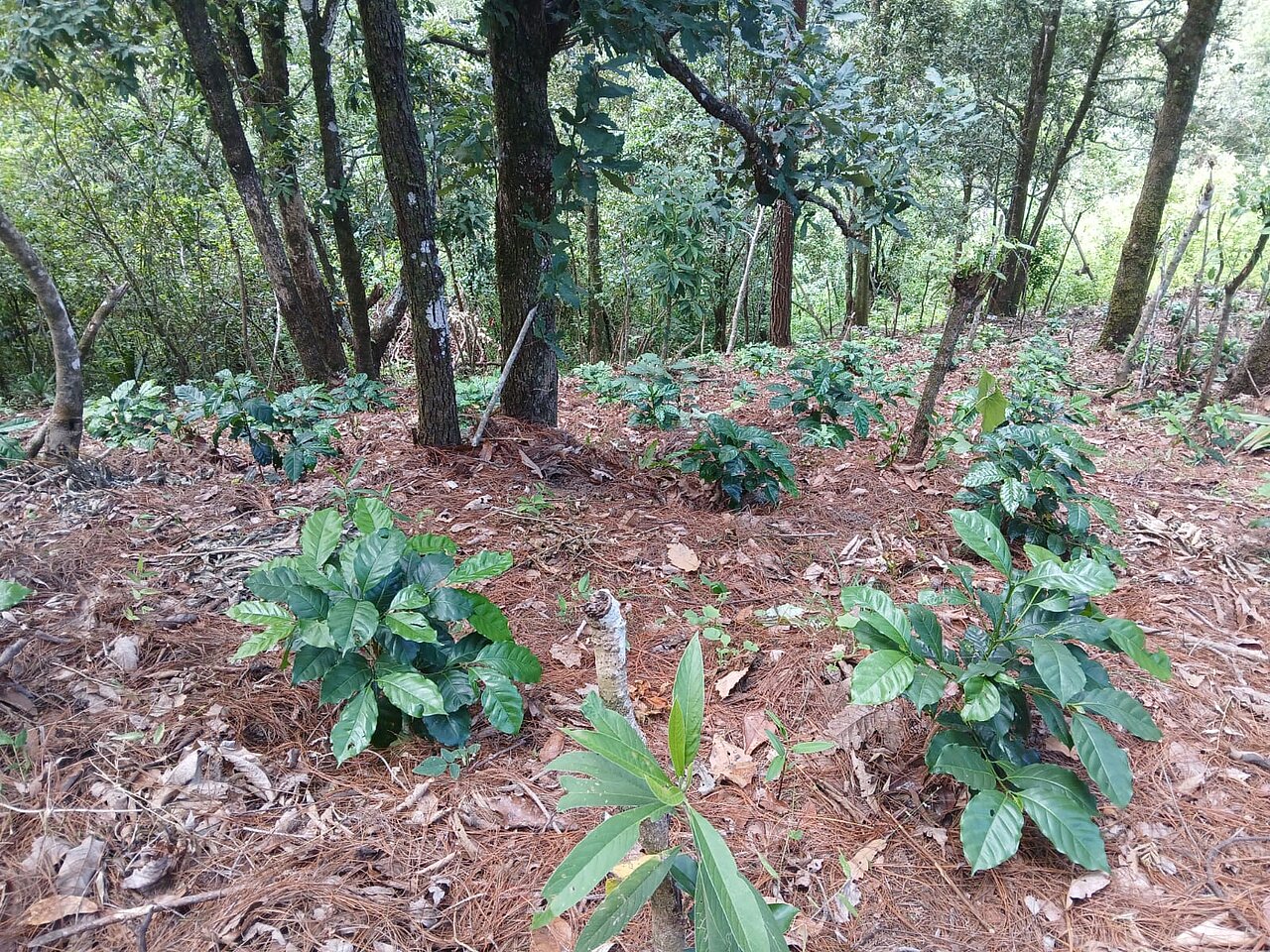
The lesson is simple: make the transformation visible, and others will feel encouraged to create change on their own land.
Fair prices: the next hurdle
Yet, caring for the land is only part of the challenge. The main obstacle is external: low financial returns. González often lacks access to markets that value his efforts with a fair price. To tackle this, he uses the diploma's network to connect with buyers who value this socio-environmental commitment. The BioFinCas project also provides broader support, such as the German consumer awareness campaign to sensitise buyers, and the initiative to share cooperative profiles directly with potential buyers in Germany.
David hopes to continue preserving his heritage, passing his knowledge, and forging connections with buyers who recognise the dedication that goes into every cup. For the farmers, coffee is heritage passed down through generations—one they want to leave intact for their children.
We want consumers to see that what we do has a meaningful impact on biodiversity. We aren't harming the life in our soil; on the contrary, we are helping it thrive so that the coffee you enjoy is a truly biodiverse cup that supports nature.
A story in every cup
Every cup of coffee directly connects us with the farmers and their land. To keep enjoying the morning coffee, producers need conditions to thrive: fair prices, access to markets, and the space to protect the biodiversity their livelihoods depend on.
At dawn, when mist still hangs in the valleys of Chiapas, David walks his grove. The coffee trees grow beneath older shade trees, their roots held by soil teeming with life. Somewhere in the undergrowth, a white-tailed deer lifts its head; insects hum over the young plants. In his hands: ripe cherries, picked one by one, bound for cups far away from this mountain.
The story behind every morning coffee begins in the earth, where it is grown.
Each of them carries a story – of hours under a burning sun, of harvests in the pouring rain, of a boy who inherited a struggling family plot at seventeen and now teaches his neighbours how to farm with nature instead of against it. The next time you have your morning cup of coffee, it’s worth remembering where its story begins: in the earth.
The link has been copied to the clipboard
Contact
IKI Office
Zukunft – Umwelt – Gesellschaft (ZUG) gGmbH
Stresemannstraße 69-71
10963 Berlin