

India
Last updated: September 2025

With a population of more than 1.4 billion, India has been a key partner country of the German International Climate Initiative (IKI) since its inception. With its growing population and innovative strength, India plays a central role in solving global challenges, for example in climate change mitigation and in achieving the development goals of the United Nations 2030 Agenda.
It is also one of the so-called megadiverse countries and is known for its extremely high level of biodiversity, as well as being home to four of the world’s 36 biodiversity hotspots. These biodiversity hotspots are defined as places where the biodiversity is particularly rich but, at the same time, severely threatened.
Interface project
All priority countries of the IKI also engage in so-called IKI interface projects, which have permanent project offices in the capital city of the respective country. Alongside their own, country-specific project commission, these interface projects are also tasked with maintaining close contact to environment and climate ministries as well as networking with other relevant ministries in the field of climate and biodiversity policy. Beyond this, the interface projects also work to network all of the IKI projects in the country and region together so as to promote synergies.
In India, the interface function is currently represented by the Indo-German Support project for Climate Action in India.
Project priorities
- The development and use of methods to measure the additional climate benefits from development programmes by the Indian government that do not have a specific climate focus;
- Promotion of cooperation between the public and private sectors to support the transition to a low-carbon economy;
- Function as an IKI interface: Promotion of dialogue on climate and biodiversity between the IKI projects in the country as well as between other actors (networking opportunities and knowledge management).
Insights into the project work
- Indo-German Cooperation on Agrivoltaics (IGCA)
- Energy Storage for Renewable Energy Integration in India (StoREin)
- Development of National Framework for Electronic People's Biodiversity Registers in India
- Restore, Conserve and Protect Forest and Tree Cover for NDC Implementation in India
- Wetlands Management for Biodiversity and Climate Protection
- India Sustainable Mobility Initiative
In a nutshell
Region: South Asia
Population: 1.45 billion (World Bank, 2024)
CO2eq emissions (incl. LUCF): 3.805 billion t (3rd rank of global top emitters) (ClimateWatch, 2022)
CO2eq emissions per capita (incl. LUCF): 2.7 t (ClimateWatch, 2022)
Total energy supply (IEA, 2023):
- 46 % Coal
- 5 % Gas
- 1 % Hydro
- 1 % Nuclear
- 2 % Wind, Solar etc.
- 20 % Biofuels / Waste
- 25 % Oil
- 20 % RE in electricity mix (5 % Wind, 6 % PV)
IKI projects in the country (last updated in August 2025)
- bilateral: 12 ongoing, 27 completed
- regional: 4 ongoing, 5 completed
- global: 12 ongoing, 44 completed
IKI partner ministries:
- Ministry of Environment, Forest and Climate Change (MoEFCC)
- Ministry of Housing and Urban Affairs (MoHUA)
- Ministry of Commerce and Industry (MoCI)
- Ministry of Power (MoP)
- Ministry of New and Renewable Energy (MNRE)
The IKI Strategy
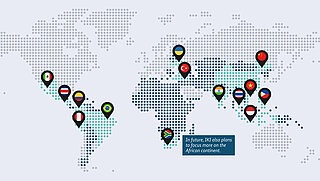
The IKI wants to maximise its impact on climate action and biodiversity conservation. To this end, it concentrates its funding activities on prioritised fields of action within the four funding areas. Another key element is the close cooperation with selected partner countries, especially with the IKI’s priority countries.




IKI partner countries
The link has been copied to the clipboard