
Save the Blue Five – Regional approach to protect migratory marine megafauna in the Southeast Pacific Region (SEPR)
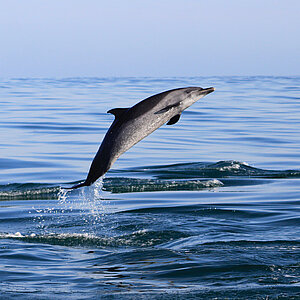
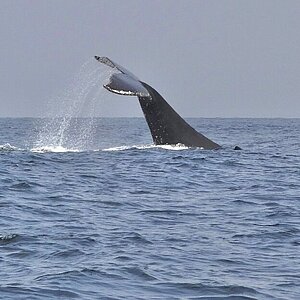
The five species groups - whales, dolphins, sharks, sea turtles and manta rays - known as the Blue Five, are of outstanding biodiversity value and are particularly vulnerable due to their dependence on transboundary habitats. The project therefore takes a regional approach to improve their chances of survival. It strengthens the policy framework for the conservation and sustainable use of marine megafauna and promotes the implementation of coordinated measures. These include coordinated transnational conservation actions, a common monitoring system, improved science-policy interfaces, public-private financing mechanisms, capacity building and awareness raising. To achieve its objectives, the project promotes regional dialogue and cooperation among countries and stakeholders within the framework of the Permanent Commission for the South Pacific, as well as cooperation between policy and science.
- Countries
- Chile, Colombia, Costa Rica, Ecuador, Panama, Peru
- IKI funding
- 19,500,000.00 €
- Included preparation phase
- 500,000.00 €
- Duration
- 02/2023 till 01/2028
- Status
- open
- Implementing organisation
- Deutsche Gesellschaft für Internationale Zusammenarbeit (GIZ) GmbH
- Political Partner
-
- Ministry of Environment (MINAM) - Peru
- Ministry of Environment and Energy (MAE) - Ecuador
- Ministry of Environment and Energy (MINAE) - Costa Rica
- Ministry of Environment and Sustainable Development (MinAmbiente) - Colombia
- Permanent Commission for the South Pacific (CPPS)
- Implementing Partner
-
- Conservation International (CI)
- MarViva Foundation
- Permanent Commission for the South Pacific (CPPS)
State of implementation/results
- Three regional action plans on marine protected areas, sharks and rays, and marine turtles of the Permanent Commission for the Southeast Pacific (CPPS) are being updated.
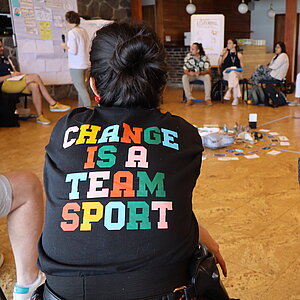
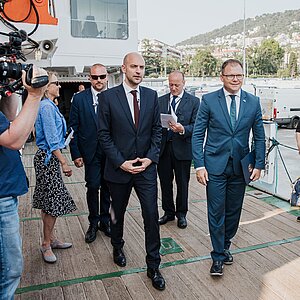
- Several side events and dialogue sessions were held at international conferences, such as the Interamerican Convention for the Protection and Conservation of Sea Turtles (Ecuador), the International Whale Commission (Perú), the 16th COP on Biological Diversity (Colombia), the Immersed in Change Conference (Costa Rica), and the UN Oceans Conference (France).
- Following the launch at UNOC-3 and the regional “30x30 in Action” conference, CPPS - during their general assembly in January 2026 - formally approved the Regional Network of Marine and Coastal Protected Areas in the Southeast Pacific (RAMPAS) to strengthen regional collaboration on protected area management involving managers responsible authorities, civil society, local communities, and youth.
- Letters of support for three GEF-sponsored projects were signed: (A) Collaboration on governance, regional corridor management, regional blue economy, and regional communications focusing on the Eastern Tropical Pacific; (b) the protection of mangroves in the Colombian Pacific; and (c) the improvement of digital tracebility for sustianable fisheries in Chile, Peru and Ecuador.
- Ten species as well as relevant methodologies and indicators for regionally standardised monitoring efforts have been defined and agreed among partner countries: Green Turtles, Hawksbill Turtles, Leatherback Turtles, Humpback Whales, Bottlenose and Pantropical Spotted Dolphins, Whale Sharks, Hammerhead Sharks, Silky Sharks and Giant Manta Rays.
- In cooperation with international and experts from Latin America, regional climate change models based on UNFCCC scenarios have been developed to better understand potential impacts on migratory marine megafauna.
- The established Southeast Pacific Blue Leadership network implements a regional mentorship programme with the Regional Youth Network for the Ocean aiming at mutual knowledge and experience exchange.
- Educational and cultural workshops and events were held in Ecuador, Peru, and Colombia to involve youth and the broader community in conservation and sustainable management practices.
- Seven private sector organisations and small-scale community businesses were selected for financial support in an award-based competition. These organisations provide in kind financial commitment and are being supported in strengthening the conservation and sustainable management of migratory marine megafauna, ensuring coastal sustainable livelihoods.
- In cooperation with the Colombian bank DAVIVIENDA, the first Colombian biodiversity bond is implemented to support sustainable blue economy projects in the Pacific. Private sector actors receive funding from the bank and technical assistance from GIZ to comply with international sustainability standards.
- In partnership with Peru’s Savings and Credit Union FEPCMAC, Peru’s first Blue Finance Mechanism was established. The goal is to improve access to sustainable financing for artisanal fishers and coastal marine tourism operators through the Municipal Savings and Credit Banks. This involves integrating blue sustainability criteria into financial portfolios that support marine conservation and responsible economic activities.
- A regional awareness-raising campaign, based on scientific data and linked to everyday actions to create simple stories, is designed and implemented. Messages contain informative facts, appeal to emotions, and call for action for all stakeholders. The campaign was broadcast in public spaces.
- An online library including a photo library and a best practice repository was built and seeks to centralise knowledge on the conservation of marine megafauna in the Southeast Pacific, facilitating access to knowledge products.
Latest Update:
10/2026
Project relations
Legend:
The link has been copied to the clipboard