
The Asia Low Carbon Buildings Transition (ALCBT)
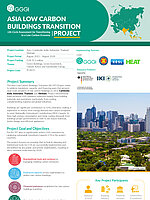
Buildings and space cooling is the main driver for the growing future electricity demand and rising GHG emissions in Asia. The project addresses regulatory, capacity and financing gaps that prevent large scale adoption of low carbon buildings. The project will develop technical and institutional capacity for city/state governments. To transform existing and new buildings towards carbon neutrality by 2050, the project will focus on enhancing capacity to achieve regional and national ambition and targets for low carbon buildings, with policy recommendations. It will establish common metrics (taxonomy/MRV system) and central registry for certified buildings. Through building certification and business model innovation, the project will try to mobilize public and private finance. To raise awareness and promote replication locally and globally, the project will share best practises and showcase successes.
- Countries
- Cambodia, India, Indonesia, Thailand, Viet Nam
- IKI funding
- 17,978,440.00 €
- Duration
- 08/2023 till 08/2028
- Status
- open
- Implementing organisation
- Global Green Growth Institute (GGGI)
- Political Partner
-
- Ministry of Construction - Viet Nam
- Ministry of Energy - Thailand
- Ministry of Housing and Urban Affairs (MoHUA) - India
- Ministry of Land Management, Urban Planning and Construction (MLMUPC) – Cambodia
- Ministry of Public Works (PU) - Indonesia
- Implementing Partner
-
- ASEAN Centre for Energy (ACE) - Indonesia
- Energy Efficiency Services Limited – EESL
- HEAT GmbH
State of implementation/results
- The project targets 6200 buildings for low-carbon assessment, support to 19.000+ people through networking and training by 2028, and mobilize EUR 140 million investment for low-carbon buildings.
- The Building Emission Assessment Tool (BEAT) was launched in June 2025, benchmarking and customization for each project country ongoing.
- Preliminary data collection from 1,200 buildings in Phnom Penh and Kandal in Cambodia completed, deep dive assessment of 75/250 buildings completed. Preliminary data collection on 1,600 buildings in Kerala, Haryana, Uttar Pradesh in India completed, deep-dive assessment for 231/300 buildings completed. In Indonesia, pilot cities Jakarta and Semarang endorsed by the government in February 25.
- Training modules developed, localized and translated into local languages. In India, 123 (30% female) master trainers, 933 (23% female) trained. In Cambodia, 27 (19% female) trainers, 52 (21% female) trained. Local training institutions engaged for Indonesia in February 2025 and Thailand in June 25.
- Regional one-stop shop (OSS) platform system requirement developed in February 2025, 2nd regional consultation on prototype in April 2025. Platform design ongoing.
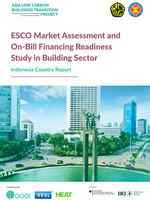
- Green financing for building sector country assessment reports prepared in January 25. Green Finance Network framework developed in May 2025.
- Policy recommendations and scenario modelling for India completed, consultations ongoing in Cambodia and Indonesia.
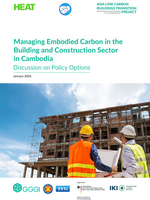
- Embodied carbon policy review in Cambodia and building taxonomy roadmap drafted in April 2025.
- Green Public Procurement (GPP) policy review and market assessment for best available technology for air conditioners completed, results presented at the ASEAN Cool Initiative Meeting in the Philippines in June 2025. Regional and national GPP Guidelines under development.
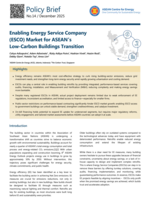
- Energy Service Company (ESCO) policy and regulatory review completed in May 2025, market assessment in Cambodia, Indonesia, and Thailand ongoing.
Latest Update:
04/2026
Project relations
Legend:
The link has been copied to the clipboard



![[Translate to English:]](/fileadmin/_processed_/a/4/csm_20250327_PhomPenh_AdobeStock_1290631159_bf56228de3.jpg)