

National adaptation plans
Prioritised field of action in the IKI funding area adaptation to the impacts of climate change (as of March 2025)

Initiated in 2010 as part of the Cancun Adaptation Framework, the NAP process aims to support developing countries, and especially the least-developed countries (LDCs), in efforts to integrate their medium- and long-term adaptation needs into existing planning processes.
The integration process is cross-sectoral and takes place at all levels of political decision-making, since adaptation is a cross-cutting issue that affects a broad spectrum of sectors and levels of government.
With the signing of the Paris Agreement, all Parties are now required to engage with the necessary processes for planning adaptation and carrying out adaptation measures. At the same time, the NAP process is also becoming increasingly important for the implementation and verification of the nationally determined contributions (NDCs) enshrined in the Paris Agreement, most of which include adaptation targets.
The NAP approach: a cross-sectoral process
The NAP process defines a comprehensive and integrated national process that establishes institutions who are intended to help all sectors and regions work together to identify current and future risks, and to set priorities for programmes and policies in such a way that resilience is increased and losses are avoided. National adaptation planning work is therefore not exclusively focused on the preparation of an additional, standalone planning document. Instead, the NAP process can be more accurately understood as a cross-sectoral, iterative coordination process that extends from political will-building and institutionalisation to the identification and prioritisation of adaptation options, and on to an implementation strategy and its verification.
More and more countries are making progress in adaptation planning and in drawing up or updating their NAPs.However, in many countries, and especially in the LDCLDCs, there is still a lack of capacity to develop and implement a complex and comprehensive adaptation planning process across institutions. In such cases, capacity-building must be promoted, innovative potential must be supported as part of a new process and specific positive examples must be created. This is the only way to achieve a paradigm shift towards climate-resilient development. This is precisely where the existing IKI portfolio comes in: yet the primary objective is not to finance individual adaptation measures, but to strengthen capacities for planning, designing, implementing and monitoring the NAP process.
The IKI as a factor for NAP process implementation
Although adaptation measures are increasingly being integrated into national strategies and sector planning, and being allotted national budgets, implementation financing remains a key demand. To ensure that the adaptation measures prioritised in the NAP process can also be implemented long-term, the IKI’s NAP process funding work focuses strongly on efforts to demonstrate the economic benefit of such adaptation.
On the one hand, this aims to support investment decision-making in relation to adaptation measures and, above all, widen the scope of such investment with the involvement of the private sector. On the other, such work should culminate in the development of a financing strategy and thereby enable access to both private and public climate finance at a national and international level.
funding volume
has been provided by the IKI for the NAP since it was founded in 2008. (as of: 03/2025)
Selected projects
- Supporting Brazil in implementing its national agenda for adaptation to climate change (ProAdapta)
- Support programme on scaling up climate ambition on land use and agriculture through NDCs and National Adaptation Plans (SCALA)
- Scaling up Community based Adaptation for Livelihoods and Ecosystems in Southern Africa (CBA-SCALE Southern Africa+)
- South-South cooperation on climate information and services – development of a platform for knowledge management and joint learning
Links
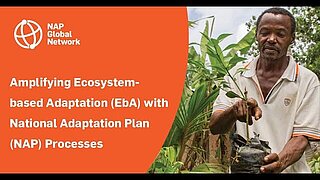
Explanation video
Funding area

The IKI Strategy
The IKI wants to maximise its impact on climate action and biodiversity conservation. To this end, it concentrates its funding activities on prioritised fields of action within the four funding areas. Another key element is the close cooperation with selected partner countries, especially with the IKI’s priority countries.
Click here for the IKI Strategy


Selected publications from IKI projects on the topic
-
![[Translate to English:] Cover Publikation "Access to Finance for Adaptation Measures"](data:image/gif;base64,R0lGODlhAQABAAAAACH5BAEKAAEALAAAAAABAAEAAAICTAEAOw==) 10/ 2024 | Tool/Open source product
10/ 2024 | Tool/Open source productAccess to Finance for Adaptation Measures at the Hyper-local Level Guide
English (PDF, 654 KB)
Spanish (PDF, 981 KB)
-
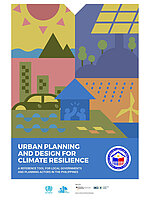
05/ 2023 | Tool/Open source product
Urban Planning and Design for Climate Resilience: A Reference Tool for Local Governments and Planning Actors in the Philippines
English (PDF, 116 MB)
![[Translate to English:] Cover Publikation "Access to Finance for Adaptation Measures"](/fileadmin/_processed_/2/8/csm_20241029_giz_Finance_Adaptation-Measures_CitiesAdapts_c365d63d79.jpg)
Further information on the topic



The link has been copied to the clipboard