Bridging Ambition and Action
How Germany’s International Climate Initiative is supporting Türkiye in the run-up to COP31
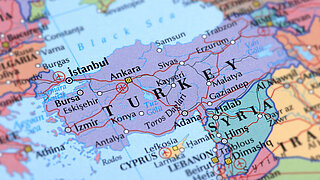
As Türkiye prepares to host this year’s UN Climate Change Conference (COP31) in Antalya, the global climate agenda is moving from high-level commitments towards concrete, real-economy implementation.
With its net-zero emissions vision for 2053 and its Nationally Determined Contribution (NDC 3.0), Türkiye is establishing an operational roadmap for sustainable development. Under NDC 3.0, the country aims to reduce its greenhouse gas (GHG) emissions by 466 Mt CO₂ eq. compared with the revised business-as-usual trajectory, thereby limiting GHG emissions to 643 Mt CO₂ eq. by 2035.
Support from Germany’s International Climate Initiative (IKI)
The International Climate Initiative’s Policy Interface project in Türkiye supports policy dialogue and technical cooperation between Germany and Türkiye in the fields of climate action and biodiversity conservation.
The IKI Policy Interface project provides direct strategic and technical support to the Directorate of Climate Change (DoCC) under the Ministry of Environment, Urbanisation and Climate Change (MoEUCC).
Through an integrated cycle of policy design, sustainable finance frameworks, carbon market readiness and ecosystem restoration, the project helps translate national climate ambition into verifiable, investable solutions ahead of COP31.
Turning national ambition into an operational action plan
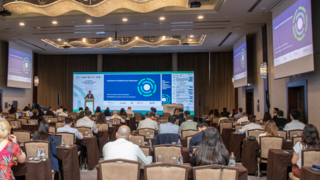
To realise COP31’s ambition of turning pledges into tangible action, climate commitments must be translated into clear, actionable blueprints that define how national targets will be put into practice across key economic sectors. To provide Türkiye with a robust, sector-specific framework to present at COP31, the IKI Policy Interface Türkiye supports the DoCC in updating two cornerstone national strategy documents:
- The Climate Change Mitigation Strategy and Action Plan (2026–2035); and
- The Climate Change Adaptation Strategy and Action Plan (2026–2035).
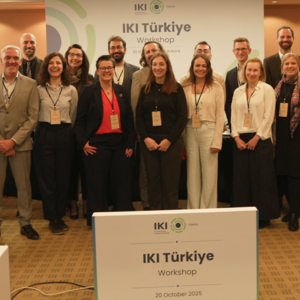
Through inclusive stakeholder consultation workshops held in Ankara with public institutions, the private sector, academia and civil society, participants reviewed and refined proposed sectoral measures, institutional responsibilities, targets and monitoring indicators. The revision process seeks to align the plans with NDC 3.0 and the national Climate Law, while taking account of the Global Goal on Adaptation in the adaptation plan. Together, the plans are intended to guide emissions reductions and strengthen climate resilience across sectors.
Alongside this work, the project supports the development of an NDC management cycle to strengthen institutional coordination and the processes for implementing, monitoring and updating national climate commitments.
Unlocking sustainable finance and capital alignment
High-level climate pledges cannot be translated into action without mobilising substantial public and private capital. In line with COP31’s focus on turning pledges into bankable investments, including through platforms such as the Presidency’s Climate Implementation Bridge (CIB), the IKI Policy Interface Türkiye project helps connect policy targets with financial markets.
The project provides technical support to the DoCC on the implementation of Türkiye’s Green Taxonomy Regulation. This includes support for adapting the EU’s Technical Screening Criteria to Türkiye’s regulatory and sectoral context and developing practical sector guidelines and an Excel-based Taxonomy Alignment Tool.
Furthermore, in collaboration with the United Nations Environment Programme (UNEP), the project facilitated Türkiye’s inaugural NDC Clinic, entitled "Translating NDC Ambition into Investment". The event brought together policymakers, financial institutions and private-sector representatives to discuss investment priorities, financing barriers and opportunities for implementing national climate commitments. Discussions also considered how project pipelines and platforms such as the Türkiye Industrial Decarbonisation Investment Platform (TIDIP) could help advance investment in industrial decarbonisation.
Driving industrial decarbonisation and carbon pricing readiness
Green industrial transformation is a key priority for maintaining trade competitiveness while curbing industrial emissions under global mechanisms such as the EU Carbon Border Adjustment Mechanism (CBAM). To strengthen industry’s readiness, the operationalisation of the Türkiye’s national Emissions Trading System and preparations for CBAM readiness are supported through Fit for Carbon Pricing project, a distinct initiative within the broader IKI Türkiye portfolio, also funded by Germany’s International Climate Initiative.
Building on Türkiye’s well-established monitoring, reporting and verification (MRV) infrastructure, the project strengthens public- and private-sector capacities for carbon pricing and industrial decarbonisation, including in the iron and steel and aluminium sectors. Economic modelling highlights the strategic importance of this transition: while relying on CBAM alone risks causing economic contraction while delivering only limited emissions reductions, introducing an aligned domestic carbon price substantially accelerates emission reductions and supports growth through clean industrial sectors.
Keeping carbon pricing revenues within Türkiye ensures that dedicated funds remain available to finance industrial transformation.
Demonstrating nature-based solutions and ecosystem resilience
Climate resilience is closely linked to the health of natural ecosystems, requiring integrated approaches that connect climate mitigation and adaptation with biodiversity conservation. In line with the Global Biodiversity Framework and the National Water Plan, targeted ecosystem restoration is being advanced through institutional cooperation with the General Directorate of Nature Conservation and National Parks under the IKI Policy Interface Türkiye project.
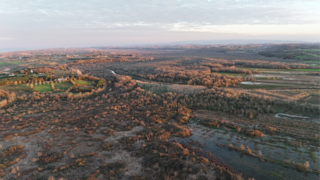
In Sakarya’s Acarlar Floodplain Forest, practical capacity-building activities have strengthened technical expertise and supported the generation of empirical evidence on how wetland restoration enhances water regulation, carbon storage and local climate adaptation. These findings provide a scalable model for nature-based solutions, which is scheduled to be presented at COP31 side events to demonstrate practical approaches to strengthening national resilience.
A cohesive foundation for implementation at COP31
As the international community gathers in Antalya, the focus will be squarely on tangible implementation and scalable delivery mechanisms. By bridging policy formulation with capital mobilisation, industrial preparedness and ecosystem restoration, the collaborative efforts across the IKI portfolio provide Türkiye with a stronger basis for implementing national climate priorities.
Together, these activities strengthen the policy frameworks, technical tools and institutional capacity needed to advance Türkiye’s climate and biodiversity priorities. As Türkiye prepares to host COP31, they illustrate how international cooperation can support the practical work of connecting national commitments with sectoral action, financing needs and ecosystem conservation.
Background information: interface projects in IKI's priority countries
In the priority countries of the International Climate Initiative (IKI), there are IKI interface projects which operate offices in the capital cities. In addition to their own country-specific project remit, the tasks of the interface projects include
- working in close cooperation with the ministries responsible for climate, energy and biodiversity and the German embassies on the ground, and
- networking all IKI projects in the country and thus promoting synergies for project work.
The interface projects are implemented by Deutsche Gesellschaft für Internationale Zusammenarbeit (GIZ).
The link has been copied to the clipboard
Contact
IKI Office
Zukunft – Umwelt – Gesellschaft (ZUG) gGmbH
Stresemannstraße 69-71
10963 Berlin
Please submit written enquiries via the contact form.