From concern to stewardship
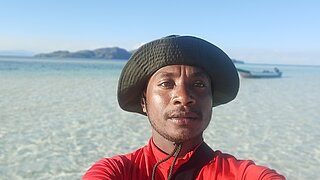
When the West Wetar Conservation Area was designated at the end of 2025, many fishers in far eastern Indonesia feared the sea would close to them. A young community member helped turn that fear into something else: a shared decision to protect the water their families have always lived off.
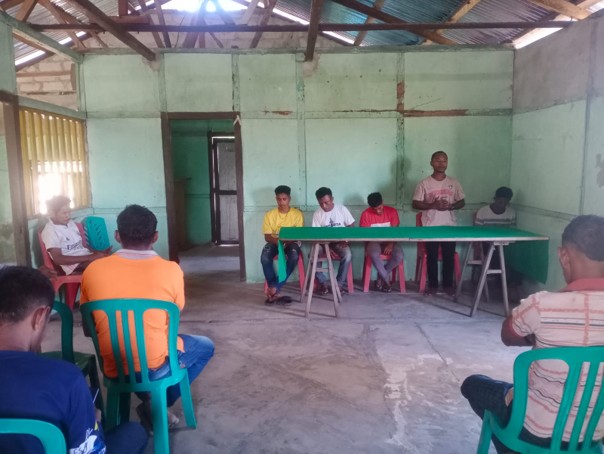
Tomi Aldian Maehen, a young member of the West Wetar community, sits with the village head, village staff, customary elders, the Village Consultative Body and community members in Telemar Village.
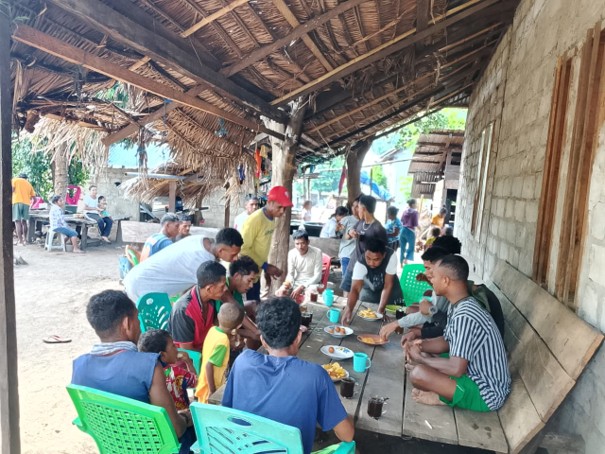
He was invited to explain something that is still new: the West Wetar Conservation Area, a stretch of sea spanning eight villages, designated at the end of 2025. It covers an area of more than 300,000 hectares – coral reefs, seagrass beds, mangroves, and the migration routes that marine species depend on. In its centre lies a core zone where fishing is not allowed, a safe space for the sea to recover.
Not everyone understood the designation at first.
In the beginning, fishers fear for their livelihoods
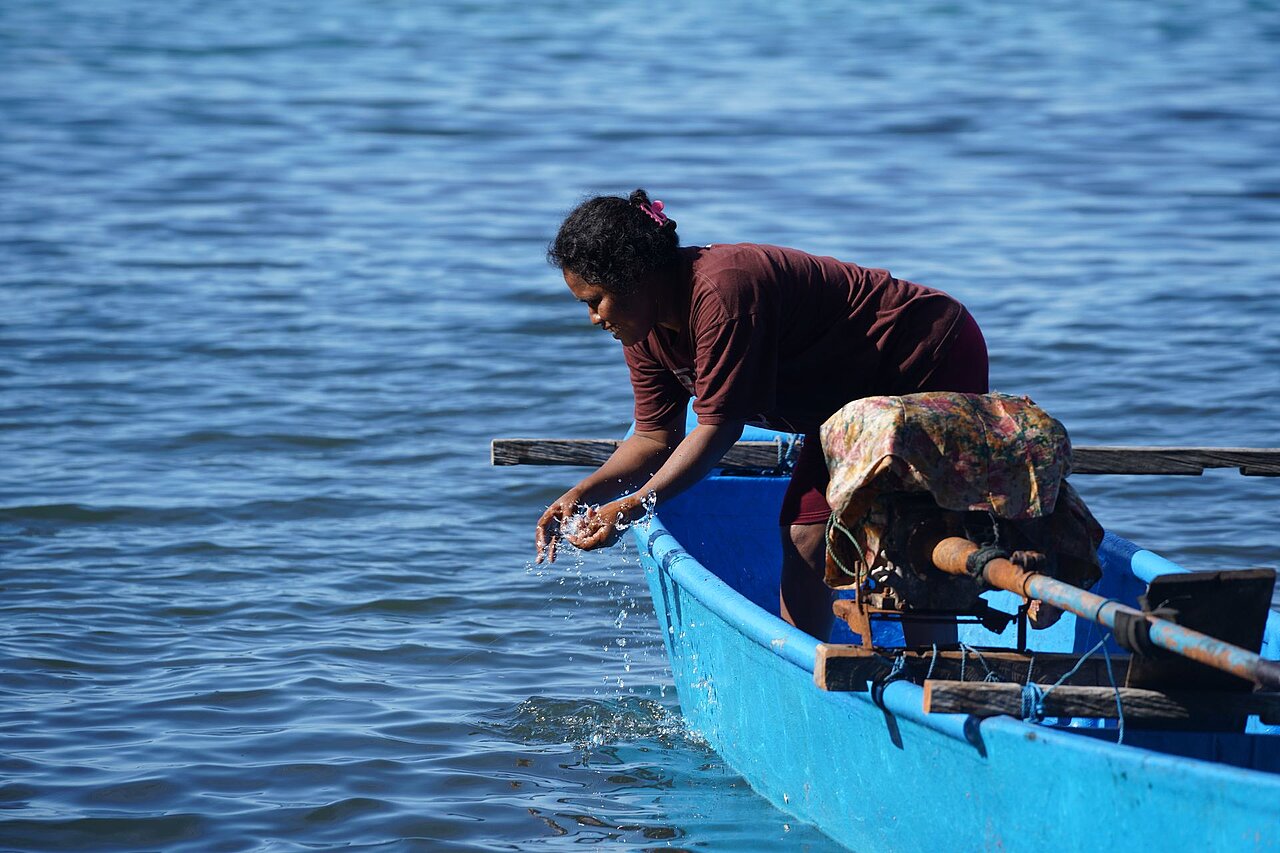
Among West Wetar community members, however, there was initial doubt. Some feared that areas traditionally belonging to local communities would become the property or responsibility of the central or regional government once designated as a conservation area.
For the fishers, the fear was more concrete: that conservation would keep them away from the sea.
Community meetings build a deeper understanding
But the mood has changed. Part of the reason was the community meetings, where people were informed about the conservation area. These were organised by the Solutions for Marine and Coastal Resilience in the Coral Triangle (SOMACORE) programme in collaboration with government partners and the organisations Konservasi Indonesia and Conservation International-Timor-Leste.
Thanks to the community meetings supported by the IKI, local residents understand the benefits of the protected area.
Pak Peter Hetharia from the Maluku Provincial Department of Marine Affairs and Fisheries confirms the importance of those meetings. Before them, he says, fishers assumed their activities would be restricted. Once the benefits and objectives were explained, communities became more enthusiastic. The process gathered community aspirations to inform the area's five-, ten- and 20-year management plans.
Germany backs a global commitment
Germany supports the SOMACORE project through its International Climate Initiative (IKI), contributing to the global pledge to place 30 per cent of the world's oceans under protection by 2030. Healthy oceans are essential to life on our planet. They are home to countless species, they provide food, and they help buffer the effects of global warming by absorbing heat and CO₂.
From conversation to local initiative
Tomi, too, took part in the meetings. He had already understood the purpose of conservation before the first one took place – and how important it was to keep making the case for protecting the sea well beyond those meetings. He uses youth gatherings, including activities of the church youth organisation Angkatan Muda GPM, as opportunities to discuss the importance of protecting the marine area. When travelling to neighbouring villages such as Ustutun, Lirang and Karbubu today, he also talks with community leaders and customary elders. His continued outreach has made a difference.
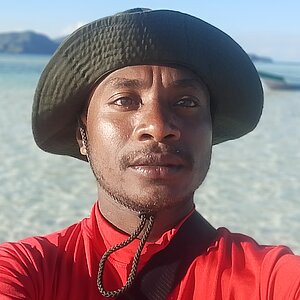
People began to realise the importance of the conservation area for supporting the economic sustainability of our marine area and marine ecosystem for our children and grandchildren.
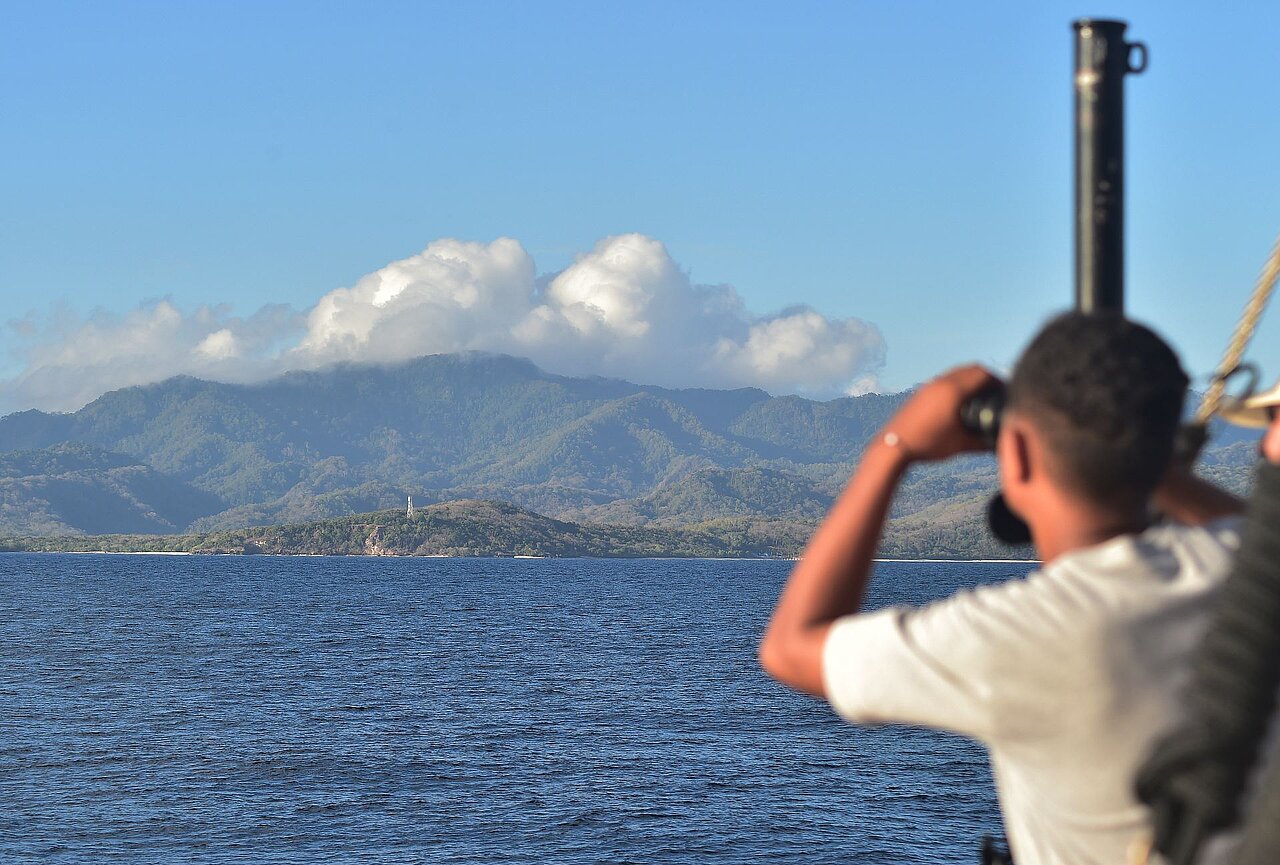
Through his commitment, he became one of its important ambassadors in the West Wetar community. But he is not alone. Pak Peter Hetharia noticed strong participation from elders, youth and women during the community meetings. Pokmawas – a community surveillance group that patrols the waters and reports illegal fishing – is made up almost 90 per cent of young people.
A surveillance group goes on patrol and reports illegal fishermen.
In addition to the community meetings, SOMACORE organises regional exchange programmes. They have given Tomi practical ideas for what could come next. After training visits to Alor and Bali he is forming a pokdarwis, a community tourism-awareness group, to help manage tourism opportunities in the village. His plan is to strengthen the group in Telemar first, then work with colleagues to establish similar groups in the other seven villages.
Protecting the sea for the next generation
Community support is beginning to take more concrete forms. After his meeting in Telemar, Tomi says he has received statements of commitment from community members, customary elders and the Village Consultative Body in support of protecting the conservation area's core zone as a refuge for marine life.
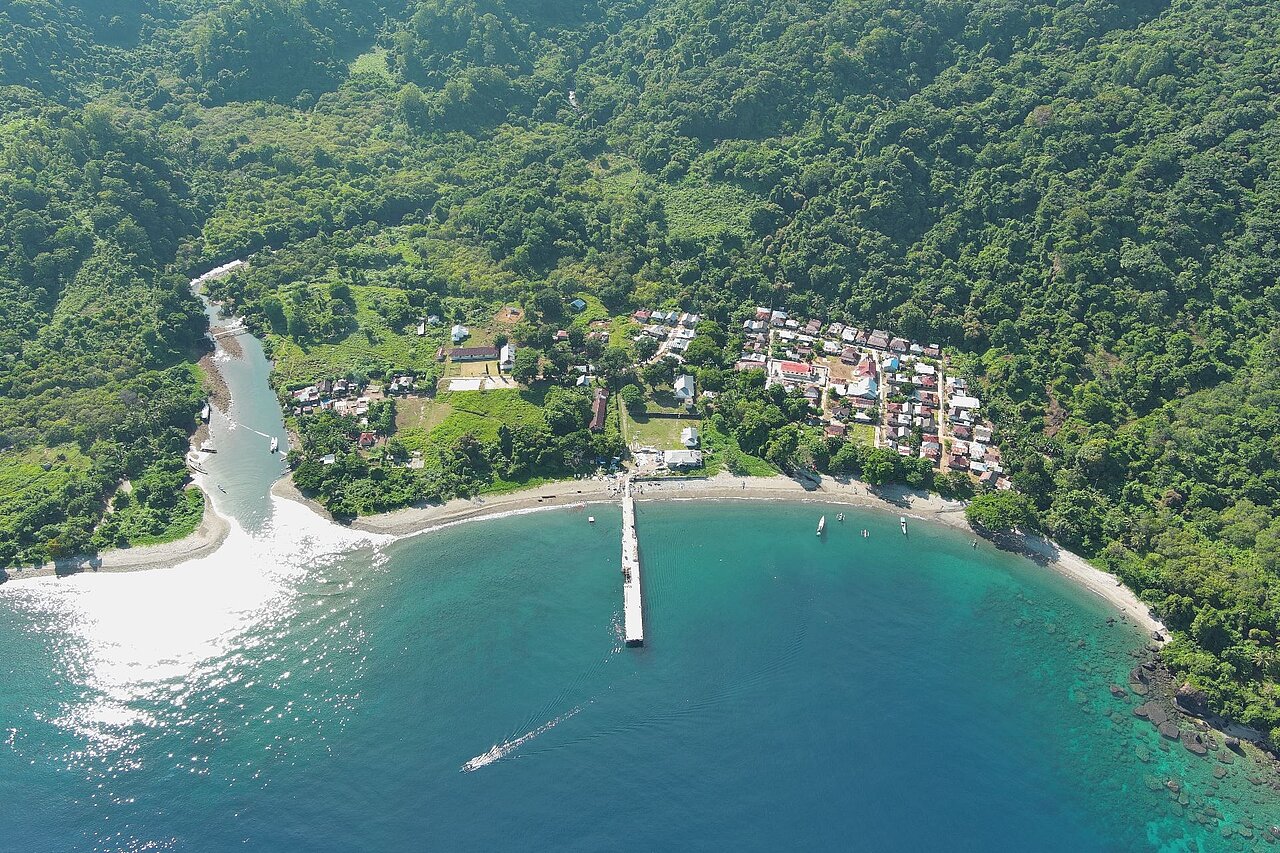
During the community meetings held under the SOMACORE programme, residents understood that damage to coral reefs and fish spawning grounds could reduce marine resources for future generations. That understanding is now guiding what happens in the water, not just on paper.
For West Wetar, conservation is a process rather than a finished achievement. The designation has created the framework. The conversations have helped communities understand it. For community members such as Tomi the work continues. His plan is simple: start in Telemar, learn what works, and take those lessons to the seven neighbouring villages.
The link has been copied to the clipboard
Contact
IKI Office
Zukunft – Umwelt – Gesellschaft (ZUG) gGmbH
Stresemannstraße 69-71
10963 Berlin
Please submit written enquiries via the contact form.