

From Protecting Bees to Biodiversity Policies
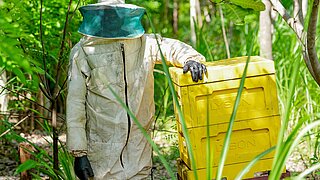
With support from the IKI, Nigeria turned biodiversity science into action by advancing policies, engaging communities and promoting pollinator protection.
Sometimes, the smallest things can set big changes in motion. A bee landing on a flower might seem like a small detail, but pollinators like bees, butterflies and bats play a vital role in sustaining entire ecosystems, as well as our food systems. In Nigeria, understanding how much we depend on pollinators helped spark a broader movement for biodiversity.
With support from the International Climate Initiative (IKI), the country transformed the findings of two landmark reports by the Intergovernmental Science-Policy Platform on Biodiversity and Ecosystem Services (IPBES) into new policies, grassroots action, and stronger community awareness regarding this topic.
Building on the priorities identified during the 2019 BES-Net Anglophone Africa Regional Trialogue, Nigeria used the IPBES Thematic Assessment on Pollinators, Pollination and Food Production and the IPBES Thematic Assessment on Land Degradation and Restoration as a foundation to guide its biodiversity management. Six examples for the important developments are:
1. Strengthening Policy for Pollinators and Pest Management
A major achievement was the development of two national strategies: the Pollinator Strategy and the Integrated Pest Management Strategy. Finalized with expert support and national review, both strategies aim to reduce harmful pesticide use, protect pollinator populations, and promote sustainable agriculture.
Validated in 2025, the strategies are now set for formal adoption and have already influenced Nigeria’s updated National Biodiversity Strategy and Action Plan (NBSAP). Ahead of their official adoption, aspects of the strategies were piloted in Benue and Kano states, where chemical pesticide use is widespread. With support from the Women Environmental Programme, 210 farmers (of which 60 women in Benue and 49 in Kano) were trained in eco-friendly practices.
2. Teaching the Next Generation About Bees and Biodiversity
Schools played a key role in spreading awareness about the importance of pollinators. World Bee Day 2021 was marked with a national art competition involving 150 primary and secondary school children, blending creativity with learning. This laid the groundwork for the creation of school pollinator clubs in partnership with the St. Catherine’s Group of Schools, an initiative aimed at embedding pollinator education more systematically into school activities and sustaining engagement on this important topic.
By 2023, the initiative expanded to include students from secondary schools and universities in Abuja. Over 300 students took part in activities focused on pollinator conservation and management, including how to protect habitats and reduce pesticide use.
3. Mapping and Monitoring Pollinators Through Science and Community Action
To better understand and protect pollinators, Nigeria undertook a wide-ranging documentation effort that combined science, data, and community involvement. Researchers extracted and preserved DNA from 100 butterfly species, 5 bee species, and 10 bat samples, building a national genetic reference bank for pollinators. Alongside this, infographics and DNA barcodes and QR codes were developed to help share knowledge and raise public awareness of key pollinator species. Field teams also identified pollinator habitats across three national parks: Old Oyo, Kainji Lake, and Cross River.
4. Promoting Practical Knowledge for Pollinator-Friendly Farming
To help farmers adopt pollinator-friendly practices, Nigeria developed an easy-to-use manual that combined scientific advice with local knowledge. Designed with rural communities in mind, the manual offers practical steps for conserving pollinators while improving farm productivity.
1,000 copies were distributed nationwide, and over 100 people, including farmers and extension agents, were trained to use and promote the manual in their communities. Developed jointly by the Ministries of Agriculture and Environment, the manual is now supporting more sustainable, biodiversity-conscious farming across the country.

5. Establishing a Demonstration Plot for Learning and Awareness
To show the value of pollinator-friendly farming in practice, a demonstration plot was set up in Kwali, Abuja, featuring 27 medicinal plants and 15 food crops that support pollinators. The plot was created through a partnership between the National Institute for Pharmaceutical Research and Development (NIPRD) and ‘Be The Help’ Foundation, a local NGO.
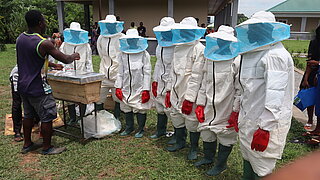
43 farmers (including 14 women) were trained on the benefits of integrating these plants into their farms and gardens, for both pollination and traditional medicine. Participants received copies of the national pollinator manual, beehives, and beekeeping tools. The training helped shift local attitudes, encouraging farmers to see bees not as pests, but as essential allies for crop production and honey.
Farmers have since shared their knowledge with others in their communities, helping spread awareness and encourage collective action for pollinator protection.
6. Mapping Land Use to Guide Conservation Priorities
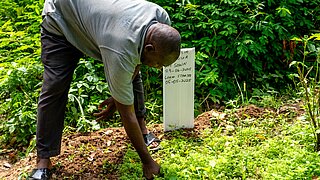
Using GIS and remote sensing, a desktop review was carried out across 22 Nigerian states to assess land cover changes and identify patterns of degradation. By analyzing vegetation indices, the study provided baseline data to support future monitoring and guide priority interventions.
The findings help to inform where conservation efforts are most needed and have been shared with local authorities, communities, and businesses to promote more sustainable, eco-friendly farming practices.
Looking Ahead: A Foundation for Nature-Positive Change
Nigeria’s experience shows how global biodiversity knowledge can drive real change when rooted in local needs and action. From national policies to school programmes and field-based monitoring, the country has taken important steps toward more sustainable land use and stronger pollinator protection.
These efforts support food systems and rural livelihoods in alignment with broader global goals for nature and people. As Nigeria continues to implement the Global Biodiversity Framework, the foundations laid through this work offer valuable momentum for what comes next.
The link has been copied to the clipboard
Contact
IKI Office
Zukunft – Umwelt – Gesellschaft (ZUG) gGmbH
Stresemannstraße 69-71
10963 Berlin
About BES-Net
The Biodiversity and Ecosystem Services Network (BES-Net) aims to build capacity and commitment for biodiversity action across the world by translating the latest Intergovernmental Science-Policy Platform on Biodiversity and Ecosystem Services (IPBES) products into action for biodiversity and conservation on the ground. BES-Net is funded by the Government of Germany (through the International Climate Initiative) and SwedBio.
Related Publications
-
 05/ 2024 | Publication types | Report
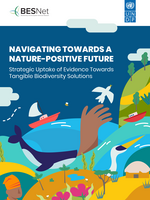
Navigating Towards a Nature-Positive Future: Strategic Uptake of Evidence Towards Tangible Biodiversity Solutions – BES Net
English (PDF, 6 MB)
![[Translate to English:] Walhai](/legacy/_processed_/d/4/csm_20210608_Walhai_Miguel_Schmitter_0106af1a48.jpg)