
Linking climate adaptation and biodiversity conservation

How can agriculture and climate adaptation work hand in hand - and protect biodiversity at the same time? The SCALA programme shows how this goal can be achieved in three regions.
The IKI-funded “Support programme on Scaling up Climate Ambition on Land Use and Agriculture” (SCALA) is helping countries draft and update national adaptation plans, strengthen the adaptation component of nationally determined contributions, and achieve greater alignment with national biodiversity strategies and action plans.
From 2021, as SCALA began working more closely with national and local stakeholders, it became apparent that, in many countries, climate solutions in agriculture are inseparable from biodiversity solutions ‒ and from the real custodians of both: local and Indigenous communities.
That is why, as SCALA enters a new phase until 2028, the programme is placing an even greater emphasis on supporting countries in aligning agrifood commitments in climate plans with those in national biodiversity strategies and action plans.
Adaptation to climate change requires a variety of solutions
Examples of how SCALA is already supporting countries to align multiple development objectives in Africa, Asia‒Pacific, and Latin America are diverse. They illustrate that there are very different approaches to tackling the consequences of climate change..
Senegal - using climate-resistant millet and groundnut varieties
SCALA is promoting nature-based solutions (NbS) to strengthen climate resilience in agriculture in Senegal, with a focus on millet, groundnut and market gardening value chains.
One key solution that emerged from the country’s system-level assessment was the use of composting units and training farmers to produce compost at different scales. For example, small-scale composting supports women farmers, while large-scale systems can support agribusiness. This helps reduce reliance on chemical fertilisers and aligns with Senegal’s climate goals to expand compost use to 20,000 hectares.
Another NbS is the use of climate-shock-tolerant varieties of millet and groundnuts to help farmers better cope with changing weather.
Nepal - strengthening the advisory services for smallholder farmers
SCALA supports adaptation by promoting climate-smart agriculture in rice, livestock, and horticulture value chains, aligned with Nepal’s Nationally Determined Contributions (NDC) and National Adaptation Plan (NAP) priorities.
The programme encourages climate-resilient practices, such as alternate wetting and drying for rice and silvopastoral systems for livestock, which help conserve biodiversity and enhance ecosystem health.
Capacity-building for provincial agricultural and veterinary centres strengthens local advisory services, enabling smallholder farmers to adopt climate-smart, biodiversity-friendly practices that improve resilience and food security.
Colombia - rediscovering traditional knowledge and using it for climate change adaptation
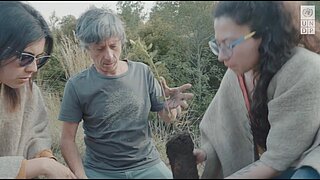
SCALA is supporting the Wayuu people in Guajira, Colombia – in the face of increasingly harsh climate impacts related to drought and flooding – to rediscover traditional knowledge, embrace innovation and become more climate resilient and food secure.
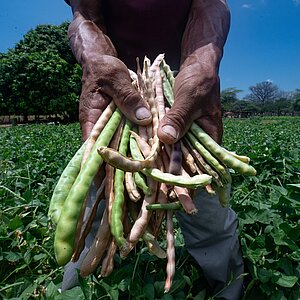
This is exemplified by a focus on cultivating nutritious and agrobiodiverse species such as the drought- and flood-resistant Guajiro bean, a potent cultural symbol of food security and resilience for the Wayuu people.
SCALA has also established four Community Laboratories for Climate Action in the Sumapaz region of Colombia to implement and scale up adaptation and conservation models specific to the biodiversity of the landscapes they operate in. The laboratories have worked to rescue community knowledge of 15 traditional agricultural practices that are crucial to strengthening climate change adaptation across the region.
About SCALA´s approach
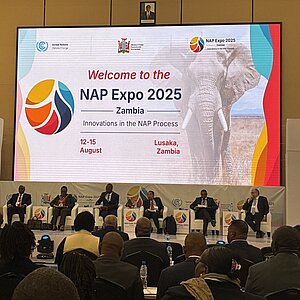
With proposed new adaptation indicators to achieve the Paris Agreement’s global goal on adaptation discussed at the June 2025 meeting of the UN Framework Convention on Climate Change’s subsidiary bodies (SB62), SCALA is well placed to help countries take more concrete actions on adaptation.
Indeed, as part of its NAP support, the programme is already working with Egypt and other countries in aligning their NAP planning with these proposed new indicators.
Julia Wolf, FAO global coordinator of SCALA, sums up SCALA’s approach by saying: “For FAO and UNDP, adaptation to climate change and protection of nature and biodiversity are fundamental to achieving food security and resilient livelihoods. Strengthening agrifood systems is not only key to withstanding climate impacts ‒ it is central to building a more sustainable and equitable future for all.”
The SCALA programme is co-led by the Food and Agriculture Organization of the United Nations (FAO) and the United Nations Development Programme (UNDP). You can find the full version of this article on the FAO and UNDP websites.
The link has been copied to the clipboard
Contact
IKI Office
Zukunft – Umwelt – Gesellschaft (ZUG) gGmbH
Stresemannstraße 69-71
10963 Berlin
Funding priority
IKI Strategy
The IKI aims to achieve maximum impact for the protection of the climate and biodiversity. To this end, it concentrates its funding activities on prioritised fields of action within the four funding areas. Another key element is close cooperation with selected partner countries, in particular with the IKI's priority countries.