
Support programme on scaling up climate ambition on land use and agriculture through NDCs and National Adaptation Plans (SCALA)
With climate change threatening the agriculture sectors, livelihoods and food security, there is an urgent need for scaled action to cope with climate-related impacts. In response to that, SCALA supports 12 countries in Africa, Asia and Latin America to both build adaptive capacity and to implement low emission priorities in agriculture and land use. The programme uses a multi-stakeholder approach, harnessing strong engagement from the private sector and key national institutions. National activities focus on strengthening policies, appraising and adopting innovative approaches, as well as removing key barriers related to information gaps, governance, finance, gender mainstreaming and integrated monitoring and reporting. The ultimate goal is for countries to turn agricultural related priorities laid out in their National Adaptation Plans (NAPs) and Nationally Determined Contributions (NDCs) into action.
- Countries
- Argentina, Cambodia, Colombia, Costa Rica, Ivory Coast, Egypt, Ethiopia, Mongolia, Nepal, Senegal, Thailand, Uganda
- IKI funding
- 26,000,000.00 €
- Duration
- 11/2019 till 12/2028
- Status
- open
- Implementing organisation
- United Nations Development Programme (UNDP)
- Political Partner
-
- Ministries of Agriculture and Rural Equipement - Senegal
- Ministries of Food, Agriculture and Light Industry - Mongolia
- Ministry for Environment and Sustainable Development (MEDD) - Senegal
- Ministry of Agriculture, Animal Industry and Fisheries - Uganda
- Ministry of Agriculture, Forestry and Fisheries - Cambodia
- Ministry of Agriculture, Livestock and Fisheries (MAGyP) - Argentina
- Ministry of Agriculture & Land Reclamation - Egypt
- Ministry of Agriculture and Cooperatives - Thailand
- Ministry of Agriculture and Livestock - Costa Rica
- Ministry of Agriculture and Livestock Development - Nepal
- Ministry of Agriculture and Natural Resources - Ethiopia
- Ministry of Agriculture and Rural Development - Colombia
- Ministry of Agriculture and Rural Development - Cote d 'Ivoire
- Ministry of Environment, Forest and Climate Change (MEFCC) – Ethiopia*
- Ministry of Environment (MoE) - Cambodia
- Ministry of Environment and Energy (MINAE) - Costa Rica
- Ministry of Environment and Sustainable Development (MinAmbiente) - Colombia
- Ministry of Environment and Sustainable Development - Argentina*
- Ministry of Environment and Sustainable Development - Côte d’Ivoire
- Ministry of Environment and Tourism – Mongolia; Ministry of Environment MoE - Egypt; Ministry of Forests and Environment - Nepal; Ministry of Water and Environment - Uganda; Office of Natural Resources and Environmental Policy and Planning - ONEP - Thailand; Secretariat of Agriculture, Livestock and Fisheries - Argentina; Undersecretariat of Environment and Sustainable Development - Argentina
- Implementing Partner
-
- Food and Agriculture Organization of the United Nations (FAO)
State of implementation/results
- Outcome 1: Strengthening the evidence base for transformative climate action
- SCALA supports countries in integrating transformative climate action into national plans and in strengthening capacities for evidence-based decision-making. All countries conduct systems-level assessments to fill information gaps for agriculture priorities and financing strategies.
- Senegal: Prioritization of agroecological practices for adaptation, resilience, and carbon storage in millet, groundnut, and vegetable gardening systems in line with NDC targets.
- Colombia: 32 risk and vulnerability assessments in agricultural subsectors; 15 traditional adaptation practices of Indigenous Peoples and local communities documented.
- Cambodia: Strategies developed to enhance the resilience of smallholder farmers and communities, focusing on sustainable, climate-resilient livestock systems and gender-sensitive, profitable value chains; identification of forest-risk commodities such as cashew and cassava.
- SCALA supports countries in integrating transformative climate action into national plans and in strengthening capacities for evidence-based decision-making. All countries conduct systems-level assessments to fill information gaps for agriculture priorities and financing strategies.
- Outcome 2: Strengthening governance and integration of agriculture and land-use priorities
- SCALA strengthens governance mechanisms by promoting stakeholder engagement and enabling institutions responsible for implementing Nationally Determined Contributions (NDCs) and National Adaptation Plans (NAPs) to incorporate agriculture and land-use priorities into planning, budgeting, monitoring, and reporting. Examples include:
- NAP and NDC 3.0 development: Support for preparation and submission of NDC 3.0 in Cambodia, Colombia, Costa Rica, Côte d’Ivoire, Ethiopia, Mongolia, Nepal, and Thailand, as well as Mongolia’s first NAP, through inclusive consultations, technical and financial assistance, and capacity-building for agriculture and livestock targets.
- Integration into national plans: Updating the CCPAP and aligning with NDC 3.0 (Cambodia); integrating climate change into the Agriculture Development Strategy (Nepal); contributions to NBSAP, 7th National Assessment Report (Mongolia) and Long-Term Strategies for agriculture (Senegal, Uganda); integration of gender and social aspects into CCAPA (Thailand).
- Institutional and technical strengthening: Trainings for planners to integrate NDC/NAP priorities at local level (Ethiopia), gender-responsive climate budgeting (Mongolia), capacity-building for climate-resilient agriculture (Nepal), Agroclimatic Peasant Promotion School for community leaders (Colombia).
- Monitoring & Evaluation: NDC tracking system (Senegal), M&E frameworks for agriculture and water sectors (Egypt), support for BTR preparation, review and submission (Cambodia, Côte d’Ivoire, Nepal, Senegal), Tier 2 emission calculations (Argentina), agriculture statistics database for UNFCCC reporting (Cambodia).
- Policy coherence: AI-driven analyses of alignment between NDC3.0, NBSAP, and NAP targets to strengthen coherence across Rio Conventions (Cambodia, Egypt, Mongolia, Nepal, Thailand).
- SCALA strengthens governance mechanisms by promoting stakeholder engagement and enabling institutions responsible for implementing Nationally Determined Contributions (NDCs) and National Adaptation Plans (NAPs) to incorporate agriculture and land-use priorities into planning, budgeting, monitoring, and reporting. Examples include:
- Outcome 3: Promoting private sector engagement in climate action
- SCALA supports countries in promoting private sector investment in agriculture and land use and building new alliances for implementing priority climate actions. Examples include:
- Business Cases: Identification of climate-smart investment opportunities in cashew and cassava value chains (Cambodia, Côte d’Ivoire); feasibility studies on carbon offsets for sustainable forest management (Cambodia); economic appraisals of transformative solutions in livestock and dairy value chains (Egypt) and integrated livestock, cocoa, and cassava systems (Uganda); development of climate-smart business plans and Common Interest Groups (Ethiopia); identification of high-potential business cases for private climate investments (Uganda).
- Pilots: Scaling pilots for certification of deforestation-free beef (Costa Rica) and climate-adapted agriculture (Colombia); pilot Payments for Ecosystem Services mechanisms to incentivize and de-risk soil carbon sequestration (Costa Rica); climate-resilient livestock farms and nature-based agriculture interventions to demonstrate scalable approaches (Nepal).
- Project Concepts: Support for sustainable livestock project in Arenal-Norte Huetar Conservation Area (Costa Rica, US$5.8 million), multifunctional landscape restoration for peacebuilding (Colombia, €25 million), strengthening resilience of vulnerable communities (Senegal, LDCF), and accelerating transition to a nature-positive economy (Costa Rica, US$5.4 million).
- SCALA Private Sector Engagement Facility (PSEF): Publication of feasibility and market analyses for compost (Grenada) and sustainably grown papaya (Maldives). Results continue to be leveraged for financing, policy development, and private sector engagement.
- SCALA supports countries in promoting private sector investment in agriculture and land use and building new alliances for implementing priority climate actions. Examples include:
- SCALA-organised events:
- October 2025: Participation in three side events and technical sessions on transformational adaptation in agrifood systems and local indigenous action at the 9th Asia Pacific Adaptation Network Forum in Bangkok.
- October 2025: SCALA was presented during a presentation on agrifood systems, NDC3.0, and COP30 at the World Food Forum Youth Assembly Session on Agrifood Systems.
- October 2025: SCALA’s work on private sector engagement and scalable climate solutions in Colombia and Costa Rica was showcased at the Scaling Week for Impact in Latin America and the Caribbean, organized under the CGIAR Scaling for Impact initiative.
- November 2025: SCALA organized a virtual side event on Advancing Climate Action in Agrifood Systems through National Adaptation Plans at COP30, launching the flagship report Agrifood systems in National Adaptation Plans: A global analysis. SCALA was also highlighted by high-level representatives of Uganda and Cambodia during the side event From Farm & Food to Future: Driving Climate Action through NDC3.0 at the NDC3.0 Partnership Pavilion.
- November 2025: Participation in a technical workshop on cross-linkages among food systems actors and aligning food systems in NAP and NDC, presenting SCALA’s approach from planning to implementation.
- December 2025: Organized webinar Shaping Climate Futures: Gender and Just Transition pathways after COP30.
Latest Update:
10/2026
Further links
- Article: Implementing SHARP+ to foster transformative climate actions in Uganda' cattle corridor
- Video: 3 ways to transform the agriculture sector in Senegal
- Video: 3 ways Uganda will scale up climate action
- Article: Egypt scales up climate adaptation actions of its agriculture, water and agrifood sectors
- Video: How Ethiopian farmers are adapting to climate change
- Web Story: Mainstreaming Gender Equality into budgeting and planning processes for climate action
- Web Story: Colombia paves the way from adaptation planning to local implementation in five agricutltural sub- sectors
- Article: Uganda’s approach to reporting climate actions from all sectors
- Article: Thailand focuses on climate-smart agriculture to transform its climate actio
- Article: Mission critical: bridging the gap between business and national climate plans
- SCALA Private Sector Engagement Facility Brief
- FAO Press Release
- Video : SCALA in Nepal
- Publication: Private sector mapping, outreach, and engagement in climate-responsive agrifood systems SCALA private sector engagement guidance series, March 2023
- Web story: Team Splicing from Mongolia wins the SCALA Hackathon for Asia and the Pacific
- Web story: Nepal pursues a locally led adaptation approach to implement climate plans
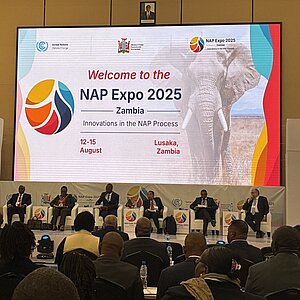
- Web story: Accelerating climate action and adaptation strategies at NAP Expo 2023
- Web story: An inside look at the scoping mission in Oromia and Harari Regional States of Ethiopia
- Web story: How can we accelerate NDC implementation? Three takeaways from Berlin
- Web story: SCALA supports Egypt with integrating agriculture into the National Adaptation Plan
- Training Modules: Addressing agriculture in National Adaptation Plans
- Web story: Celebrating women’s leadership in climate action
- Web story: Sowing resilience: how Colombia’s Indigenous People adapt to climate change
- Video: SCALA in Cote d`Ivoire
- Video: How Costa Rica plans to go carbon neutral
- Video: 3 ways Egypt is building a resilient agriculture sector
- Video: 3 ways Mongolia is transforming its farming and livestock sectors
- Published article on International Women’s Day
- Video: How the private sector can contribute to Cambodia’s climate action
- Published article on private sector engagement
- Video: 5 ways Thailand will transform its agriculture and land use sectors
- UNDP Press Release
- Article: Joining hands with businesses to scale up climate resilient agriculture
- Article: When you think farmer – think female!
- Twitter-Account
- Article: Strengthening transformative approaches in Senegal’s climate action plans
- Article: Uganda identifies barriers, solutions, and investment opportunities for gender-responsive agri-food value chains in the cattle corridor
- Article: Costa Rica prioritizes transformative climate practices in its agri-food chains
- Article: Cambodia strengthens climate action coordination with ministries, private sector and community-based organizations
- Article: Mongolia prioritizes adaptation and mitigation goals on livestock, animal husbandry and arable farming
- Article: COP26 confirms need for increased ambition on public and private finance in the agriculture and land use sectors
- Article: How to advocate for gender equality in the response to climate change
- Article: The climate-nutrition-agrifood system nexus in Uganda
- Article: Ethiopia enhances irrigation, watershed and pastureland management to translate climate plans into actionable climate solutions
- SCALA Technical Facility Webpages
Project relations
Legend:
The link has been copied to the clipboard