
Marine conservation in a changing ocean
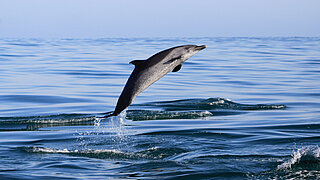
The IKI funded Save the ‘Blue Five project’ is building the scientific foundation to prepare for the conservation challenges ahead in the Southeast Pacific.
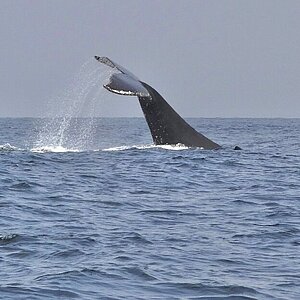
The Southeast Pacific is home to some of the world's most remarkable marine wildlife. Humpback whales migrate thousands of kilometers between feeding and breeding grounds, sea turtles depend on coastal habitats that span national borders, and highly migratory sharks and rays move across vast ocean corridors. At the same time, the ocean these species depend on is changing rapidly. Rising temperatures, declining oxygen levels, changing ocean currents and shifting food webs are beginning to reshape marine ecosystems in ways that remain difficult to predict.
These changes raise an important question: how can species be protected if the habitats and migration routes they depend on are shifting?
Species on the move
The Southeast Pacific—stretching from Costa Rica to Chile and extending into international waters—is one of the world's most productive marine regions. Its ocean currents, seasonal upwellings and rich marine ecosystems support rich populations of whales, dolphins, sea turtles, sharks and rays, many of which migrate across multiple national jurisdictions during their life cycles.
Evidence compiled through the project's climate change assessment suggests that these changes may affect species in very different ways. Humpback whales are likely to experience changes in feeding conditions and migration patterns as prey distributions shift. Sea turtles face growing risks from warming nesting beaches and the loss of critical coastal habitats. Sharks and rays encounter expanding low-oxygen zones that compress available habitat and increase interactions with fisheries. Dolphins are also likely to respond to changing oceanographic conditions and shifts in prey availability. The implications of these climate-related impacts extend beyond the species themselves. As marine megafauna change where they feed, breed or migrate, their influence on marine food webs, coastal economies and cultural values are also likely to shift.
Building the scientific foundation for future marine conservation
Understanding future risks requires more than observing present-day changes. Furthermore it is essential to identify where important habitats may persist, emerge or decline in the future.
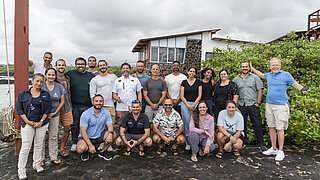
To help answer this question, the ‘Save the Blue Five’ project which is funded by the International Climate Initiative (IKI) has brought together scientists and expert knowledge from more than 20 collaborators, including climate modelers and marine species specialists from around the world. Together, they are developing climate-informed species distribution models that combine biological observations, climate projections and high-resolution oceanographic information.
The modeling effort draws from a large regional compilation of marine megafauna occurrence data assembled for the project, including tens of thousands of species records spanning whale sharks, sea turtles, sharks, dolphins and whales. These data are being integrated with climate projections and oceanographic variables to better understand how suitable habitats may shift under future climate scenarios.
The project, that is implemented by the Permanent Commission for the South Pacific (CPPS), Deutsche Gesellschaft für International Zusammenarbeit (GIZ) GmbH, Conservation International (CI), MarViva Foundation, is also developing interactive tools and visualization platforms that allow partners to explore climate and biodiversity information in a more open, transparent and accessible way.
This pioneer work done by our partners from CI and experts from the University of Santa Barbara help translate complex scientific analyses into information that governments, regional organizations and conservation practitioners can use to support planning and decision-making for marine management.
From science to decision-making
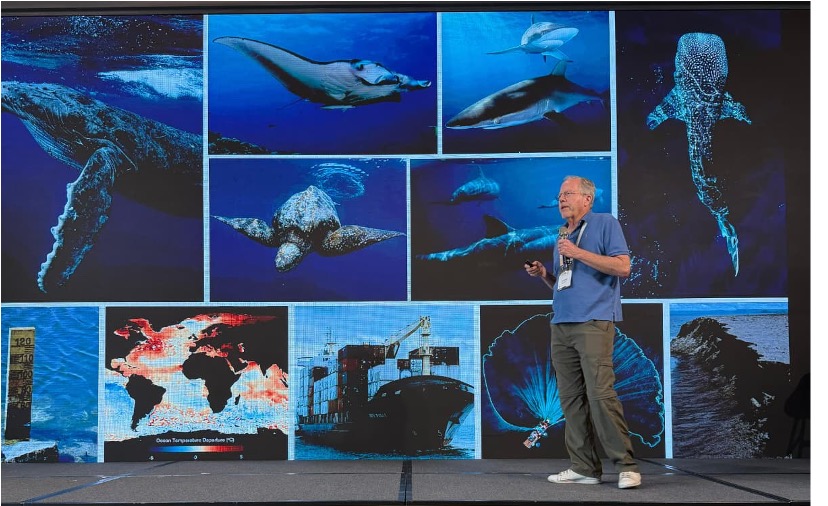
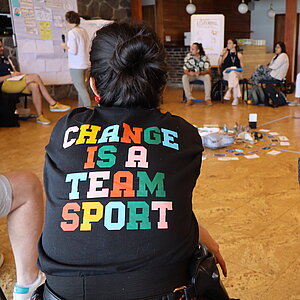
A key objective of Save the Blue Five is to ensure that scientific knowledge can support real-world conservation action. Through workshops, technical exchanges and regional collaboration, scientists, modelers, government representatives and conservation partners are working together to translate climate information into practical applications for marine biodiversity conservation.
Rather than providing fixed predictions, the scientific outputs developed through Save the Blue Five offers projections that can help partners explore possible future changes and consider where adaptation may be needed.
For example, projected shifts in suitable habitat, migration routes and areas of high species importance can help managers review whether existing marine protected areas and management plans remain aligned with future ecological conditions.
They can also inform more adaptive approaches, such as periodically updating conservation priorities, adjusting management measures as new information becomes available, and identifying ocean areas that may become more important for marine megafauna over time.
At the regional level, this information can support action plans and policy discussions, including those coordinated through institutions such as CPPS, by bringing a clearer climate change lens into marine conservation planning.
Looking ahead
The scientific analyses are now moving into the model validation and refinement phase, helping establish a stronger foundation for climate-informed marine conservation in the Southeast Pacific.
Over the coming months, Save the Blue Five will be translating these technical analyses into clear, practical briefs and resources that can support countries, regional organizations and conservation practitioners in planning for climate change.
The lesson emerging from the project is clear: protecting marine biodiversity in a changing climate requires understanding not only where species are today, but where climate change may take them tomorrow.
The link has been copied to the clipboard
Contact
IKI Office
Zukunft – Umwelt – Gesellschaft (ZUG) gGmbH
Stresemannstraße 69-71
10963 Berlin