
Mitigating industrial emissions in Indonesia
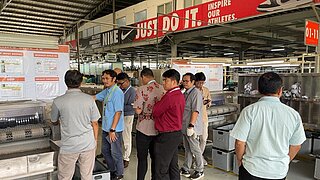
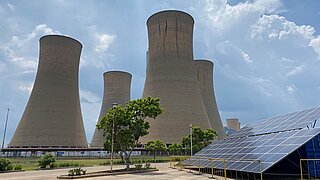
The SETI project is supporting the Indonesian industry to mitigate emissions through energy efficiency and the implementation of renewable energy.
Decarbonising industry is one of the most critical levers globally for reducing emissions of climate-harmful gases. In Indonesia, the International Climate Initiative (IKI) is supporting this process through the ‘Sustainable Energy Transition in Indonesia’ (SETI) project.
The project aims to reduce greenhouse gas emissions caused by the use of fossil fuels in businesses by promoting renewable energy and energy efficiency measures. It combines training programmes to build capacity with technical support, including energy audits and advisory services to help companies implement decarbonisation measures.
Training courses provide useful knowledge
More than 180 individuals from Indonesian businesses have participated in the various training programmes offered so far. Topics covered include energy transition strategies, technology exploration, investments in energy efficiency and renewable energy, as well as measurement and verification. Participants highlighted the benefits of the programme.
I gained a better understanding of technologies applicable to our energy transition process^.
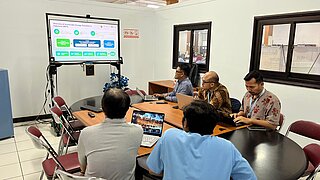
SETI’s roles in capacity development, matchmaking, and energy audits are crucial for us, helping identify technology providers and recommendations that contribute directly to energy savings.
Building the Industrial Energy Lab
Through the Industrial Energy Lab, the SETI project provides professional support to Indonesian companies. In its first year (2025), it assisted 14 companies with energy audits, pre-feasibility studies for potential measures, and project development for energy efficiency and renewable energy systems. For example, the project assessed the economic potential of a industrial rooftop solar installation and identified potential barriers to implementation.
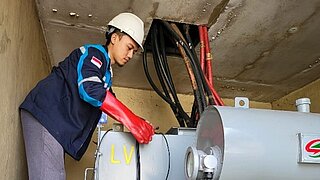
Overall, the SETI project conducted five industrial energy audits in energy-intensive sectors, identifying an emission mitigation potential of up to 21,706 tCO₂e (carbon dioxide equivalent) per year.
Through the energy audit conducted by SETI, we identified previously unrecognised opportunities to improve boiler efficiency, which are expected to significantly reduce the company's energy costs.
To accelerate the adoption of energy efficiency and renewable energy solutions, the project also supports the establishment of a Sustainable Energy Network (SEN). This network fosters collaboration, knowledge exchange, and technical support among industry stakeholders. In partnership with Indonesia’s Directorate General of New, Renewable Energy, and Energy Conservation (DJ EBTKE) under the Ministry of Energy and Mineral Resources, the SETI project developed an online catalogue of low-carbon technologies and tested it in a pilot project to identify suitable technologies and providers for high-efficiency appliances.
Advisory that makes an impact
By April 2026, four companies had implemented energy efficiency measures or adopted renewable energy solutions based on SETI’s audit recommendations, resulting in mitigated greenhouse gas emissions. The savings achieved are as follows:
- Pulp and paper company in Banten: energy savings of 2.34 million kWh per year, cost savings of €61,920 per year and a reduction in CO₂ emissions of 1,107.63 tonnes per year.
- Footwear manufacturer in Sukabumi, West Java: energy savings of 2.76 million kWh/year, cost savings of €134,400/year and a reduction in CO₂ emissions of 2,405.11 tonnes/year.
- Footwear manufacturer in Sukabumi, West Java: Energy savings of 8,246,001 kWh/year, cost savings of €365,760/year and a reduction in CO₂ emissions of 6,111 tonnes/year.
- Footwear manufacturer in Majalengka, West Java: Energy savings of 1,331,090 kWh/year, cost savings of €66,240/year and a reduction in CO₂ emissions of 1,034.55 tonnes/year.
The path forward
The activities of the SETI project demonstrate that industrial decarbonisation can be accelerated through a combination of capacity building and professional advisory services. The positive pilot results serve as concrete examples of a sustainable energy transition, enabling other business leaders to replicate these efforts on a larger scale.
Growing demand for renewable energy and energy efficiency, pressure from export markets, volatile global energy prices, and national solar energy targets are driving momentum for expansion.
The SETI project is expanding its support through sustainable energy networks and new pilot initiatives. Around 60 companies have already registered with relevant energy profiles, decarbonisation goals, commitments to sustainable business practices, and demonstrated financial readiness to accelerate the decarbonisation of Indonesia’s industry.
The link has been copied to the clipboard
Contact
IKI Office
Zukunft – Umwelt – Gesellschaft (ZUG) gGmbH
Stresemannstraße 69-71
10963 Berlin