
Protecting Indonesia’s peatlands
Education, sustainable agriculture, and smart planning demonstrate how effective climate action and improved livelihoods go hand in hand.
In the past, a farmer in the village of Baru in South Sumatra could harvest rice once a year. Today, they harvest twice a year, and sometimes even three times. In addition, the village community produces organic fertiliser and sells honey. This example shows that nature conservation and economic development can be successfully combined. In this case, where Germany’s International Climate Initiative (IKI) has paved the way with its Peat Impacts project, peatlands play a key role.
Peatlands as partners in the fight against climate change
Indonesia’s carbon-rich peatlands are vital natural defences against climate change, yet they face constant pressure from drainage and recurring fires. To tackle these challenges the IKI has bridged the gap between village-level action, field science, and government policy to keep these vital ecosystems intact.
By connecting local restoration efforts with stronger governance and scalable livelihood models, the project offers an actionable model for climate action that responds directly to local development needs and national commitments.
Classrooms and digital networks: guarding peatlands for the future
Long-term environmental protection relies heavily on building early awareness and providing communities with open access to data. IKI´s Peat-IMPACTS project took a dual approach by introducing peatland conservation to both local schools and global digital spaces, ensuring that knowledge management and dissemination reach across generations.
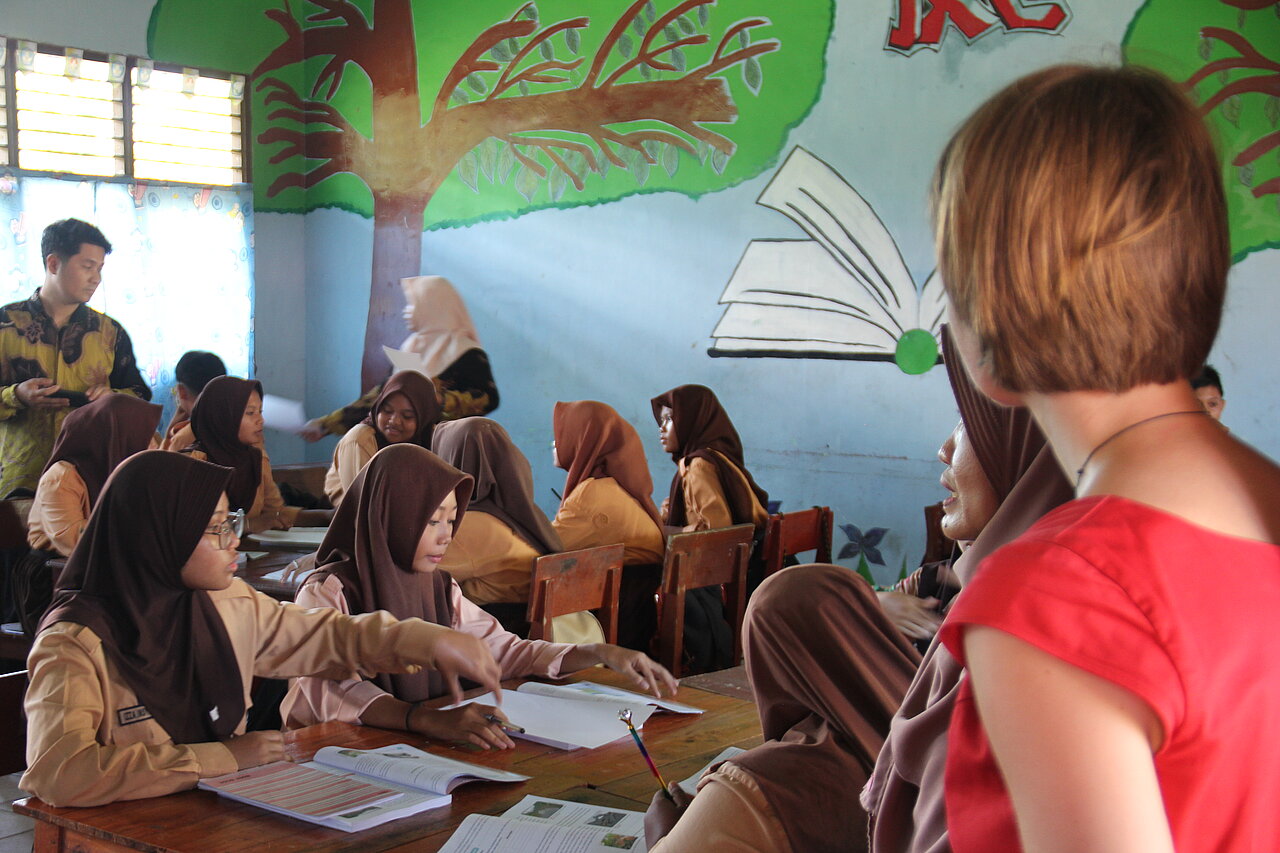
Collaborating with the South Sumatra Watershed Forum and the Peatland and Mangrove Restoration Agency (BRGM), the project developed a tailored, local peatland curriculum.
This educational framework has already been successfully implemented in 1,530 primary schools across Ogan Komering Ilir (OKI), Banyuasin, and Kubu Raya. It builds a fundamental understanding of peat ecosystems from an early age, working within local government authority to create lasting educational change.
On the digital front, the project launched WikiGambut, an open-source, collaborative knowledge management platform designed to centralize, synthesize, and share research on peat ecosystems. The platform has engaged over 568 volunteer contributors from diverse backgrounds and recorded more than 154,500 visits during its core monitoring period between January 2020 and December 2024. Today, more than a year after the project's operational closure, WikiGambut continues to scale impact, reaching an impressive 1,974,430 unique visitors:
From knowledge to action

Moving science from the lab to the field is essential for halting land degradation, protecting biodiversity, and stopping agricultural fires. Because burning has traditionally been viewed by farmers as the fastest and cheapest way to clear land, the project set up localized demonstration plots and delivered intensive training on Zero-Burning Land Preparation.
Eight demonstration plots in seven in seven villages
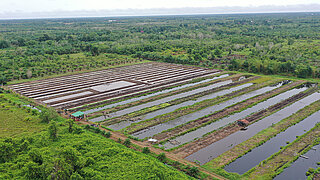
The project established eight field demonstration plots—ranging from 0.5 to 10 hectares—across seven pilot villages. These sites are sustainably managed and have directly contributed to protecting and improving the conservation status of 71 hectares of critical peatland ecosystems. Through these plots, communities adopted peat-friendly paludiculture (cultivation on wet peatlands where the water table is kept near the surface) and agrosilvofishery models like the Surjan system.
In Sungai Radak Dua Village, West Kalimantan, this water-management approach combines raised agricultural beds for crops like areca nut and durian with lower fish-rearing basins, allowing farmers to multiply their seasonal harvests and diversify incomes without draining the land.
New agricultural approaches double the harvest
In South Sumatra's Baru Village, the introduction of agrosilvofishery systems allowed farmers to transition from a single annual rice harvest to harvesting two or three times a year. Alongside these systems, the project supported community enterprises such as organic fertilizer production and stingless bee (trigona) honey under the certified "Bunga Desa" brand, proving that environmental stewardship can directly reinforce economic resilience.
Embedding Climate Action into government planning
Local success stories need backing from formal government systems to achieve long-term, structural permanence. Peat-IMPACTS ensured its field results were legally codified by embedding environmental data and scientific frameworks directly into subnational government planning cycles.
By bringing together government agencies, academia, NGOs, and the private sector, the project facilitated the formal development and endorsement of three Peat Protection and Management Plans at the landscape scale. These roadmaps cover critical regions including OKI and Kubu Raya. To guarantee long-term legal, institutional, and fiscal support, these plans were successfully integrated and mainstreamed into two district Regional Development Plans. Aligning these plans with active government planning periods ensures that peatland conservation remains a well-funded, statutory institutional priority rather than a temporary project intervention.
Development of a tailor-made planning and analysis tool
This policy integration was backed by the application of the LUMENS (Land Use Planning for Multiple Environmental Services) framework and software, developed by ICRAF, the implementing organisation of the project.
By developing a dedicated module to simulate greenhouse gas emissions under different rewetting scenarios, the project provided provincial environmental agencies and the Indonesian Ministry of Environment and Forestry with science-based accounting needed to support Indonesia’s Nationally Determined Contribution commitments.
Moving Forward: a blueprint for regional scaling
The legacy of IKI´s Peat-IMPACTS project proves that nature-based solutions work best when they protect natural carbon sinks while simultaneously supporting rural livelihoods and local ownership.
As climate hazards grow in frequency and intensity across Asia's lowlands, this multi-level capacity model offers a ready, practical blueprint for adjacent tropical nations.
Highly vulnerable coastal, lowland areas in countries like Vietnam and Bangladesh share interconnected peat and mangrove landscapes that could benefit directly from upscaling this integrated approach.
The link has been copied to the clipboard
Contact
IKI Office
Zukunft – Umwelt – Gesellschaft (ZUG) gGmbH
Stresemannstraße 69-71
10963 Berlin