
Turning ambition into investment-ready solutions

The Mitigation Action Facility supports projects that help countries and industries transition to low-carbon development pathways.
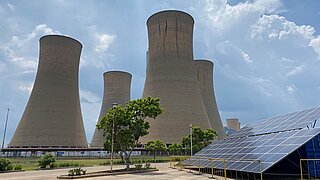
Heavy industries such as steel, cement and aviation are among the most difficult sectors to decarbonise. They require major investments, new technologies and long-term coordination between governments, industries and financial institutions. For many countries, the challenge is not only technological — it is also financial and institutional.
Through its Detailed Preparation Phase (DPP), the Mitigation Action Facility (MAF) provides fully funded support to selected projects, including feasibility studies, technical assistance and expertise on financing, mitigation potential, gender equality and social inclusion, and carbon markets. This support helps projects overcome barriers, strengthen partnerships and build the foundations for implementation and future investment.
Developing the next generation of low-carbon industry projects
Industrial decarbonisation projects are often considered too complex, risky, or early-stage for conventional financing. The Mitigation Action Facility helps bridge this gap by supporting scalable mitigation projects, developing investment-ready business models, strengthening capacities, and mobilising public and private actors around shared transition pathways.
Its portfolio increasingly focuses on hard-to-abate sectors with high mitigation potential. Alongside energy and transport, industry is a priority sector for driving transformational change and long-term emissions reductions.
Creating new markets for sustainable aviation fuels in Brazil
Aviation is one of the hardest sectors to decarbonise. For long-haul flights, electrification is not feasible, making Sustainable Aviation Fuel (SAF) the only scalable drop-in solution for reducing emissions from existing aircraft. Yet SAF production remains limited due to a shortage of sustainable feedstock, among other things.
In Brazil, a project supported by the Mitigation Action Facility is tackling this challenge through an integrated “seed-to-fuel” SAF platform. The project cultivates macaúba, a high-yield native crop that can be grown on degraded land, and links oil production to a biorefinery expected to produce around 1 billion litres of SAF annually. While the refinery has secured US$ 1.5 billion in financing, the agricultural supply chain requires catalytic capital to scale.
The Mitigation Action Facility supports the first dedicated macaúba oil mill, a critical step in establishing the supply chain. The project could reduce lifecycle emissions by up to 80% compared with conventional jet fuel while restoring degraded land, creating jobs and supporting smallholder farmers.
The project has the potential to establish an important precedent for the expansion of bioeconomy infrastructure financing across Latin America and other emerging markets.
Transforming industrial value chains in Viet Nam
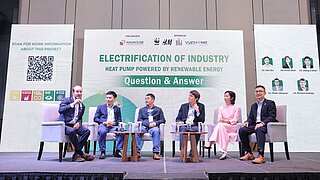
The Viet Nam – Sustainable Industries project supported by the Mitigation Action Facility is supporting the decarbonisation of the country’s textile and apparel as well as food and beverage sectors, which together account for around 60% of energy consumption in light industry.
The project supports more than 300 industrial facilities in adopting energy-efficient technologies and electrifying energy-intensive processes, while also improving access to finance through green credit lines and innovation grants. By reducing emissions (7.21 MtCO₂e expected) and strengthening industrial competitiveness, the project aims to demonstrate how targeted support can accelerate low-carbon industrial transformation.
The pipeline of industrial decarbonisation projects
There are several additional projects that currently receive fully funded proposal development support from the Mitigation Action Facility for example in South Africa, Viet Nam, Brazil, Türkiye, and India. Whereas seven industry projects from the Call for Projects 2026 are currently under assessment for project preparation.
With support from the International Climate Initiative (IKI) the Mitigation Action Facility will continue to provide technical support and climate finance for ambitious mitigation projects with the aim of decarbonising key sectors of the economy and society.
The Mitigation Action Facility
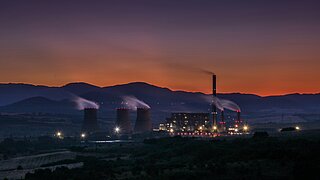
The Mitigation Action Facility is a multi-donor climate finance platform that supports ambitious mitigation actions through technical assistance and climate finance. One of its core donors is the German Federal Government, which channels support via the International Climate Initiative (IKI). By reducing investment barriers and strengthening collaboration between governments, industry and financial institutions, it helps build a pipeline of scalable low-carbon solutions across sectors including energy, transport and industry.
The link has been copied to the clipboard
Contact
IKI Office
Zukunft – Umwelt – Gesellschaft (ZUG) gGmbH
Stresemannstraße 69-71
10963 Berlin
Please submit written enquiries via the contact form.