

Turning solid waste into fuel solutions

With support from the International Climate Initiative, India is reducing greenhouse gas emissions from municipal waste while converting organic materials into clean energy.
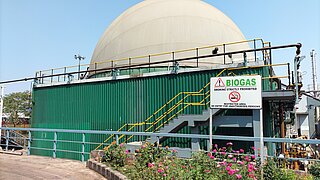
India generates roughly 150,000 tonnes of municipal solid waste (MSW) each day, resulting in approximately 19 million tonnes of CO₂-equivalent emissions annually. At the same time, nearly half of this waste is biodegradable, representing a substantial opportunity for energy recovery through compressed biogas (CBG). Harnessing this potential is essential for reducing emissions while accelerating the transition toward a circular economy.
The project “Waste Solutions for a Circular Economy in India” enables cities in scaling up MSW-to-CBG solutions. It is financed by the International Climate Initiative (IKI) and other donors as part of the Mitigation Action Facility, which is a multiple-donor climate finance mechanism.
Help cities adopt scalable, low-carbon waste management systems
A key achievement of the project is the development of an Advisory on CBG Plants Based on Municipal Solid Waste, which provides practical guidance for cities and investors. It defines conditions for commercially viable projects, including the need for at least 100 tonnes per day of source-segregated waste, achievable through cluster approaches across municipalities. It also outlines financial requirements, including the need for capital and operational support for smaller plants, and recommends optimal plant locations near gas infrastructure.
By standardising technical and financial approaches, the Advisory reduces risks and helps cities adopt scalable, low-carbon waste management systems.
Unlocking finance through risk-sharing
Access to financing remains a major barrier in the waste sector. To address this, the project supported the establishment of a Risk Sharing Facility with the Small Industries Development Bank of India.
This facility provides partial debt guarantees of up to 50%, significantly reducing lending risks. As a result, waste management companies have already secured financing for two MSW-to-CBG facilities with a combined capacity of 550 tonnes per day. Several additional projects are in the pipeline, showing how innovative financial instruments can mobilise private investment for climate action.
Making source waste segregation work
Source segregation is a decisive success factor for any waste-to-energy system. Accordingly, the project focuses on strengthening waste separation at the source in cities such as Bengaluru, Patna, Trichy, Varanasi, and across the state of Goa.
Proper segregation prevents contamination, improves biogas yields, and protects infrastructure. It also enables dry waste to be channelled to Material Recovery Facilities, where it can be recycled or converted into refuse-derived fuel for industrial use. This not only improves plant performance but strengthens the entire circular economy by ensuring more waste is reused productively.
Create jobs and empower women.
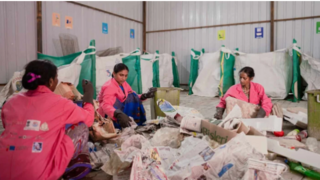
The project also generates significant socio-economic benefits by integrating informal waste workers into formal systems. To date, around 400 informal workers have been linked to social security schemes of the Government of India, improving their livelihoods and working conditions.
A dedicated Gender Action Plan supports women through training and the creation of micro-enterprises in waste management, including operating recycling facilities and producing value-added products from waste. These efforts contribute to more inclusive and efficient waste systems.
Supporting policy change
At the policy level, the project contributes to national and state-level frameworks that enable long-term transformation. This includes support for Extended Producer Responsibility (EPR), with a roadmap developed for the state of Goa to strengthen plastic waste management and recycling systems. The project also aligns with national initiatives such as:
the Sustainable Alternative Towards Affordable Transportation (SATAT) programme, which improves market certainty for CBG
Swachh Bharat Mission (Urban) 2.0, which provides financial support
the CBG blending obligation, which ensures long-term demand
Together, these frameworks create a strong enabling environment for scaling up climate-friendly waste solutions.
Key lessons for replication
The project offers important lessons for other regions and cities, within and outside of India:
Source segregation is non-negotiable: Without clean waste streams, technical and financial performance declines significantly.
Clear policy guidance accelerates action: Standardised frameworks reduce risks and support investment.
Innovative finance unlocks investments: Risk-sharing mechanisms can mobilise private capital in challenging sectors.
Inclusion improves system performance: Integrating informal workers increases recycling efficiency and social equity.
Waste-to-energy delivers multiple benefits: CBG production reduces emissions, creates clean energy, and strengthens circular resource use.
Substantial potential for scale up for the future
India’s experience shows that municipal waste can be transformed from an environmental burden into a climate solution. With the right combination of policy support, financing mechanisms, and local implementation, cities can significantly reduce emissions while generating clean energy and improving livelihoods.
Looking ahead, the Risk Sharing Facility will continue to support investment in the waste sector. With more than 4,500 cities across the country, the potential to scale up MSW-to-CBG solutions remains substantial.
Realising this potential will require sustained collaboration among governments, the private sector, financial institutions, and citizens. With support from the International Climate Initiative, a strong foundation has been established in India. The priority now is to scale solutions that transform everyday waste into a meaningful driver of climate action.
IKI support to the Mitigation Action Facility
The Mitigation Action Facility – a multi-donor programme – provides technical assistance and funding to help implement ambitious mitigation actions. It drives decarbonisation in the three priority sectors energy, transport, and industry. One of its key funding partners is the German Federal Government, which channels support via the International Climate Initiative (IKI).
Read more about the Mitigation Action Facility
The link has been copied to the clipboard
Contact
IKI Office
Zukunft – Umwelt – Gesellschaft (ZUG) gGmbH
Stresemannstraße 69-71
10963 Berlin
About the project
The IKI in India

Explore IKI´s project work in the country
