Beyond borders: Connecting grids and building trust
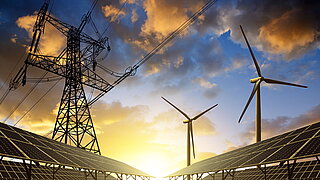
By 2045, the Association of Southeast Asian Nations (ASEAN) aims to build a fully integrated power grid to meet growing electricity demand, strengthen energy security and accelerate the clean energy transition.
Turning this vision into reality requires more than transmission lines. It requires countries to work together across borders.
A regional grid begins with people
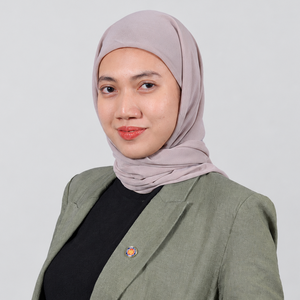
When Nadhilah Shani joins a meeting on the ASEAN Power Grid (APG), she brings together countries with very different energy systems and national priorities. Some have abundant hydropower, solar or wind resources. Others face rapidly growing electricity demand driven by industrialisation and economic development. Each has its own regulations, market structures and energy security concerns.
As Head of Power Generation and Interconnection at the ASEAN Centre for Energy (ACE), Shani works at the intersection of these different perspectives. Her task is to help turn a shared regional ambition into practical cooperation.
For her, the ASEAN Power Grid is about more than connecting power systems. It is about building the relationships, institutions and trust that enable countries to benefit from one another’s energy resources.
Regional cooperation fundamentally helps Member States recognise their shared goals and the multiplier effect of working together, despite their differences. When it comes to advancing connectivity under the ASEAN Power Grid, there are only winners and more winners – no losers.
From electricity trade to a shared energy future
At the beginning of this decade, discussions around the ASEAN Power Grid focused largely on how countries could exchange more electricity across borders. In practice, cross-border electricity trade in ASEAN remained limited, relying mainly on bilateral arrangements between neighbouring countries.
Today, the conversation has broadened. Across Southeast Asia, electricity is expected to play a growing role in transport, industry and buildings. Electrification can reduce dependence on imported fossil fuels and lower emissions, but it also means that power systems must supply substantially more electricity while remaining reliable and affordable.
The ASEAN Power Grid could help countries meet this challenge by connecting diverse energy resources across the region. Solar power may be plentiful in one country, while hydropower or wind is available elsewhere. Stronger interconnections could allow electricity to flow where it is needed, help integrate more renewable energy and reduce reliance on additional fossil-fuel generation.
The benefits extend beyond the energy transition. Cross-border connections can provide additional options when domestic supply is constrained, demand rises unexpectedly or global fuel prices increase. Rather than replacing national energy planning, regional cooperation can strengthen it by giving countries access to a wider pool of resources and flexibility.
For Shani, the political momentum behind the ASEAN Power Grid has grown considerably in recent years, with tangible progress including the signing of the Enhanced APG Memorandum of Understanding and work towards its implementation. Financial institutions are also showing increasing interest in APG projects:
“Advancing interconnectivity under the ASEAN Power Grid is truly a no-regret policy step for ASEAN. Our studies show that it makes sense for every country in the region, offering benefits in different forms – from greater system security and emergency back-up to sharing reserves and enabling commercial electricity trade.”
Trust before transmission lines
The physical infrastructure of the ASEAN Power Grid is visible: transmission towers, substations and cables crossing land and sea. The cooperation required to make it work is less visible, yet equally important.
Countries need compatible technical standards, workable market arrangements and clear rules for cross-border electricity trade and transmission. They must also agree on how to plan together and ensure that regional arrangements are reliable, fair and mutually beneficial.
Much of Shani’s work takes place in this space. It involves bringing together ministries, regulators, utilities and other partners, listening to different concerns and developing common approaches.
This process takes time. Countries must align their technical requirements and regulatory frameworks while ensuring that regional cooperation complements their national priorities. Progress therefore depends not only on engineering and finance, but also on strong institutions, sustained dialogue and mutual trust.
For Shani, partnerships are essential to turning the ASEAN Power Grid vision into a collective endeavour. They help countries move from a broad ambition towards practical questions: Which rules are needed? How can systems and markets be aligned? And how can regional connectivity deliver benefits for all?
“Through the CASE project, Germany’s International Climate Initiative has been a valued partner in supporting ASEAN on this journey, bringing resources and technical expertise that enable ACE to work closely with Member States on shared APG priorities. Our strong partnership allows us to jointly advocate for regional connectivity and turn the APG vision into a truly collective endeavour.”
Powering ASEAN together
The ASEAN Power Grid remains a work in progress, with important political, regulatory, technical and financial challenges ahead. Yet its purpose is becoming clearer: preparing Southeast Asia for a future in which electricity powers a much larger share of its economies.
Seen through Shani’s eyes, the ASEAN Power Grid is ultimately not just a story about cables. It is about countries recognising that their energy futures are connected – and building the trust, rules and institutions needed to power that future together.
About the project
Through the regional project Clean, Affordable and Secure Energy for Southeast Asia (CASE), Germany’s International Climate Initiative supports ACE and its partners in strengthening the foundations for regional energy cooperation. CASE is implemented by Deutsche Gesellschaft für Internationale Zusammenarbeit (GIZ).
The link has been copied to the clipboard
Contact
IKI Office
Zukunft – Umwelt – Gesellschaft (ZUG) gGmbH
Stresemannstraße 69-71
10963 Berlin
Please submit written enquiries via the contact form.
ASEAN Power Grid at a glance
Vision: A fully integrated regional power grid by 2045.
Purpose: To meet growing electricity demand, strengthen energy security and accelerate the clean energy transition across ASEAN.
How it works: Cross-border electricity interconnections can enable countries to share energy resources, integrate more renewables, strengthen system resilience and expand electricity trade.
What it takes: Coordinated planning, compatible technical standards, effective market rules, investment and trust among participating countries.
About Nadhilah Shani
Nadhilah Shani is Head of Power Generation and Interconnection at the ASEAN Centre for Energy and Acting Head of the APG Secretariat. She has a decade of experience in energy policy and the energy transition in Southeast Asia, including work with Indonesian utilities, government and policymakers. She holds a BSc in Electrical Power Engineering from Bandung Institute of Technology and an MSc in Sustainable Energy Technology from TU Delft, the Netherlands.