
Shaping New National Climate Commitments in Central America
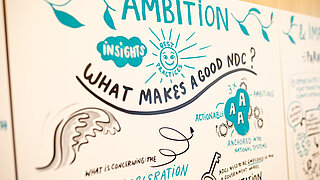
NDC 3.0: With support from the IKI, Costa Rica, Belize and El Salvador have significantly advanced their contributions through a participatory and science-based approach.
Geographically, Central America is small but it hosts for example 12 per cent of global biodiversity and is highly vulnerable to the effects of climate change. Against this backdrop, Costa Rica, Belize and El Salvador have successfully updated and submitted their Nationally Determined Contributions (NDCs) with support from the International Climate Initiative (IKI). In doing so, the countries are strengthening their ambitions and setting a course that enables the objectives of the Paris Agreement to be achieved.
Through the IKI, Germany has been supporting the three countries for several months on this journey. The projects supported translating national climate ambitions into implementable roadmaps based on clear indicators, targets, mitigation and adaptation analyses, and financing mechanisms.
Costa Rica: A participatory, feasible and measurable NDC with clear responsibilities
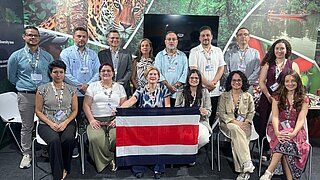
Costa Rica presents its “CND 3.0” as an accessible and highly participatory climate instrument. It therefore goes beyond the NDC concept and deliberately uses the Spanish acronym to express strong ownership and a high level of identification with the objectives within the government.
It was designed by the Ministry of Environment and Energy (MINAE) and its Climate Change Directorate (DCC) with support from the IKI.
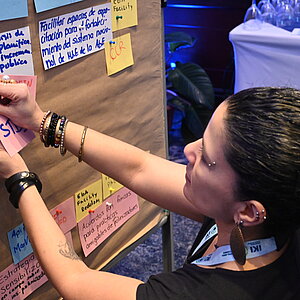
Several workshops and co-creation processes involving more than 360 participants made it possible to set concrete targets and respond to national priorities while involving all key stakeholders and societal groups.

Costa Rica’s CND 3.0 is becoming a clear, concrete and pragmatic strategy that sets achievable climate action goals. The NDC update places strong emphasis on establishing SMART indicators that are validated and structured to facilitate monitoring and reporting. The three strategic pillars are:
- C = Collective and Coherent
- N = Nature
- D = Decarbonised
Further notable actions include:
- Alignment with the National Decarbonisation Plan to strengthen coordination and effectiveness of climate action across the country.
- A communication strategy that turns the instrument into a public and easily understandable tool, including the creation of the Spanish-language term “CND”.
- Inclusion of diverse perspectives across sectors, including youth, Indigenous Peoples, women, rural communities, the private sector, municipalities and others.
- Costa Rica submitted its CND 3.0 to the UNFCCC on November 14, 2025.
Belize: Adaptation and mitigation with a participatory vision
Belize sees itself as a key country for the conservation of marine and forest ecosystems. The country’s NDC 3.0 reflects this vision by integrating a robust framework for both climate change adaptation and emissions mitigation that can be implemented and monitored using national capacities.
Financed by the IKI, Climate Analytics supported the development of modelling exercises, scientific analyses and an implementation plan to ensure that environmental commitments are realistic and financially viable. The resulting NDC is therefore based on a science-based vision with the active involvement of a wide range of stakeholders.
The participatory development process extended over several months and included virtual and in-person workshops with representatives from government, civil society, academia and the private sector, creating an open and transparent process. Further key measures include capacity-building trainings to strengthen the skills of government officials and technical staff. This provides the foundation for enabling modelling approaches that support the implementation and monitoring of the NDCs. Belize submitted its NDC 3.0 already in June 2025.
El Salvador: National targets for a low-carbon economy
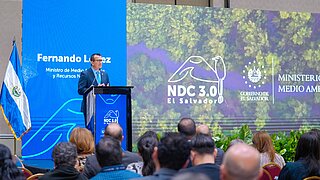
El Salvador’s NDC 3.0 goes beyond sector-specific targets and focuses on an overarching national commitment to reduce emissions by 2035. The update of the climate targets is led by the Ministry of Environment and Natural Resources (MARN), which coordinates exchanges with national institutional stakeholders and international cooperation agencies.
With support from the IKI, the mitigation component was strengthened, among other things, through the scientific development of greenhouse gas emission scenarios and the formulation of realistic targets that distinguish between domestically financed measures and internationally supported actions.
More than 24 institutions were involved in the process, which was characterised by a multi-level, cross-sectoral dialogue. Over 12 workshops/meetings enabled the validation of measures, the definition of policy guidelines, and the development of a vision that integrates economic development, sustainability and transparency. Another key achievement of the project is the strengthening of capacities across all participating institutions. This applies especially to the Department for the National GHG Inventory in MARN that has been closely accompanied by regional experts to develop their first National GHG Inventory in-house.
El Salvador submitted its NDC 3.0 to the UNFCCC on December 24, 2025.
Diverse approaches strengthen resilience
The measures presented demonstrate how Costa Rica, Belize and El Salvador, with support from the IKI, are committing to implementable, transparent and sustainable climate action.
Across all cases, it is evident that resilience is built through knowledge, technical cooperation, participatory processes and the involvement of multiple sectors, each contributing their diverse perspectives, needs and realities.
The link has been copied to the clipboard
Contact
IKI Office
Zukunft – Umwelt – Gesellschaft (ZUG) gGmbH
Stresemannstraße 69-71
10963 Berlin