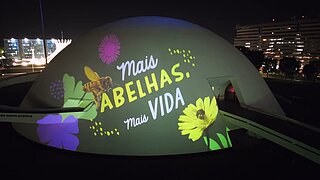
Poli-LAC raises awareness for World Bee Day through video mapping at Brasília’s National Museum
Thumb "Poli-LAC raises awareness for World Bee Day through video mapping at Brasília’s National Museum"

The content cannot be shown, because the marketing-cookies were denied. Click here , for accepting the cookies and show the video!

One third of global food production depends on bees, essential pollinators for maintaining ecosystem balance, conserving biodiversity, and ensuring food security. However, these insects have been disappearing at an alarming rate because of habitat loss, pesticide use, and climate change.

To raise public awareness of this challenge, the Poli-LAC project, which is supported by the International Climate Protection Initiative (IKI), carried out a public action in Brasília, projecting animated images onto the dome of the National Museum. The initiative reinforced the urgency of protecting, conserving, and monitoring the abundance and diversity of pollinating insects.

The action took place on May 20, World Bee Day, and is part of a broader campaign to value pollinators and their fundamental contributions to sustaining life on the planet.

The link has been copied to the clipboard

Related Videos

Thumbnail "Poli-LAC 2025: What We Achieved"

The content cannot be shown, because the marketing-cookies were denied. Click here , for accepting the cookies and show the video!

Thumb "More Pollinators, More Life: Poli-LAC at COP30"

The content cannot be shown, because the marketing-cookies were denied. Click here , for accepting the cookies and show the video!

Thumbnail "Importancia de los conocimientos tradicionales de las abejas sin aguijón"

The content cannot be shown, because the marketing-cookies were denied. Click here , for accepting the cookies and show the video!

Thumbnail "Latin America and the Caribbean in Action for Pollinating Insects Through the Project Poli-LAC"

The content cannot be shown, because the marketing-cookies were denied. Click here , for accepting the cookies and show the video!

Thumbnail "What If Pollinators Disappeared?"

The content cannot be shown, because the marketing-cookies were denied. Click here , for accepting the cookies and show the video!

Thumbnail "Pollinators: Key Species for Life"

The content cannot be shown, because the marketing-cookies were denied. Click here , for accepting the cookies and show the video!

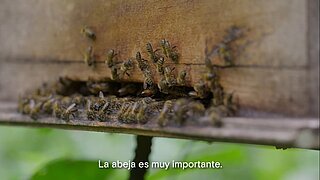
A beehive with several bees flying in and out.

The content cannot be shown, because the marketing-cookies were denied. Click here , for accepting the cookies and show the video!

Thmubnail video "No pollinators, no life!"

The content cannot be shown, because the marketing-cookies were denied. Click here , for accepting the cookies and show the video!

Related Publications

Further publications related to the International Climate Initiative and its projects can be found in the publications section of our website.
Related news

Several bees sit at the entrance of a round brown nest hole in a wooden surface
05/19/2026

Pollinator protection incorporated into national agricultural policy in Brazil

read more Pollinator protection incorporated into national agricultural policy in Brazil
12/16/2025

“The IKI Workshop for Central America and the Caribbean Through My Eyes and Through my Camera Lens”

read more “The IKI Workshop for Central America and the Caribbean Through My Eyes and Through my Camera Lens”
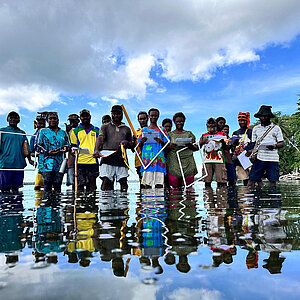
A group of people stands in the shallow ocean waters of Papua New Guinea, taking part in a training session to monitor seagrass meadows and mangrove forests.
10/08/2025

And the winners are …

read more And the winners are …
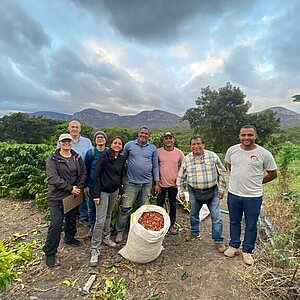
In the center of the image, there is a sack of coffee cherries while a group of eight people poses on a coffee field in front of a picturesque landscape.
09/09/2025

Without pollinators there is no life

read more Without pollinators there is no life
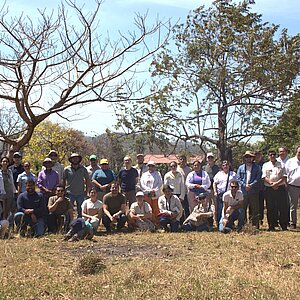
Group photo of a large number of people in a rural outdoor setting, with dry vegetation in the foreground and partly leafless trees in the background.
05/02/2025

Protecting pollinating insects in Latin America and the Caribbean

read more Protecting pollinating insects in Latin America and the Caribbean