

Women as guardians of pollinators
Across five countries in Latin America, the International Climate Initiative (IKI) is supporting women leaders in the conservation of pollinating insects through scientific research, environmental conservation, and sustainable agriculture.
From bees to butterflies, beetles to hoverflies, pollinating insects are the unsung heroes of our ecosystems and the backbone of global food production. Yet, their survival is under threat. For Dr Elisa Romero, protecting pollinators is more than a job – it is a lifelong dedication, even a family tradition.
Women have always been guardians of pollinators. My grandmother spent over 70 years protecting native bees and using their honey for barter.
In Peru’s Oxapampa–Asháninka–Yánesha Biosphere Reserve (BIOAY), she is promoting a holistic approach to pollinator conservation. This approach integrates scientific research with local knowledge and pollinator-friendly practices, ensuring that conservation is no longer an activity exclusive to researchers or environmental authorities. Instead, it becomes a collaborative process involving scientists, local communities, governments, farmers, and organisations across the region.
Pollinator conservation is becoming a collaborative process of science, local communities, governments and farmers.
Germany supports this initiative through its International Climate Initiative (IKI). The IKI-funded project Regional action for enhanced protection of pollinating insects and pollination services in Latin America and the Caribbean (Poli-LAC) has identified and implemented pollinator-friendly practices at 12 pilot sites in the BIOAY reserve.
The strategy combines scientific evidence with traditional knowledge of local communities living and working in the BIOAY reserve. As a result, targeted management actions have been taken to support pollinator populations in the region – such as conserving native vegetation, planting flowering species to provide food for pollinators, and reducing the indiscriminate use of pesticides.
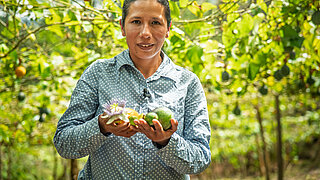
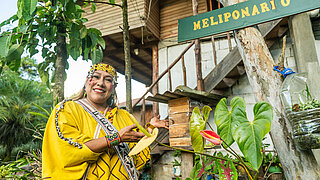
Romero herself embodies this fusion of roles: she is a professor, meliponiculturist (keeper of stingless bees), farmer, and entrepreneur. She produces local fruits such as granadilla and quito quito, and runs a small family business selling honey, propolis, pollen, and fruit nectars.
To combat pollinator decline, driven by habitat loss and pesticide use, Romero and a group of local women established AMEROXA (Multi-Ethnic Women’s Association of the Oxapampa Reserve). This collective brings together beekeepers, meliponiculturists and conservationists to promote habitat restoration, sustainable agriculture, ecotourism, and pollinator-friendly practices. Their work bridges traditional knowledge with innovative scientific techniques.
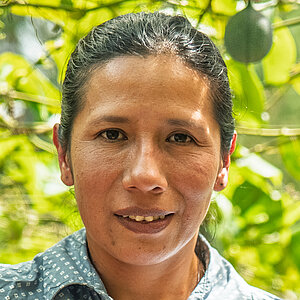
We are restoring native plants that serve as habitats for these insects while researching alternatives to chemical inputs in granadilla and quito quito crops, like ozone and plant-based extracts. This has significantly reduced pesticide use and helped prevent pollinator mortality.
Honey as a livelihood
Further south, in the Chaco Biosphere Reserve in Paraguay, Vilma Bogado – a farmer and leader of the ‘Oro Dulce’ Beekeeping Association – promotes the conservation of native stingless bees of the Tapezúa species, whilst boosting families’ incomes through honey production.
The Poli-LAC project and Oro Dulce have teamed up and have provided technical training and advisory services in collaboration with the Paraguay’s Vice-Ministry of Livestock. This is paired with small-scale investments in beekeeping equipment and hive materials to support the sustainable management and conservation of native stingless bees.

Furthermore, the aim is to strengthen members’ understanding of the importance of pollinators through community monitoring activities, carried out in coordination with the Faculty of Agricultural Sciences at the National University of Asunción.
For our community, it is essential that women become involved in pollinator protection, because we are the ones who raise awareness among our families and neighbors. People now understand that they must not burn forests or use chemical spraying indiscriminately. Honey has become an important source of income, and we must protect these small creatures.
Through these efforts local beekeepers have improved hive management practices, enhanced pollination services that contribute to melon production, and promoted the responsible production and marketing of honey for natural medicinal purposes – creating new opportunities for sustainable livelihoods.
Towards public policy for pollinating insect protection
However, these efforts also require supportive public policies. In Mexico, Xóchitl Ramírez, Head of the Unit for Innovation, Sustainability and Climate Resilience at the Ministry of Agriculture, is helping advance initiatives with producer organisations, such as avocado producers, coffee farmers and ranchers, to prevent deforestation and reduce pesticide use.

I am convinced that agriculture and environmental stewardship are compatible. There has been a strong response from small-scale producers, who understand that without pollinators, there is no food.
Mexico is currently advancing actions to promote biological alternatives and contribute to the gradual banning of highly hazardous pesticides, while implementing a national pollinator protection strategy; the Poli-LAC project has provided technical advice and supported the harmonisation of the regulation instruments and legislation to include new criteria for preventing the use of hazardous pesticides in agriculture.
Environmental education and women’s leadership
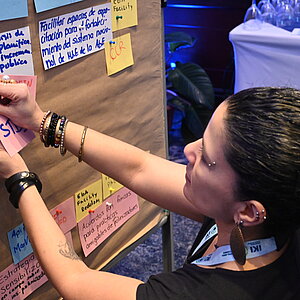
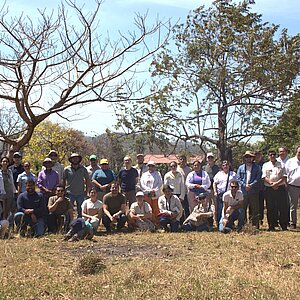
In Costa Rica, environmental education has become a cornerstone of pollinator conservation. Women living in the Tempisque Conservation Area, which forms part of the National System of Conservation Areas (SINAC) and is situated in the north-west of the country, covering the entire Nicoya Peninsula, are trained by the Poli-LAC project to understand the role of pollination in the health of ecosystems, biological connectivity and the complex relationship between pollinating insects and native plants.
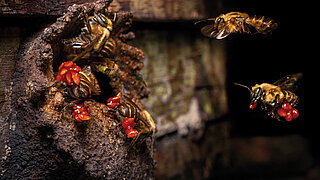
They are now carrying out both conservation activities and sustainable productive activities, helping to create habitats that provide food and shelter for pollinating insects. Poli-LAC environmental education initiatives are carried out in collaboration with local biological corridor committees, many of which are led by women.
These committees are made up of local stakeholders keen to improve environmental conditions in their territories, towns, communities and homes. From their gardens and homes, they support the conservation of biodiversity and ecosystem services.
In their home gardens, women plant fruit trees and weeds that provide shelter and food for pollinating insects. They also create ornamental flower gardens around their homes, which attract a wide variety of butterflies, bees and flies.
The leadership of women is key
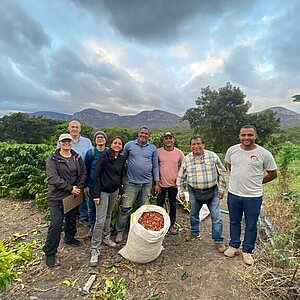
The importance of women’s leadership is also highlighted by Dr Blandina Felipe Viana, Brazilian ecologist and a postgraduate professor of Ecology at the Federal University of Bahia, who has spent more than three decades researching pollinating insects and their role in ecosystems.
The main challenge lies in the fact that the conservation of pollinators requires structural transformations in production and consumption systems, not just isolated actions. It also requires stronger collaboration among governments, researchers, producers, civil society and the private sector to address the multiple drivers of pollinator decline.
According to Viana, women often play a central role in community organisation, agroecological practices and biodiversity protection. Women’s leadership strengthens both the technical and social dimensions of conservation, making actions more integrated and sustainable in the long term.
A great impact
The experiences supported by Poli-LAC demonstrate that pollinator conservation is not only an environmental priority, but also an opportunity for sustainable development. Across Latin America and the Caribbean, women are helping protect biodiversity while strengthening local livelihoods and food security. By bringing together scientific knowledge, traditional practices and community leadership, these initiatives are helping build more resilient ecosystems and communities.
Pollinator conservation is not only an environmental priority, but also an opportunity for sustainable development.
As these experiences show, when women gain access to knowledge, resources and leadership roles in beekeeping, meliponiculture and pollinator conservation, environmental, economic and social benefits are multiplied, contributing to biodiversity conservation, sustainable livelihoods and the well-being of future generations.
The link has been copied to the clipboard
Contact
IKI Office
Zukunft – Umwelt – Gesellschaft (ZUG) gGmbH
Stresemannstraße 69-71
10963 Berlin
IKI@CBD COP17
Related Publications
-

-
12/ 2024 | Educational material
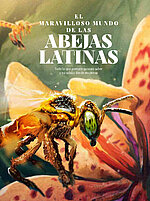
The Wonderful World of Latin American Bees
Spanish (PDF, 10 MB)
English (PDF, 14 MB)
Portuguese (PDF, 18 MB)