
Innovation Regions for a Just Energy Transition
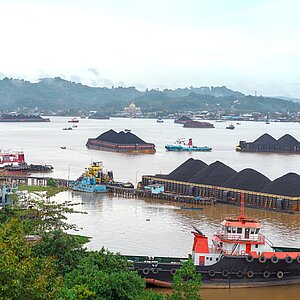
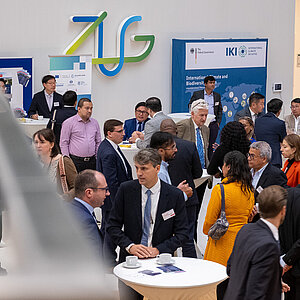
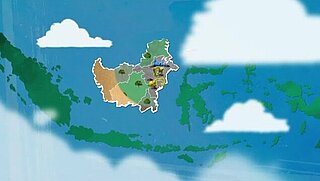
The global energy transition away from coal to renewable energy is threatening local livelihoods, economic activities and jobs, but also holding opportunities for sustainable, low carbon development. The project works with key stakeholder of coal regions to plan for and implement regional just energy transition pathways away from coal and towards a low-carbon energy system. Focusing on the regional economic transformations, the project works with government, industry, unions, communities, civil society, and academia. It fosters interregional peer-to-peer exchange, learning, and policy dialogue in an international network and information sharing via a knowledge hub. In Indonesia, it supports the development of specific transition plans in two coal regions and in Colombia the development of the concept and framework for energy communities and the implementation of just and inclusive energy communities in César and la Guajira.
- Countries
- Chile, Colombia, Indonesia, Kazakhstan, Mongolia, South Africa, Thailand, Viet Nam
- IKI funding
- 19,992,605.25 €
- Included preparation phase
- 598,258.25 €
- Duration
- 04/2022 till 01/2027
- Status
- open
- Implementing organisation
- Deutsche Gesellschaft für Internationale Zusammenarbeit (GIZ) GmbH
- Political Partner
-
- Diverse climate change relevant institutions in the respective partner countries/Diverse klimarelevante Institutionen in den entsprechenden Partnerländern
- Ministry of Industry and Trade (MOIT) - Viet Nam
- Ministry of Mining and Energy (MinEnergia) - Colombia
- Mpumalanga Department of Economic Development and Tourism (DEDT)
- State Ministry of National Development Planning (BAPPENAS) - Indonesia
- Implementing Partner
-
- Climate Action Network (CAN)
- International Institute for Sustainable Development (IISD)
- International Labour Organisation (ILO) - Switzerland
- Wuppertal Institute for Climate, Environment and Energy GmbH - Germany
- Online
State of implementation/results
- The Regional Consultation Forums for East Kalimantan and South Sumatra were established by governor decrees to guide coal phase-out with a focus on sustainable alternatives and community well-being. Each region identified priority green growth sectors (15 in East Kalimantan, 13 in South Sumatra). On July 24, East Kalimantan palm oil stakeholders committed to full compliance with the national sustainable palm oil standard by 2045, boosting productivity through smallholder support. Local women’s groups are being trained to actively participate in the forums.
- A study on developing biomethane business models in East Kalimantan was conducted and published by the provincial government’s Industrial Crop Office. A methanol company expressed its interest to source biomethane for biomethanol production during a matchmaking event organized by the project, attended by developers, feedstock owner (palm oil mills), and regulators.
- On July 18, six provincial government agencies in East Kalimantan discussed their respective roles in achieving the 25% renewable energy target by 2029 as input into their 5-year activity plan, including facilitating community development and re-skilling former coal workers to support the planned development and operation of 358 MW of solar power, with priority given to former coal mine land.
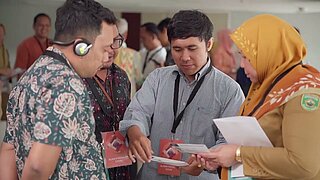
- Two Collective Bargaining Agreements were signed in East Kalimantan with Kaltim Prima Coal and AEL Indonesia. Partner unions identified key Just Energy Transition (JET) issues for bargaining and consultations. Around 1,100 union members participated in workshops through March 2025.
- The South Sumatra Provincial Government has expressed interest in developing an initiative to improve job loss coverage for workers in the coal mining sector, following findings from a project’s study.
- In March 2025, a Community of Practice workshop was held in Jakarta to support a JET in Asia. Stakeholders from Indonesia, Mongolia, the Philippines, Thailand, and Vietnam discussed social impacts like job displacement and emphasized reskilling, social safety nets, and green job creation. The workshop focused on promoting inclusive labour transitions and strengthening regional cooperation.
- An expert exchange was conducted in April 2025, discussing coal mine methane emissions. Experts highlighted cost-effective technologies to reduce emissions and stressed the need for better data and policies to support climate goals and energy transitions in coal regions.
- In May 2025, a National Forum on Just Transition in the Railway System was held in Colombia with unions and government representatives. Three panels addressed policies, social dialogue, and union experiences related to energy transition.
- In June 2025, the Just Energy Transition Forum was organized in Ulaanbaatar, Mongolia, bringing together key stakeholders to discuss the country’s shift from coal to renewable energy. The forum highlighted Mongolia’s heavy reliance on coal and the increasing energy demand expected in the coming years. It showcased Nalaikh district’s ambitious plans to develop solar parks and battery storage systems as part of its clean energy transition. The event also emphasized the importance of improving air quality and ensuring a just and equitable transition for all affected communities.
- In June 2025, cooperative training was launched in Colombia’s coal regions of Cesar and La Guajira to support just transition efforts. Using Think.COOP and Start.COOP methodologies, around 40 participants from local associations have been trained since 2024 on cooperative values, business planning, and market access. The initiative emphasizes inclusion of women and youth and aims to strengthen grassroots economic activities.
- A High-Level Political Dialogue on Just Energy Transition in Latin America’s coal regions took place in Bogotá, Colombia, during the CELAC Financing Summit in July 2025. The event brought together government officials from Colombia, Bolivia, and Costa Rica, representatives from international financial institutions, private sector actors, and civil society leaders. The dialogue focused on inclusive energy transition strategies, emphasizing coordinated policy, sustainable financing, and community involvement to support renewable energy and local livelihoods in coal regions like La Guajira and Cesar.
Latest Update:
03/2026
Project relations
Legend:
The link has been copied to the clipboard


![[Translate to English:]](/fileadmin/_processed_/7/2/csm_20241213_RE_Anlage_Dach_Privatsektor_Initiative_BMWK_2b2c722b5a.jpg)