
Innovation Regions for a Just Energy Transition
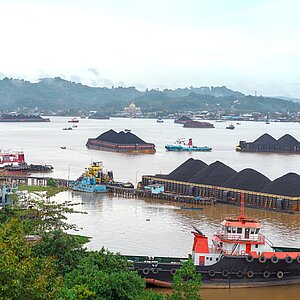
The global energy transition away from coal to renewable energy is threatening local livelihoods, economic activities and jobs, but also holding opportunities for sustainable, low carbon development. The project works with key stakeholder of coal regions to plan for and implement regional just energy transition pathways away from coal and towards a low-carbon energy system. Focusing on the regional economic transformations, the project works with government, industry, unions, communities, civil society, and academia. It fosters interregional peer-to-peer exchange, learning, and policy dialogue in an international network and information sharing via a knowledge hub. In Indonesia, it supports the development of specific transition plans in two coal regions and in Colombia the development of the concept and framework for energy communities and the implementation of just and inclusive energy communities in César and la Guajira.
- Countries
- Chile, Colombia, Indonesia, Kazakhstan, Mongolia, South Africa, Thailand, Viet Nam
- IKI funding
- 21,992,605.25 €
- Included preparation phase
- 598,258.25 €
- Duration
- 04/2022 till 01/2028
- Status
- open
- Implementing organisation
- Deutsche Gesellschaft für Internationale Zusammenarbeit (GIZ) GmbH
- Political Partner
-
- Diverse climate change relevant institutions in the respective partner countries/Diverse klimarelevante Institutionen in den entsprechenden Partnerländern
- Ministry of Industry and Trade (MOIT) - Viet Nam
- Ministry of Mining and Energy (MinEnergia) - Colombia
- Mpumalanga Department of Economic Development and Tourism (DEDT)
- State Ministry of National Development Planning (BAPPENAS) - Indonesia*
- Implementing Partner
-
- Climate Action Network (CAN)
- International Institute for Sustainable Development (IISD)
- International Labour Organisation (ILO) - Switzerland
- Wuppertal Institute for Climate, Environment and Energy GmbH - Germany
- Online
State of implementation/results
- From July to November 2025, over 10 project-supported Regional Consultation Forum (RCF) — multi-stakeholder platforms established by governor decrees to guide coal phase-out while promoting sustainable economic alternatives and community well-being — meetings took place in Indonesia. In addition to agreements to ease investments in green energy, stakeholders from three land-based economic sectors (palm oil, fishery, and tourism) in East Kalimantan and South Sumatra reached a preliminary agreement that all businesses in these sectors within the province comply with selected sustainability standards by 2045, boosting productivity through smallholder support. Local women’s groups are also being trained to actively participate in the forums.
- Setting the benchmark: the International Energy Agency’s Southeast Asia Indicators Handbook for Just and Inclusive Transitions (2025) highlights the RCF approach as an emerging good practice for social inclusion and participation.
- On July 18 2025, six provincial government agencies in East Kalimantan discussed and aligned their respective roles in achieving the 25% renewable energy target by 2029, providing input to their 5-year activity plan, including facilitating community development and re-skilling former coal workers to support the planned development and operation of 358 MW of solar power, with priority given to former coal mine land.
- Five Collective Bargaining Agreements were signed in East Kalimantan with Kaltim Prima Coal, AEL Indonesia, PT Davindo Adi Pratama, PT Bumi Lestari Maju, and PT Pelita Bumiwangi. Partner unions identified key Just Energy Transition issues for bargaining and consultation and incorporated them into the agreements.
- The South Sumatra Provincial Government has expressed interest in developing an initiative to improve job loss coverage for workers in the coal mining sector, following findings from a project’s study.
- Chile’s National Action Plan for Decarbonization was revised to include a new policy measure (Action 21), informed by project findings on thermal flexibility, supporting a more reliable coal phase-out and strengthening the climate-mitigation framework.
- On November 14 2025, the Building consensus for a just transition in Colombia’s coal regions social dialogue brought together government, business, trade unions and territorial actors in La Guajira to align priorities on jobs, skills, economic diversification and inclusive regional development.
- On October 3, the Mongolia’s Path to a Cleaner Future: investing in renewable energy and green technology session at the EU Mongolia Business and Investment Forum brought together policymakers and private sector actors to discuss accelerating renewables, clean heating and energy efficiency to support decarbonisation and improved air quality.
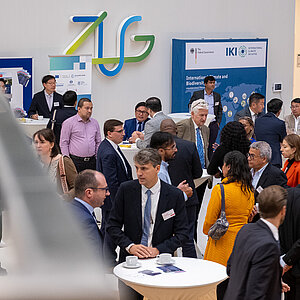
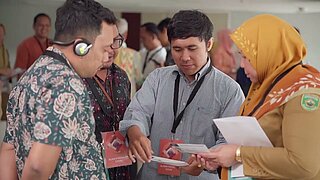
- On October 14, around 100 experts, policymakers and government representatives gathered in Samarinda, East Kalimantan for the International Forum for Coal Regions in Transition to exchange knowledge on sustainable futures for coal-dependent regions including economic diversification, renewable energy opportunities and repurposing former mining areas.
- From October 13 to 17, a learning visit to East Kalimantan brought together a diverse group of international policymakers and coal region stakeholders to exchange practical lessons on just energy transition with a focus on economic diversification, inclusive governance and locally anchored transition approaches.
- On October 30, an expert exchange brought together practitioners from coal affected regions and international organisations to discuss how embedding ecosystem restoration into just energy transition strategies can support social inclusion, livelihoods, climate resilience and long-term territorial recovery.
- Experiences from coal regions in Colombia Indonesia and Thailand were presented at COP 30 in Belem, highlighting practical approaches to just transition including inclusive governance social dialogue and local economic diversification.
- Gender: IKI JET integrates gender-responsive approaches into just transition planning by strengthening women’s participation in regional decision-making, labour dialogue, and economic opportunities in coal regions. In Indonesia, women are represented in government-led regional consultation forums and collective bargaining processes; in South Africa, women-led businesses and skills programmes expand economic participation; and in Colombia, women actively contribute to energy transition planning through participatory workshops and structured engagement processes. Training in green jobs and peer exchanges further strengthen women’s technical skills and participation in transition and negotiation processes.
Latest Update:
10/2026
Project relations
Legend:
The link has been copied to the clipboard


![[Translate to English:]](/fileadmin/_processed_/7/2/csm_20241213_RE_Anlage_Dach_Privatsektor_Initiative_BMWK_2b2c722b5a.jpg)