
Protecting Aquatic Ecosystems in India's Northeastern Himalaya Region
Population growth, increased usage intensity and climate change impacts are increasingly threatening aquatic habitats and their ecosystem services in India’s northeastern Himalayan region. The project helped to ensure the retention and sustainable use of this region’s unique ecosystems, which form the basis for the livelihoods of millions of people. Capacity-building in the affected Indian administrative and research institutions, as well as local user groups, aimed to provide the resources and skills needed for the participative development of protective and sustainable usage models for aquatic natural resources in selected sections of rivers in four states. These usage models were then tested in the context of pilot projects. The establishment of local and international networks promoted knowledge sharing and the dissemination of good practice. In addition, the project was setting up an excellence cluster that will also remain active once the project completes.
- Countries
- India
- IKI funding
- 4,700,000.00 €
- Duration
- 01/2020 till 06/2025
- Status
- completed
- Implementing organisation
- Deutsche Gesellschaft für Internationale Zusammenarbeit (GIZ) GmbH
- Political Partner
-
- Ministry of Environment, Forest and Climate Change (MoEFCC) - India
- Implementing Partner
-
- Institute of Inland Fisheries Potsdam-Sacrow (Institut für Binnenfischerei e.V. Potsdam-Sacrow)
- Ministry for Development of North Eastern Region - India
- Ministry of Environment, Forest and Climate Change (MoEFCC) - India
State of implementation/results
- Project completed.
- The “Red List” of endangered species of freshwater fish was updated. Protective measures were included in the national action plans.
- Two new fish species and four aquatic insects were discovered during the inventory of aquatic species in Nagaland.
- The methodology of climate vulnerability - the areas to which fish will migrate under changing climate conditions - was applied to three fish species for the first time.
- In November 2024, stakeholders from research, society and politics founded the regional knowledge network “North East India Freshwater Collective (NEIFC)”.
- More than 70 students from Kohima Science College, Jotosma, Nagaland, enrolled in the multi-disciplinary course “Traditional Knowledge - Heritage for the Future”, which was added to the curriculum in 2024.
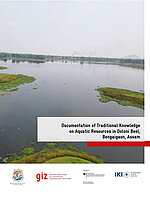
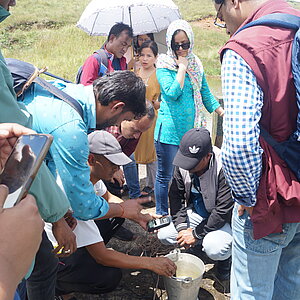
- Indigenous and local knowledge about aquatic resources in the four pilot areas was documented using the developed methodology manual. In Manipur, 300 students were involved in the documentation to ensure the transfer of knowledge across generations.
- In the village of Poilwa, Nagaland, the villagers protected eight designated spawning areas on the 7 km long Tepuiki River. This led to an increase in the fish population and food security. About 100 families supported in rearing fish and endemic snails in their paddy fields, resulting in an increase in income of about INR 750 per month. Invasive snail species were removed from the fields.
- In Manipur, on the Chakpi River in Chandel District, four villages have came together to declare an 8 km stretch of the river as a “protected zone”, protecting the spawning and breeding grounds of indigenous fish species and banning fishing, sand mining and tourist activities. More than 420 young people and women monitored the condition of the river every month and made the data available at the newly established Community Information Center (CIC). Additional livelihoods increased the income of mainly poorer fishing households and reduced their dependence on aquatic resources.
- In Khliehshnong, Sohra, Meghalaya - the newly constructed visitor information center on a 3-hectare water body created awareness about endemic fish species such as Channa pardalis. It improved the livelihood of the village's 600 households and is was managed by previously unemployed youth were then responsible for water quality monitoring, nature walks and environmental education. In Umkaber, seven community fish sanctuaries were established in a 200-meter stretch of the river.
- In Assam, the first Integrated Wetland Management Plan (IWMP) was developed and implemented for the Doloni wetland. At the request of the Indian Ministry of Environment, the development of the IWMP for the urban Ramsar wetland Deepor Beel was supported.
Latest Update:
04/2026
Project relations
Legend:
The link has been copied to the clipboard


Related Publications
-
 05/ 2025 | Educational material
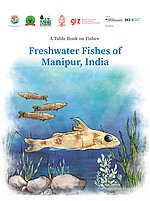
Freshwater Fishes of Manipur, India: A Table Book on Fishes
English (PDF, 10 MB)
-
-
-
11/ 2024 | Tool/Open source product
Training Module on Gender & Aquatic Resources Management
English (PDF, 5 MB)
-
-
11/ 2024 | Tool/Open source product
Toolkit for Capacitating Biodiversity Management Committees to Document, Manage and Monitor Aquatic Ecosystems
English (PDF, 15 MB)
-
09/ 2024 | Tool/Open source product
River Monitoring Handbook- Chakpi River, Manipur
English (PDF, 14 MB)
-
-
08/ 2024 | Guideline
Fish Sanctuaries as means for Stock Protection and Enhancement
English (PDF, 2 MB)
-
-
08/ 2023 | Tool/Open source product
Methods Manual: Documenting Traditional Knowledge of Aquatic Resources in North East-India
English (PDF, 3 MB)