

Adaptation to the impacts of climate change
Adapting to the impacts of climate change is essential. Through its work in 2025, the International Climate Initiative (IKI) supported countries and regions that are particularly vulnerable.

Adapting to the impacts of climate change is becoming increasingly important, particularly in light of more frequent extreme weather events. The IKI supports countries and regions that are particularly vulnerable through its funding area ‘Adaptation to the impacts of climate change’.
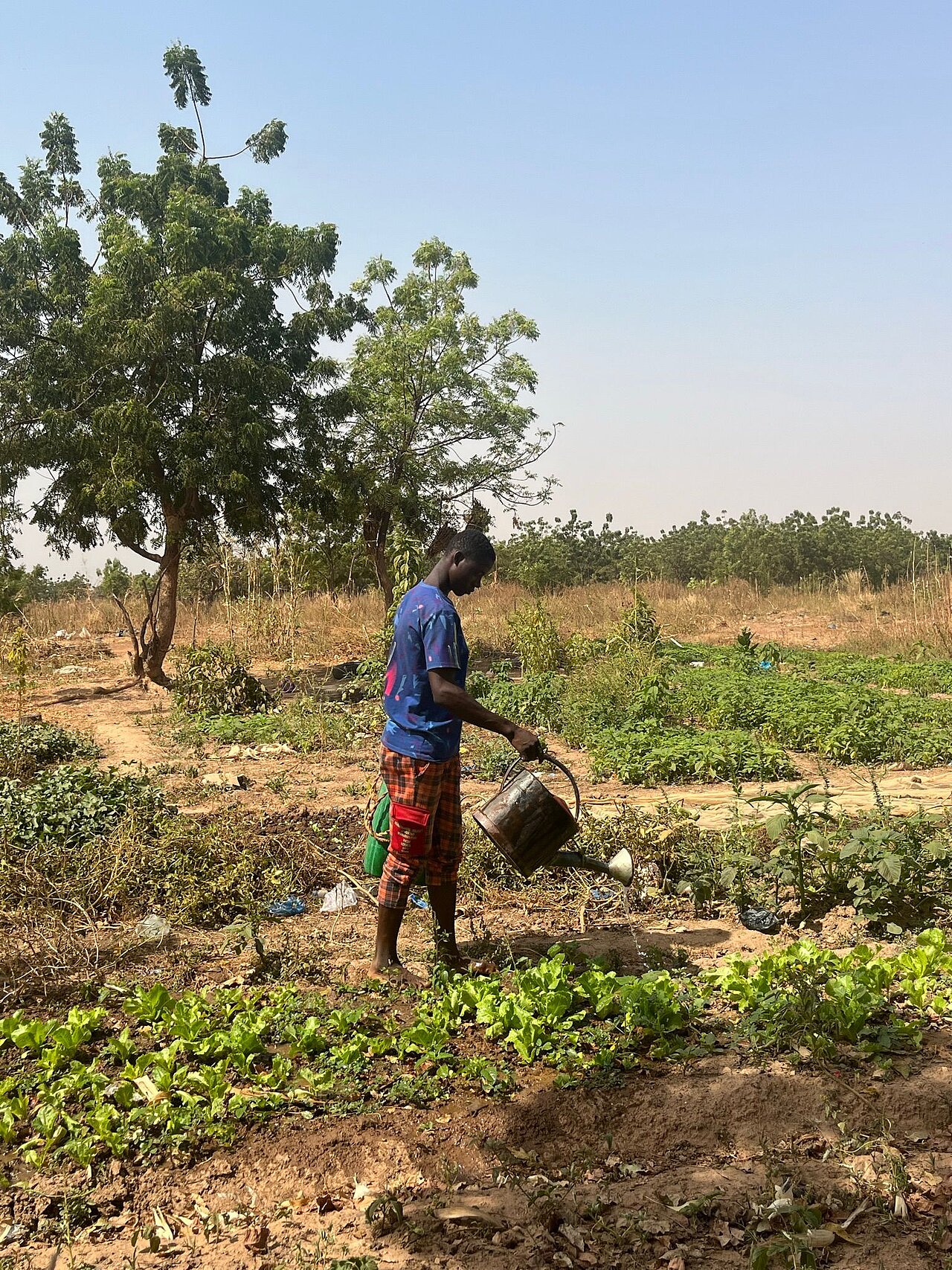
People are already feeling the impacts of climate change. Extreme weather events, degraded ecosystems, water shortages and crop failures are threatening livelihoods, economic development and social stability. Alongside international climate action, adaptation to these changes is a central pillar of global climate policy, based on the Paris Agreement.
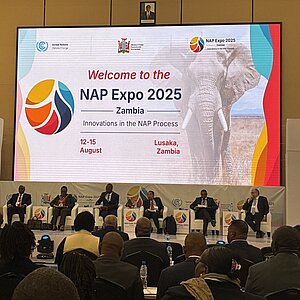
The International Climate Initiative (IKI) specifically targets transformative adaptation solutions, primarily in particularly vulnerable countries and regions. It prioritises the development and implementation of National Adaptation Plans (NAPs), ecosystem-based adaptation (EbA) and approaches to strengthening resilience at the interface between climate, safety and development.
In addition, Germany contributed a further EUR 60 million to the Adaptation Fund via the IKI in 2025. This fund implements specific and innovative adaptation measures to support communities worldwide that particularly suffer from the effects of climate change. Germany is the largest donor of this central multilateral financing instrument for climate change adaptation and has been actively supporting the fund since its foundation. Since 2013, Germany has made contributions totalling EUR 670 million, which were provided by the IKI. Some 180 projects in around 100 countries that have been approved so far are likely to benefit 45 million people, create, protect or rehabilitate nearly a million hectares of natural habitats, and install 600 early warning systems.

Adaptation to climate change is a key topic of this World Climate Conference, with good reason. Where societies are unable to adapt to the new climatic conditions, they are threatened by hunger and poverty, and people are forced to leave their homelands. Many countries depend on international cooperation for successful adaptation. Germany has been a reliable partner here for many years. I hope that our contribution to the Adaptation Fund will continue to establish trust and provide stimulus for common solutions in Belém.
Two project proposals to strengthen climate resilience from the Thematic Call 2024 were chosen in 2025 and are expected to begin their preparation phase in 2026. In Colombia, Ecuador and Peru, the IKI is funding the protection of water catchment areas from the Andes to the Amazon rainforest and supporting the ecosystem-based land and water use planning. In East Africa, the IKI is funding measures to strengthen conflict-sensitive and ecosystem-based adaptation with the aim of maintaining peace.
The preparation phase for a project from the Brazil Country Call with a planned funding volume of EUR 10 million was implemented in 2025. The project is strengthening the resilience of vulnerable groups by means of nature-based solutions in the area of water-sensitive urban development. The project is scheduled to start in 2026.
funding
was committed by the IKI in 2025 for projects that work on the adapation to the impacts of climate change.
In 2025, adaptation to the impacts of climate change remained an important element of IKI funding by the IKI Compete funding instrument.
As part of the IKI Large Grants Call, the IKI organised an ideas competition for three adaptation-relevant funding priorities. The aim was to find ideas for projects to make forests, ecosystems and biodiversity more resilient to climate risks by means of the effective and inclusive implementation of the National Adaptation Plan (NAP, in progress) in India. Other priority issues were strengthening the climate resilience of coastal cities in South and Southeast Asia, and scaling up successful approaches to climate change adaptation, including in the areas of NAPs and EbA.
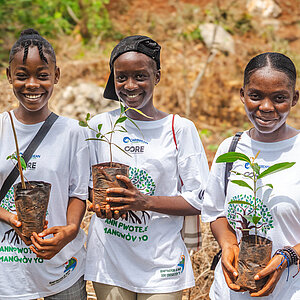
In addition, the IKI is supporting locally-led ecosystem-based adaptation (EbA) measures in countries particularly severely affected by climate change with a separate thematic priority in the IKI Medium Grants Call. This is to take place in close cooperation with the German and local civil societies.
Project overview 2025
Projects started
- Nature-based solutions for climate-resilient water management (“SbN Agua”)
- Promoting resilience in households and communities vulnerable to climate change in Satkhira
- Working with indigenous populations to restore eroded soils in saline ecosystems in highland regions
- Improving chia and sesame smallholders’ livelihoods through climate-smart practices
- Facilitating private sector engagement for the financing of ecosystem-based adaptation in support of the Climate Change Action Plan of the Philippines
- Introducing climate-smart farming practices and solutions to reduce poverty
- Raising awareness on climate change adaptation to restore and preserve water and soil resources
- Protecting people with disabilities from the effects of climate change and natural disasters
- Empowering schools as change agents for sustainable conservation and more food security
- Engaging women and youth to protect wetland biodiversity and improve livelihoods
Preparation phases started
Projects extended and/or additionally funded
- Adaptation Fund
- Global EbA Fund - Support for the Implementation and Upscaling of Ecosystem-based Adaptation
- Ecosystem-based adaptation on the northern central coast of Viet Nam: restoration and co-management of degraded dunes and mangroves
- Supporting Brazil in implementing its national agenda for adaptation to climate change (ProAdapta)
IKI Annual Report 2025
This article is part of the IKI Annual Report 2025.
The link has been copied to the clipboard