
International PtX Hub develops e-fuel pilots
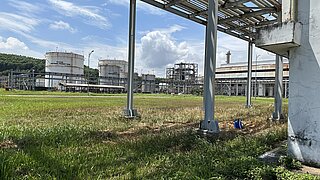
Pilot projects in Colombia, Vietnam and Kenya demonstrate how climate-friendly fuels can be produced at ‘fossil-fuel’ industrial sites.
The International PtX Hub, supported by the International Climate Initiative (IKI), is working with industrial partners in Colombia, Viet Nam and Kenya to develop Power-to-Liquid (PtL) e-fuel pilot plants. The pilots are intended to demonstrate that climate-neutral e-fuels for aviation and shipping can be produced at industrial sites traditionally associated with fossil refining.
Power-to-Liquid is a process that combines renewable electricity with non-fossil CO2 to produce liquid fuels, such as e-SAF (synthetic Sustainable Aviation Fuel). These fuels can replace fossil kerosene without changes to existing aircraft engines. Of all the routes to Sustainable Aviation Fuel currently available, PtL offers the deepest emissions reductions and the greatest long-term scalability.
Two MoUs signed in May 2026
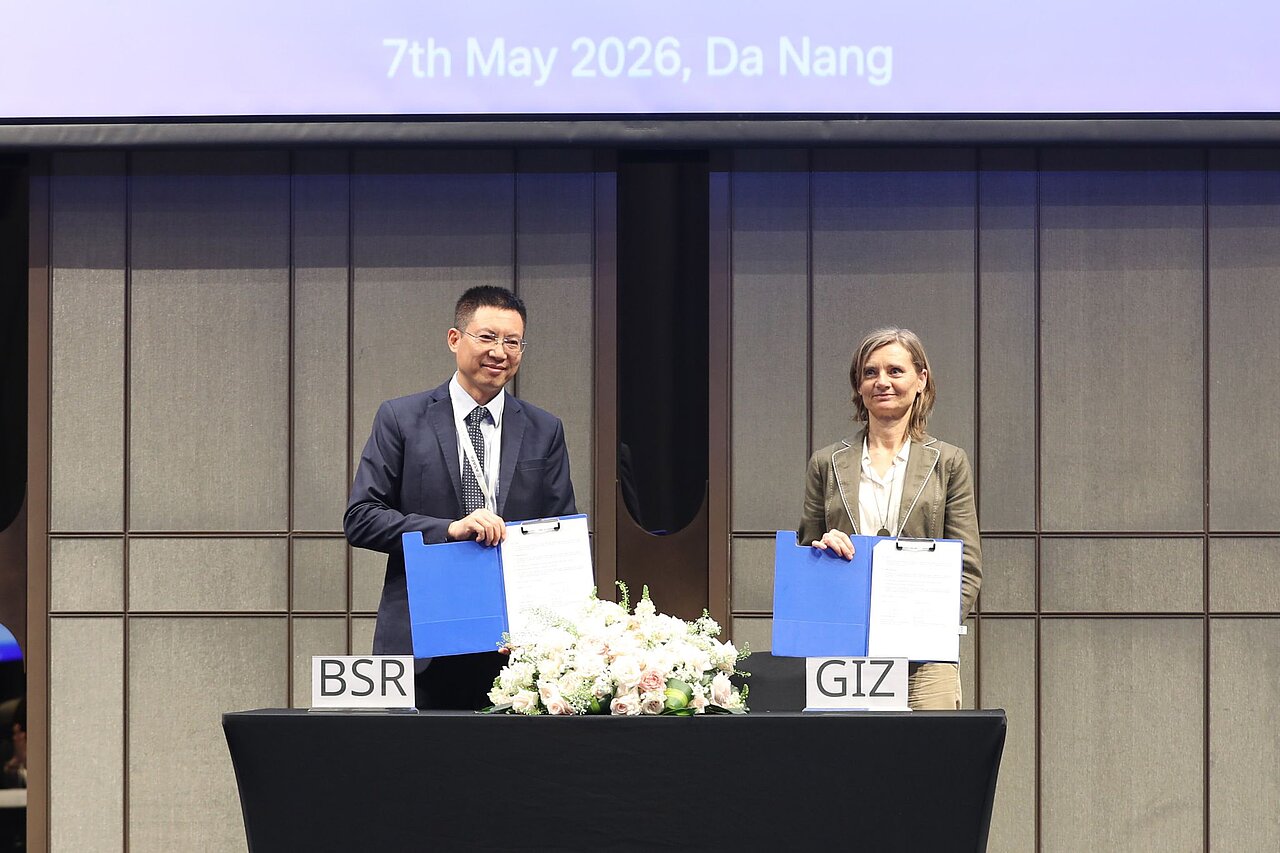
The first Memorandum of Understanding (MoU) was signed on 7 May 2026 with Binh Son Refining and Petrochemical (BSR), a subsidiary of PetroVietnam and the operator of Viet Nam's largest refinery at Dung Quat. Under the agreement, BSR and the International PtX Hub will work towards a pilot plant using renewable electricity and non-fossil carbon. A biogenic CO2 stream from BSR's own bio-ethanol plant is being considered as a feedstock option.
By working with BSR on a concrete pilot plant, we aim to kickstart Viet Nam's readiness to produce sustainable fuels and create a reference model for the broader PtX sector in the country.
Later that month, a second Memorandum of Understanding was signed at the World Hydrogen Summit 2026 in Rotterdam, between Deutsche Gesellschaft für internationale Zusammenarbeit (GIZ) and Ecopetrol, Colombia's largest energy company. The Colombian pilot is to be developed at Ecopetrol’s Cartagena refinery and can build on the Coral Project, a green hydrogen facility already commissioning at the same site. A kick-off workshop in Bogotá is planned for early July 2026.
Working with state-owned refiners
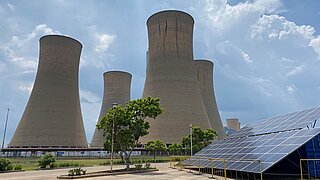
In both cases, the partner companies are large, state-owned actors in the petroleum sector. This choice is deliberate. Refining incumbents such as BSR and Ecopetrol bring engineering capacity, refinery infrastructure, utilities, and the financial strength required to take a first-of-a-kind plant from concept to commercial operation. By developing the first PtL pilots through these companies, the programme aims to create credible reference cases for national decarbonisation that can be replicated by other industrial actors in the region.
The demand side reinforces the case. International regulations such as the Carbon Offsetting and Reduction Scheme for International Aviation (CORSIA) framework of the International Civil Aviation Organisation (ICAO) and the ReFuelEU Aviation of the European Union (EU) are progressively tightening fuel requirements. Meanwhile, the supply of low-emissions e-fuels remains well below demand.
Kenya: laying the groundwork for a third pilot
In parallel with the two industrial partnerships, the International PtX Hub is preparing a third pilot in Kenya, where the work is at an earlier stage. A recent pre-feasibility study, developed in collaboration with the Kenyan Ministry of Energy and Petroleum, the Kenya Civil Aviation Authority (KCAA) and Kenya Airways, assesses how the country could produce SAF and sets out a route towards a first plant.
Kenya is well placed for this. It has abundant renewable energy from geothermal, solar, wind and hydro sources, and it is a regional aviation hub, handling some 8.6 million passengers in 2023. SAF production is already a stated national priority under Kenya's Green Hydrogen Strategy and Roadmap for 2023 to 2032, supported by a National Action Plan for Aviation and a dedicated steering committee.
The study recommends a hybrid Power-and-Biomass-to-Liquid plant using the Methanol-to-Jet route, drawing on renewable electricity and local biomass residues, with an output of around 21,900 tonnes of SAF a year. It compares three possible locations: Olkaria for its renewable energy resources, Nairobi for skilled labour and proximity to the country's main airport, and Mombasa for water access and its seaport. The next step is an Expression of Interest to the Ministry of Energy and Petroleum, followed by a full feasibility study and the search for an industrial partner.
A replicable model for industrial decarbonisation
The companies best placed to decarbonise the fossil fuel industry are often the ones running it today. That is the premise behind the pilots in Colombia and Viet Nam, which aim to be ready for construction by early 2028. By turning state-owned refiners into producers of climate-neutral e-fuels, the International PtX Hub aims to show that the energy transition in hard-to-abate sectors does not require building from scratch. It can start from within.
The link has been copied to the clipboard
Contact
IKI Office
Zukunft – Umwelt – Gesellschaft (ZUG) gGmbH
Stresemannstraße 69-71
10963 Berlin
Decarbonisation of industry
Related Publications
-
 12/ 2025 | Report | Tool/Open source product
A Guide to PtX Modelling and Allocation in Long Term Energy Planning
English (PDF, 500 KB)
![[Translate to English:]](/fileadmin/_processed_/7/2/csm_20241213_RE_Anlage_Dach_Privatsektor_Initiative_BMWK_2b2c722b5a.jpg)