
Wetlands Management for Biodiversity and Climate Protection
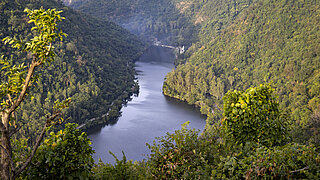
The International Climate Initiative promotes the conservation and management of wetlands in India - and strengthens cooperation to preserve these ecosystems.
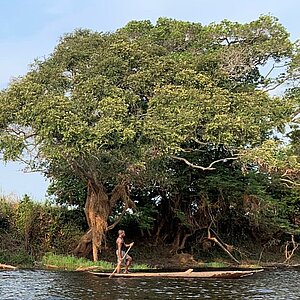
From high-altitude lakes to small village ponds and mangroves, wetlands quietly underpin biodiversity, water security, food, livelihoods and cultural ethos for millions in India.
With over 75% of India’s districts facing extreme floods, droughts, or cyclones, managing these natural buffers is critical. Their degradation and loss translate into dwindling water, food, fuel and reduced climate resilience.
These ecosystems were the focus of the “Wetlands Management for Biodiversity and Climate Protection" project which was funded by Germany's International Climate Initiative (IKI). The project focused on strengthening institutional framework and capacities for ecosystem-based integrated management of wetlands of international importance (Ramsar sites) in India.
Planning for management of wetlands
To understand the project sites spread across the country, from Himalayan states to the coasts, and along the riverine floodplains, their hydro ecology, ecosystem services and climate risk were understood through consultations and assessments, forming the basis for their wise use planning. As a result, integrated management plans of 11 wetlands (including 7 Ramsar sites) were developed under this IKI project, further informing changes in national management planning protocols and guidelines of the ‘National Plan for Conservation of Aquatic Ecosystems’.
Acknowledging that management is a continuous and dynamic exercise, the Management Effectiveness Tracking Tool (METT) for Indian Wetlands was developed to assess whether plans effectively continue to meet their objective and areas of improvement. Encouraged by the results, METT is now recommended for all Indian Ramsar sites. Management effectiveness assessment has already been carried out at 65 Ramsar sites as of April 2026. With designation support to 13 wetlands as Ramsar sites, the project supported the expansion of Ramsar network of India - in concrete terms: from 26 areas in 2018 to 99 areas in 2026.
Building capacities for the wise use of wetlands
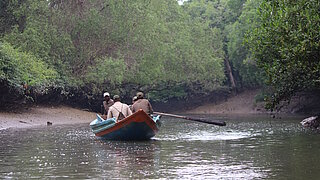
Competency strengthening initiatives for more than 3000 wetlands ‘managers’ including public officials, civil society representatives and private citizens were implemented following a mixed approach of on-site trainings and field demonstrations, with the support of government training and technical institutes.
Thousands of participants have now completed the interactive e-learning course on “Wetland Conservation and Management,” which is available on the “Integrated Government Online Training (iGOT) Karmayogi” platform, the official web-based learning portal for Indian civil servants.
These resources are all made available at the Wetlands of India Portal developed by the project, now managed by the Indian Ministry for the Environment. The portal is an information point with various resources and datasets on Indian wetlands and their management.
Beyond individual capacities, institutional structures like district-level wetland management committees, a wetland governance structure, were supported in their initial operationalisation in two states.
Collaboration and participation
The diversity of wetlands in India commands a diversity in users, interests, and resources and so management requires collaboration of researchers, decision-makers, businesses, and communities. Along with state knowledge network building, the Web-enabled Tool for Conservation Action and Partnerships (WetCAP), a matchmaking tool hosted at the wetlands portal, was developed to foster public-private collaboration.
Experiences, traditional knowledge and resource needs of fishing communities, farmer groups, boat operators, eco-development communities across partner states were another key approach. Local “wetland champions” (who serve as sources of inspiration, role models or mobilisers), women-led Self-Help Groups, students, teachers and media trainees were the conservation stewards while inter-Ministerial collaborations with Indian Ministries of Education and Tourism, helped integrate wetlands in education and job-skilling.
Apart from enriching the management plans, these collaborations shaped the Communication, Education, Participation and Awareness (CEPA) strategies in three states and the national level, looking at the roles and interdependencies of various people groups with wetlands.
Social and ecological impact
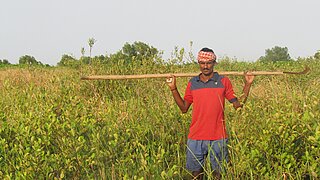
These interdependencies were starkly brought forth during COVID-19 related reverse migrations when shortage of opportunities was expected to put over-extraction pressure on wetlands.
Restoration of canals, mangroves, and ponds as short-term employment for long-term ecosystem protection and upskilling for alternate livelihoods like handicraft, beekeeping and horticulture helped support over 900 community members. Approximately, 120 tons of CO₂ equivalent was sequestered through these green recovery actions.
Longer-term impacts of these measures, as well as those brought on by the other management plans, include enhanced storm protection, increased fish catch, freshwater access, biodiversity habitat restoration and overall enhancement of community wellbeing though diversified incomes and improved resilience.
Wetlands are key to climate action
As climate uncertainty grows, wetlands offer a rare intersection point for nature-based solutions and human well-being. Investing in wetlands is therefore a pragmatic necessity.
Collaborating with national and state governments gave an opportunity to design several national initiatives like Amrit Dharohar, which promotes unique conservation values of Ramsar Sites. Working with district authorities, institutes, local organisations and communities helped implement them with continued anchorage of various interactive resources and learnings.
The partnerships forged across the global, national and local wetland community, as part of this IKI project, will continue to support these ecosystems.
In this way, the International Climate Initiative has helped to advance global and national goals for climate adaptation, biodiversity and sustainable development.
The link has been copied to the clipboard
Contact
IKI Office
Zukunft – Umwelt – Gesellschaft (ZUG) gGmbH
Stresemannstraße 69-71
10963 Berlin
What are RAMSAR Sites?
Wetlands of international importance (RAMSAR sites) are designated under the RAMSAR Convention on Wetlands—a global treaty dedicated to their conservation and sustainable use.
Further information
Related Videos


Related Publications
-
 08/ 2024 | Educational material
The Mysterious Mangroves of Bhitarkanika – A Children Book
English (PDF, 16 MB)
-
02/ 2024 | Tool/Open source product
Management Effectiveness Tracking Tool (METT) for Indian Wetlands- Practitioner’s Guide
English (PDF, 33 MB)
-
12/ 2020 | Tool/Open source product
An Inventory Assessment and Monitoring Framework for Indian Wetlands
English (external link)