


Viet Nam
Last updated: Oktober 2026

Viet Nam is highly vulnerable to climate change due to its long coastline and deltas. The impacts of climate change and a CO2-intensive economy are endangering Viet Nam's ambitious stability, growth and prosperity plans. The greatest risks arising from climate change are the increasing occurrence of extreme events and seasonal fluctuations, resulting in floods and regional droughts. Coastal areas are affected by the rise in the sea level, floods and the inflow of sea water, which have a negative impact on biodiversity and agriculture, in particular on rice farming in delta areas.
Viet Nam currently depends on fossil fuels to generate its electricity. In 2023, the electricity mix consisted of 50 per cent coal, 31 per cent natural gas/oil, 9 per cent biomass/waste, 7 per cent hydropower, and 3 per cent solar and wind power. A high level of pressure to expand the capacity of electricity generation and other energy infrastructure has developed as a result of rapid economic growth.
Interface project
All priority countries of the IKI also engage in so-called IKI interface projects, which have permanent project offices in the capital city of the respective country. Alongside their own, country-specific project commission, these interface projects are also tasked with maintaining close contact to environment and climate ministries as well as networking with other relevant ministries in the field of climate and biodiversity policy. Beyond this, the interface projects also work to network all of the IKI projects in the country and region together so as to promote synergies.
The interface function is currently represented by the project Support to Vietnam for the Implementation of the Paris Agreement (SIPA II)
Project priorities
The support of the Viet Namese government for the implementation of the Paris Agreement encompasses five core areas:
- Consultation on the further development and implementation of Viet Nam's climate and biodiversity contribution;
- Support in the establishment of an institutional framework for the implementation of the Paris Agreement, the Kunming-Montreal Agreement and the JETP;
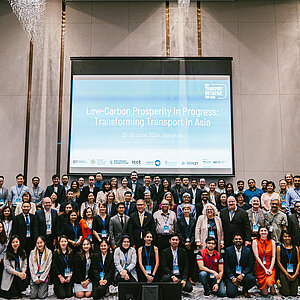
- Consultation and capacity building for the decarbonisation of the transport sector in Viet Nam with a focus on freight transport;
- Specific measures are being implemented in two provinces, which possess high scalability potential (concept of nature-based solutions for adaptation (NbSA));
- Function as an IKI interface: Promotion of dialogue on climate and biodiversity between the IKI projects in the country as well as between other actors (networking opportunities and knowledge management).
Insights into the project work
- SHIFT - Shifting Investment Flows Towards Green Transformation
- Viet Nam Nature-based Solutions for Adaptation in Agriculture through Private Sector Transformation (VN-ADAPT) Programme
- From Bean to Bar: Strengthening Vietnamese cocoa and fruit farmers’ climate-resilience and livelihoods through organic farming
In a nutshell
Region: Asia
Population: 101 million (World Bank, 2024)
CO2eq emissions (incl. LUCF): 477 million t (ClimateWatch, 2022)
CO2eq emissions per capita (incl. LUCF): 4.7 t (ClimateWatch, 2022)
Total energy supply (IEA, 2023):
- 50 % Coal
- 6 % Gas
- 7 % Hydro
- 3 % Wind, Solar etc.
- 9 % Biofuels / Waste
- 25 % Oil
- 44 % RE in electricity mix (4 % Wind, 10 % PV)
IKI projects in the country (last updated in September 2026):
- bilateral: 6 ongoing, 22 completed
- regional: 5 ongoing, 17 completed
- global: 14 longoing, 40 completed
- Ministry of Agriculture and Environment (MAE)
- Ministry of Finance (MOF)
- Ministry of Construction (MOC)
- Ministry of Industry and Trade (MOIT)
The IKI Strategy
The IKI wants to maximise its impact on climate action and biodiversity conservation. To this end, it concentrates its funding activities on prioritised fields of action within the four funding areas. Another key element is the close cooperation with selected partner countries, especially with the IKI’s priority countries.





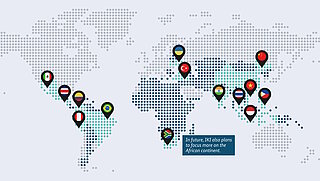
IKI partner countries
The link has been copied to the clipboard