
Just energy transition & decarbonisation of industry
To mitigate global greenhouse gas emissions, the International Climate Initiative (IKI) worked in 2025 to promote climate-friendly energy generation and industrial processes.
Socially just energy transition
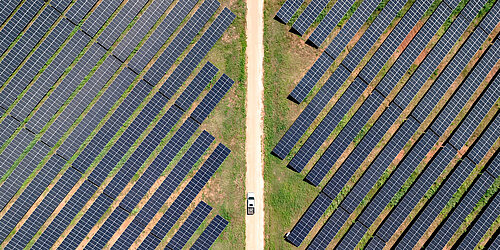
The global energy transition is one of the most important levers in the battle against the climate crisis. Around three quarters of global greenhouse gas emissions originate from the production and use of fossil fuels. For the International Climate Initiative (IKI), the expansion of renewable energies and energy efficiency are therefore key fields of action. The IKI is careful to ensure that the supported measures take social aspects and justice into account in the context of a “Just Transition”.
One priority of the IKI’s work in 2025 was to support partner countries in creating improved framework and investment conditions for the expansion of power grids and storage facilities. Both are prerequisites for the reliable and sustainable use of renewable energies.
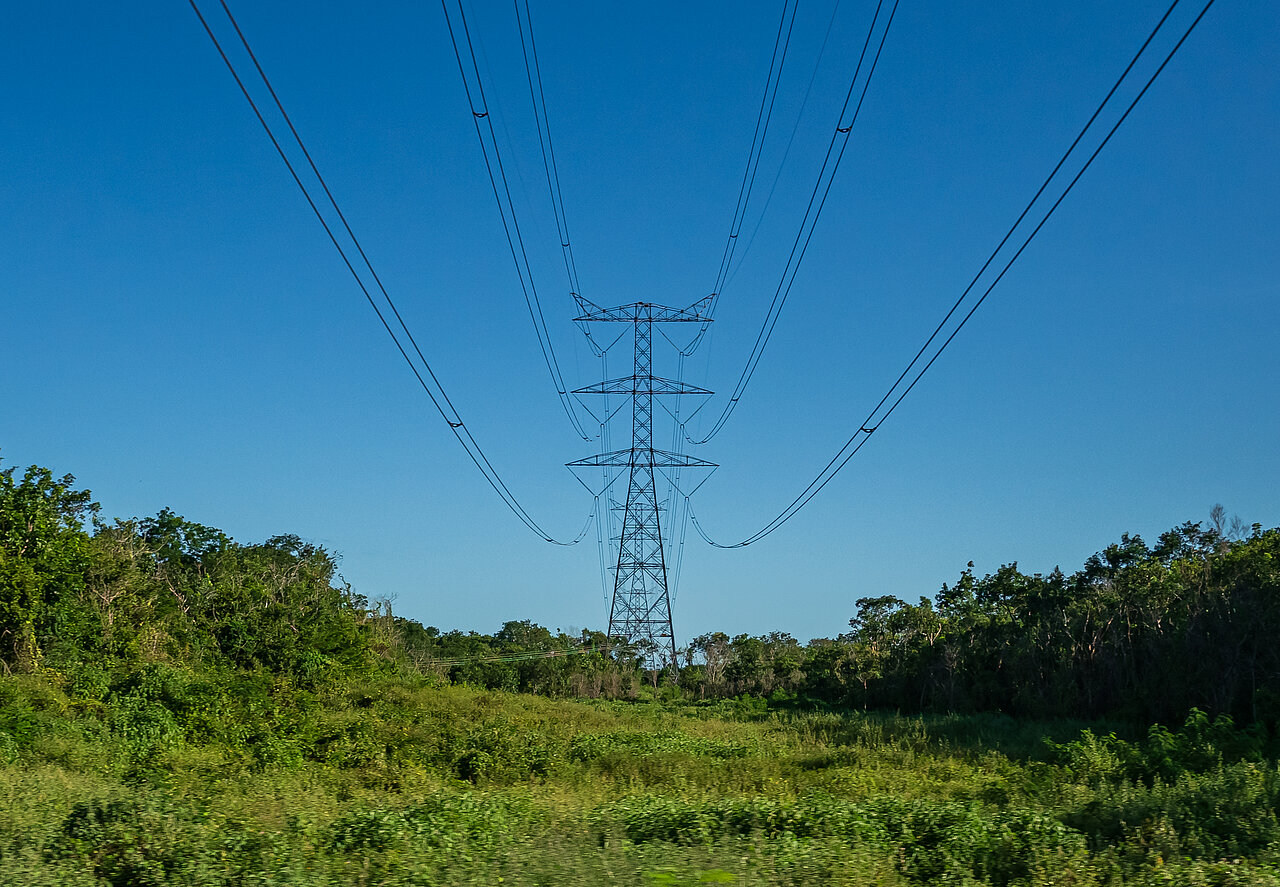
In Mexico, the IKI is funding the accelerated integration of renewable energies and flexibility in the distribution network. The project entered into its preparation phase in 2025. In addition, as part of the IKI Large Grant Calls 2025, Mexico was announced as the focus country to strengthen power storage for the integration of renewable energies and the electrification of end consumer sectors.
With a contribution of EUR 15 million to the Inter-American Development Bank’s Power Transmission Acceleration Platform (PTPA), the IKI is supporting an innovative multilateral initiative for grid expansion as part of the IKI Invest funding instrument. The platform addresses 26 countries in Latin America and the Caribbean, and specifically supports the improvement of financial framework conditions and the technical implementation of grid projects.
Also via IKI Invest, the IKI allocated EUR 12.5 million for the World Bank’s SF6 Initiative. This initiative is intended to reduce emissions of sulphur hexafluoride (SF6) and promote its global phase-out. SF6 is one of the most powerful greenhouse gases known and is mainly used in switchgears in electricity infrastructure. The support provided by the IKI comprises two parts: an initial contribution to the multi-donor trust fund “Scaling Climate Action by Lowering Emissions” (SCALE) and a further contribution to the Energy Sector Management Assistance Programme (ESMAP).
funding
was committed by the IKI in 2025 for projects that contribute to the global energy transition.
However, the IKI was also active in other areas of the energy transition in 2025. For example, the IKI is supporting its priority country South Africa on the Just Transition with two projects. The projects are intended to support energy and infrastructure planning for the integration of renewable energies, achieve progress in local project development and promote access to financing. The organisations that submitted project outlines for this purpose were requested to compile detailed project proposals in 2025.
With a project from the 2024 thematic call, the IKI is supporting energy efficiency in buildings in India. The organisation that submitted the project outline for this purpose was also requested to compile a detailed project proposal in 2025.
In the 2025 funding call from the Mitigation Action Facility (MAF), which is co-financed by the IKI, six project outlines were selected in the field of energy, including the promotion of energy efficiency and renewable energies in Kenyan waterworks, the decarbonisation of the Vietnamese cement industry, climate-friendly cooling in the Philippines and sustainable aviation fuels in Brazil.
With further priority countries and priority areas in the first IKI Large Grants ideas competition under the IKI Compete funding instrument, the IKI is also ensuring that the focus of funding remains on the energy transition. The IKI is looking for innovative project ideas for power grids and storage facilities in a focus country and focus topic. Other focus topics include urban value chains through biomass energy and methane reduction, as well as scaling up successful mitigation approaches in the area of energy, among others.
Based on previous years, the energy sector was once again a priority of the new funding call from the Mitigation Action Facility.
Decarbonisation of Industry
Industrial emissions cause approximately 23 percent of global CO₂ emissions. They are growing particularly quickly in emerging and developing countries. The pending need for the renewal of many industrial facilities makes the coming years a decisive timeframe for paving the way towards climate-friendly industrial development and the decarbonisation of existing structures.
However, successful transformation requires international cooperation – and developing and emerging countries in particular need targeted support for this purpose. The Climate Club, which Germany has co-established, is a central intergovernmental forum that funds comparable ambitions and rules for the global decarbonisation of industry. Among other things, the focus is placed on common definitions for climate-friendly basic materials such as steel and cement, the development of international lead markets, robust MRV systems and instruments for the prevention of the outsourcing of CO2-intensive production to countries with less onerous regulations in relation to climate change (carbon leakage).
The IKI supports this political work in a targeted manner through specific project funding and political counselling. A central instrument here is the Global Matchmaking Platform (GMP). It was established by the United Nations Industrial Development Organisation (UNIDO) by means of IKI contributions. So far, the GMP has directly helped nine partner countries to receive support. Discussions are currently taking place with at least 15 other countries regarding further needs.

In close alignment with the Breakthrough Agenda, which was launched at COP26 to accelerate international measures in the most important emissions sectors, GMP has developed an action plan for scaling up the green industrial transformation. The IKI was one of the central implementation partners of the Working Group on Green Industry Support for Emerging and Developing Economies (EMDEs). This applies both to technical cooperation and the mobilisation and coordination of financing.
Furthermore, the IKI initiated the Industrial Decarbonisation (ID) Hub Accelerator together with international partners. The aim here is to establish industrial decarbonisation hubs in selected emerging and developing countries, which will serve as national anchor points for politics, industry and financial actors. Financial resources will also be mobilised for this purpose. The IKI is investing ten million euros. Other donors include the United Kingdom (UK) and the philanthropic Global Industry Hub (GIH).
At the same time, the IKI is funding pilot and scaling projects in particularly emission-intensive industrial sectors and is specifically targeting the scaling-up of successful approaches.
funding
was committed by the IKI in 2025 for projects that contribute to the decarbonisation of industry.
As part of its 2024 Thematic Call, the IKI is supporting the establishment of a decarbonisation platform in Egypt. This platform is intended to provide access to finance for the decarbonisation of the steel, cement and fertiliser industries. An organisation that had submitted a project outline for this was asked in 2025 to develop a detailed project proposal.
In Brazil, an IKI project is funding decarbonisation solutions and low-carbon production methods in the steel and cement sector. In 2025, the project was in its preparation phase.
Two projects in the field of industrial decarbonisation were selected in 2025 for the 2024 funding call for the Mitigation Action Facility which is co-financed by the IKI. As in previous years, the industrial sector was again a priority of the new 2026 funding call, which was published at COP30.
As part of the first call for ideas for IKI Large Grants, the IKI made use of the IKI Compete funding instrument to find project ideas in two focus topics in order to continue pressing ahead with the decarbonisation of industry in the future. Both priority areas are open for tender with funding volumes of up to EUR 15 million.


![[Translate to English:]](/fileadmin/_processed_/a/4/csm_20250327_PhomPenh_AdobeStock_1290631159_bf56228de3.jpg)

Project overview 2025
Projects started
- Training Programme Think Tanks Energy & Climate
- Green Room Air-Conditioning (GRAce)
- Latin America and The Caribbean Power Transmission Acceleration Platform (PTAP)
- Saving energy and monitoring energy consumption in university buildings
- Reducing greenhouse gas emissions through waste management in banana cultivation
Projects additionally funded
- Indo-German Cooperation on Agrivoltaics (IGCA)
- Supporting Colombia’s Just Energy Transition, climate resilience, and food security by introducing inclusive agri-photovoltaic systems (JET- AgriSOL)
- Eastern Europe Energy Efficiency and Environment Partnership Fund (E5P)
- REN21 – Strategic intelligence to build renewable energy leadership
- PARTNERSHIP FOR NET ZERO INDUSTRY: Sustainable national transformation pathways to climate neutral industry by 2050
IKI Annual Report 2025
This article is part of the IKI Annual Report 2025.
The link has been copied to the clipboard