
Accelerating the transition to future friendly cooling
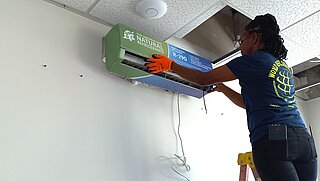
The International Climate Initiative (IKI) supports the transition to future friendly cooling and was represented by GIZ Proklima holding two side events at an international conference in Montreal.
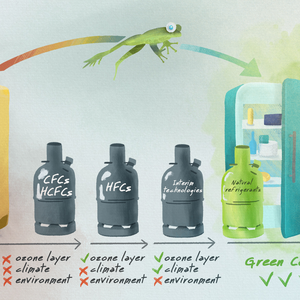
Currently, the cooling sector accounts for up to 10% of global greenhouse gas emissions. This is due to synthetic refrigerants, such as hydrofluorocarbons (HFCs) with a very high global warming potential, and to the high energy consumption of cooling devices. To break the vicious circle of rising temperatures, growing demand for cooling and increasing greenhouse gas emissions, a switch to Green Cooling technologies and a sustainable lifecycle refrigerant management is key.
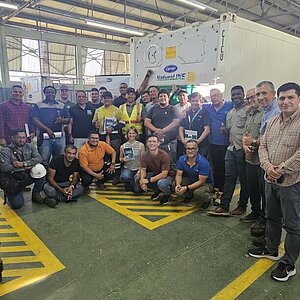
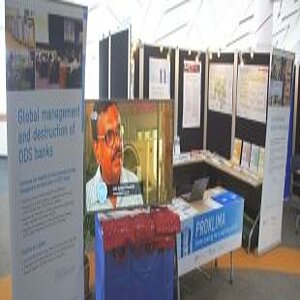
GIZ Proklima is a project cluster focused on the promotion of Green Cooling, formed through a union of various projects funded by IKI and other donors. All projects contribute to the objectives of the Montreal Protocol and its amendments. In this context, the project cluster also participates at the Protocol’s conferences. This year it hosted two side events at the 46th Open-ended Working Group of the Parties to the Montreal Protocol (OEWG46) in July 2024 in Montreal: One on the transition to future friendly ACs and heat pumps, and one on lifecycle refrigerant management.
Protecting the Ozone Layer and fighting Climate Change
The Montreal Protocol entered into force in 1989 and is the first universally ratified treaty in United Nations history. It is designed to protect the ozone layer by phasing out the production and consumption of ozone depleting substances (ODS), such as hydrochlorofluorocarbons (HCFCs). Through concrete targets, monitoring, sanctioning and financial mechanisms, the Montreal Protocol achieved that the ozone hole is slowly recovering.
However, some industries replaced the ODS with HFCs that have a very high global warming potential. In 2016, member states agreed to phase-down HFCs as well. The Kigali Amendment to the Montreal Protocol projects to reduce future emissions of HFCs by about half in 2050, compared to a scenario without HFC emission controls. This could prevent an additional temperature rise of 0.4°C until the end of the century. Once a year, member states discuss the further developments of the Montreal Protocol at the meeting of the Open-ended Working Group of the Parties.
Reducing emissions by Leapfrogging to Green Cooling Technology
Leapfrogging to highly energy efficient air conditioners and heat pumps using natural refrigerants has a huge mitigation potential at very low costs. It is estimated that “Green ACs” alone could reduce global warming by over 0.1°C.
To accelerate the adoption of sustainable refrigerant solutions, a suitable regulatory landscape, market opportunities and technology innovation, including safety features, are crucial. The first side event provided insights into the latest market trends, innovations, and regulatory developments surrounding flammable refrigerants, with a focus on naturals. More information on the side event can be found here.
Accelerating a lifecycle refrigerant management
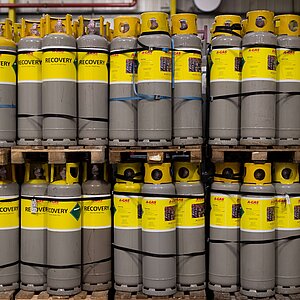
Each year, approximately 1.5 Gt CO2-eq are released from improperly managed or disposed refrigerants. This corresponds to the annual greenhouse gas emissions of 441 coal-fired power plants. Currently, neither the Montreal Protocol nor other international agreements address the challenge of accumulating ODS and HFC banks in old cooling equipment. In this context, the Climate and Ozone Protection Alliance (COPA) brings together all relevant actors to jointly work on holistic solutions for a sustainable management of ODS and HFC banks. The second side event reflected on the important topic of sustainable refrigerant management and presented lessons learned on different aspects such as technology, regulatory frameworks, and financial mechanisms. More information on this event can be found here.
Text: M.-Theresa Bruns
The link has been copied to the clipboard
Contact
IKI Office
Zukunft – Umwelt – Gesellschaft (ZUG) gGmbH
Stresemannstraße 69-71
10963 Berlin